
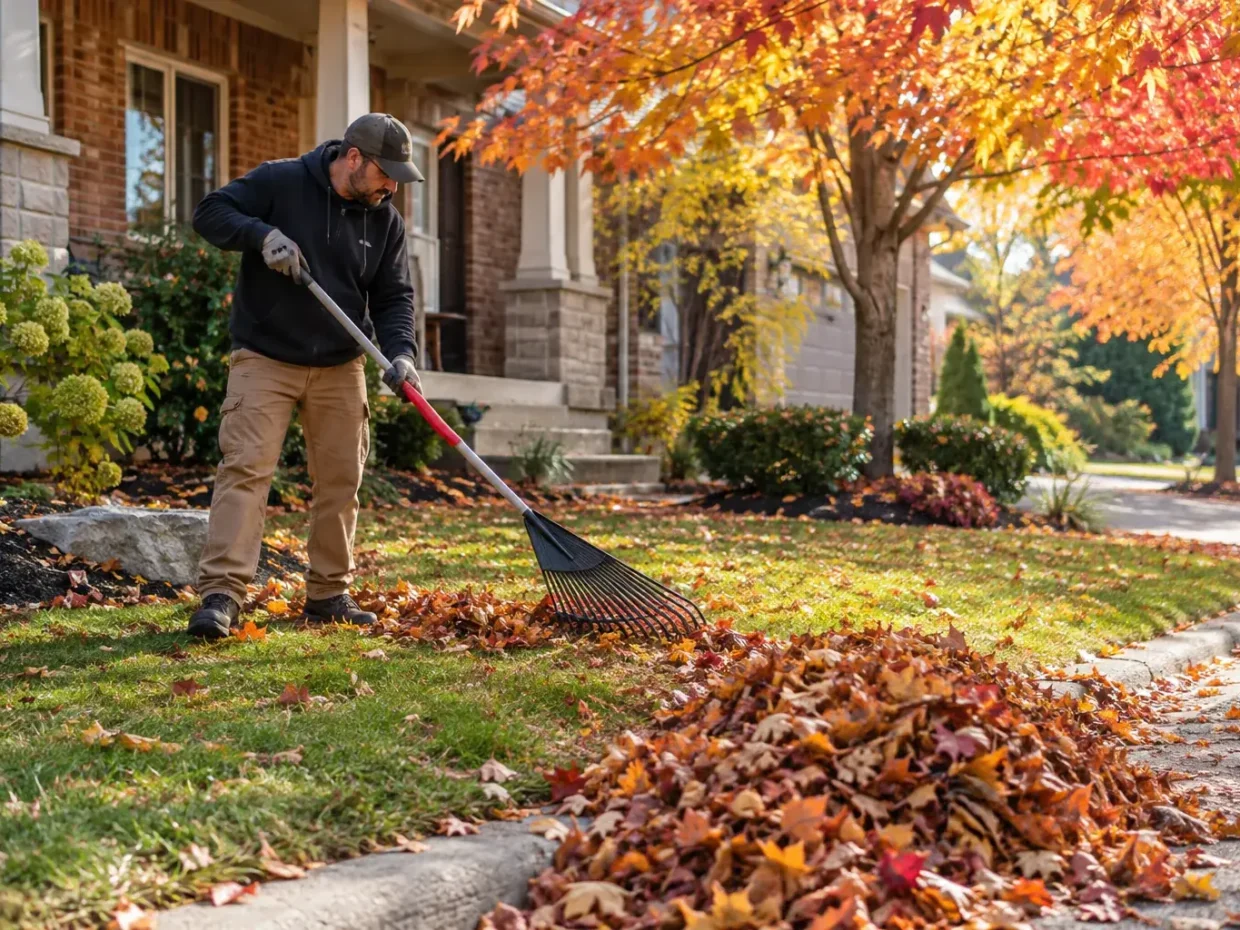
Fall care should leave access clear and beds manageable without stripping every part of the garden bare. The right amount of cleanup depends on lawn coverage, plant health, drainage and how the yard will be used in winter.
What to examine for fall cleanup
Manage leaves by location
Clear heavy mats from turf and frequently used paths, then assess suitable garden areas separately.
A thick cover on grass can hide a soggy patch and interfere with a healthy lawn surface.
Review garden beds
Remove problem debris and identify perennials or stems that may be left where suitable.
The task is to prepare the bed for next season, not make every planting identical.
Protect routes
Keep steps, paths, gates and drains clear as wet leaves become slippery or obstruct water flow.
A fall cleanup has a functional role beyond appearance.
Assess trees and shrubs
Look for broken branches and vegetation blocking windows or access.
Pruning decisions should respect species and season rather than follow a blanket cutback.
Prepare the lawn
Note thin areas and compaction for future repair, and clear material that smothers turf.
A fall visit can inform an aeration or overseeding discussion where conditions are appropriate.
Check drainage
Inspect downspout outlets, surface swales and low areas before snow cover.
Leaves in a drainage path can turn a minor flow issue into standing water during thaw.
Plan snow storage
Identify where shoveled or plowed snow can go without crushing valuable planting or blocking a sightline.
Winter use of the property is part of landscape planning.
Document spring priorities
List settled paving, damaged edging and planting gaps to revisit when conditions permit.
This keeps cosmetic work from obscuring an underlying grade or access issue.
Leaves collect in very different places: a lawn mat can be problematic, while some bed material may be part of a considered seasonal approach. Do not equate a tidy yard with bare soil everywhere. Focus on clear walking routes, drains and healthy turf; then make plant-specific decisions for the garden before cold weather.
Prioritize safe and clear routes
Wet leaves on steps and paths can obstruct walking and hide a change in level. Clear entrance routes, side gates and visible drainage outlets before focusing on decorative bed detail. A downspout outlet or surface channel packed with leaves can create pooling during rain and thaw. The practical winter route through the property deserves the first look.
Manage lawn leaves by coverage
A light scatter and a dense wet mat are different conditions. Heavy material left over grass can block light and hide soft spots. Remove or manage it in a way suited to the lawn and local disposal plan. Check for thin, compacted or damaged turf while the surface is visible. Some repairs may be suitable in the season; others are better documented for spring when conditions allow.
Choose garden cleanup by planting
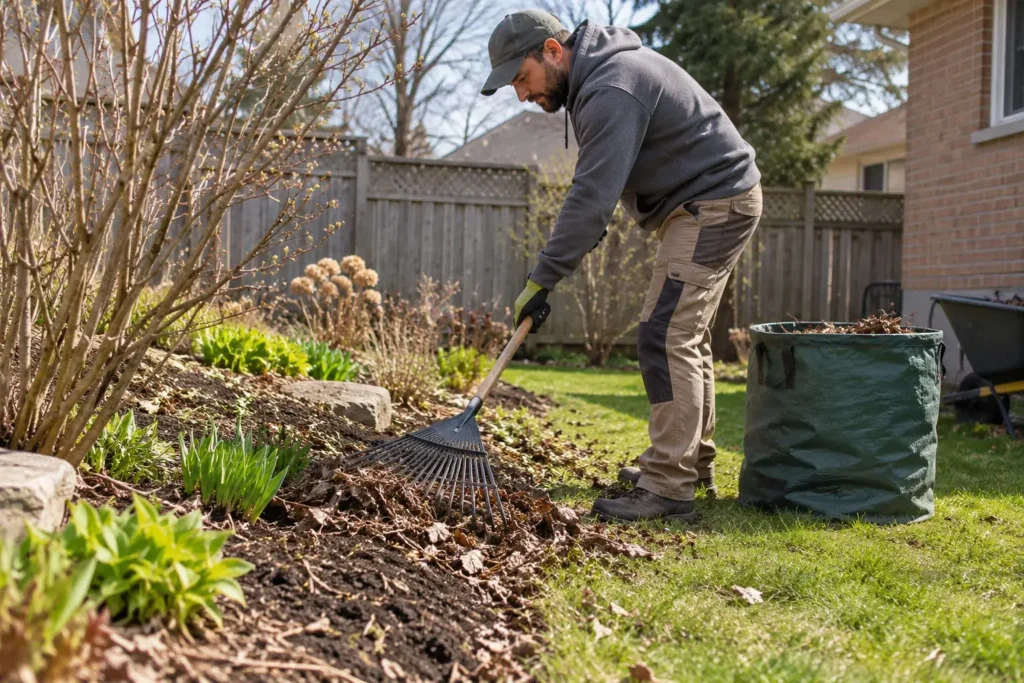
Not every perennial or shrub needs the same cutback. Some stems can remain where appropriate; diseased or troublesome material may deserve removal. Review the actual plants, the bed’s appearance goals and access for winter. Keep mulch and soil from piling over trunks. A garden can look intentionally cared for without being stripped to bare ground everywhere.
Check edges and structures
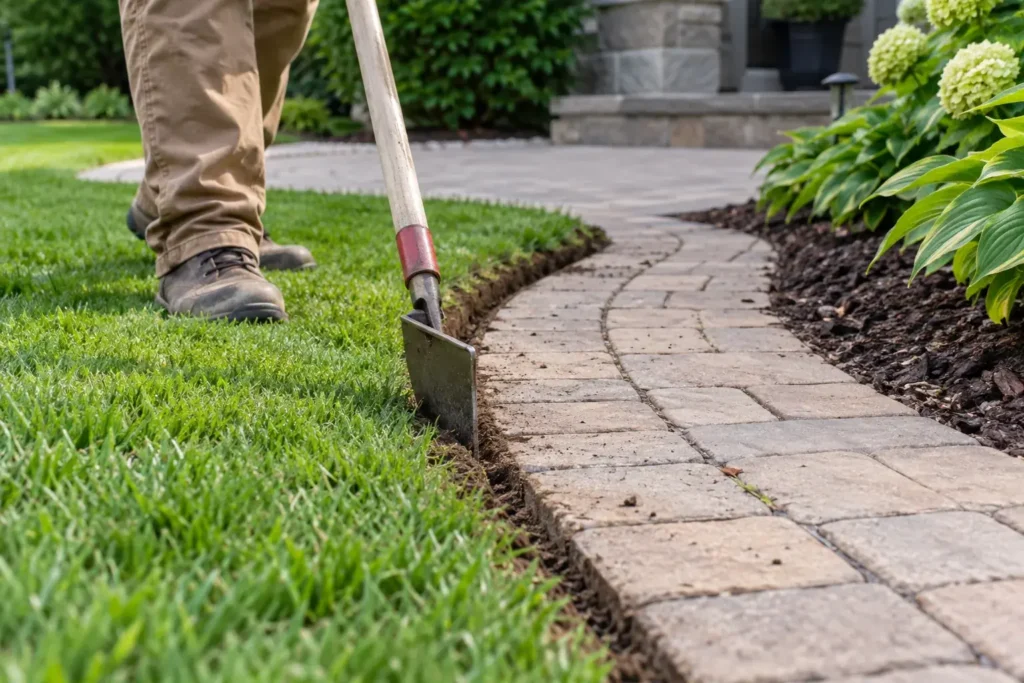
Look for loose pavers, heaved steps, fence gate drag and debris behind retaining edges. Freeze-thaw can worsen an existing opening or drainage blockage. A fall cleanup may identify these conditions, but structural or hardscape repair should be a separate, deliberate scope. Photograph a repeat problem so it can be compared after winter.
Plan snow storage now
Decide where snow from the driveway, walk and patio will go. A pile that crushes a newly planted hedge or covers a drain can cause spring damage. Avoid obstructing a gate, sightline or public route. Plants beside salted surfaces may need protection or future redesign, depending on exposure. Winter use belongs in the landscape plan before the first storm, not after every open space is filled.
Evaluate drainage after autumn rain
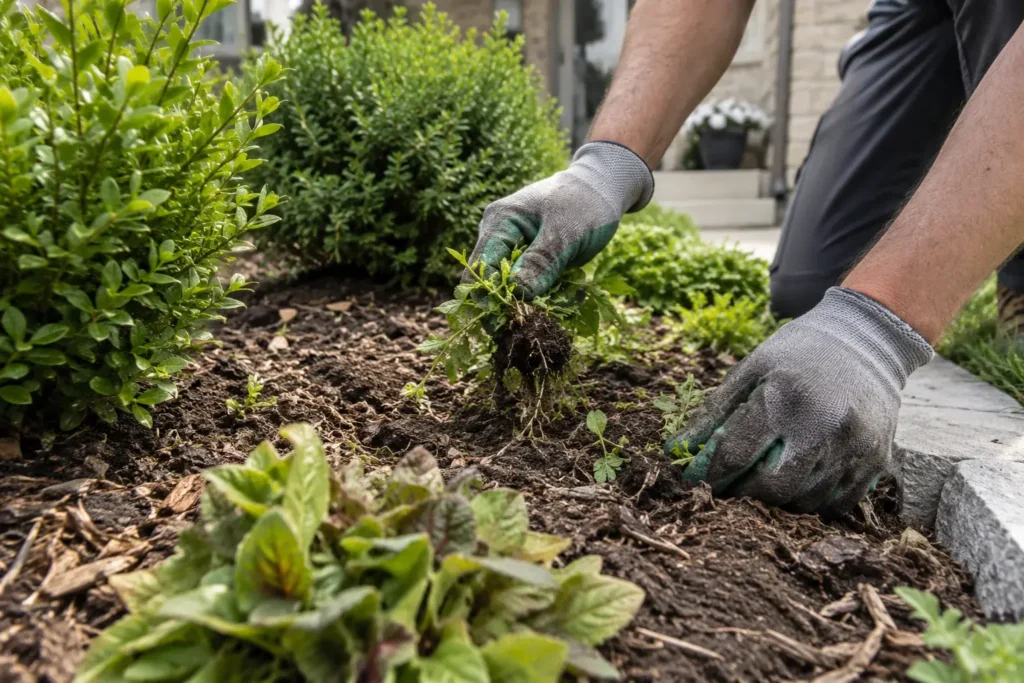
Fall storms can show where the yard holds water before ground freeze. Take photos of pooling, downspout discharge and surface movement. Cleaning leaves may solve a temporary obstruction; persistent water may need a grading or drainage assessment. Do not cover a wet patch with fresh mulch or soil without understanding what will happen during thaw.
Leave a spring action list
Record plants to replace, beds to reshape, lawn areas to renovate and hardscape needing repair. Separate urgent access or water issues from elective improvements. If a patio or fence is likely to be rebuilt, delay planting along the access route. A short documented list turns fall observations into a more efficient spring decision rather than repeating the same discovery next year.
Clarify the cleanup request
Describe the amount of tree cover, garden and lawn areas, gates, debris handling and any known damage. State whether pruning or mulch work is expected. The appropriate scope depends on plant condition and site access, and a full garden renovation should not be inferred from the word cleanup alone.
Protect beds without overworking them
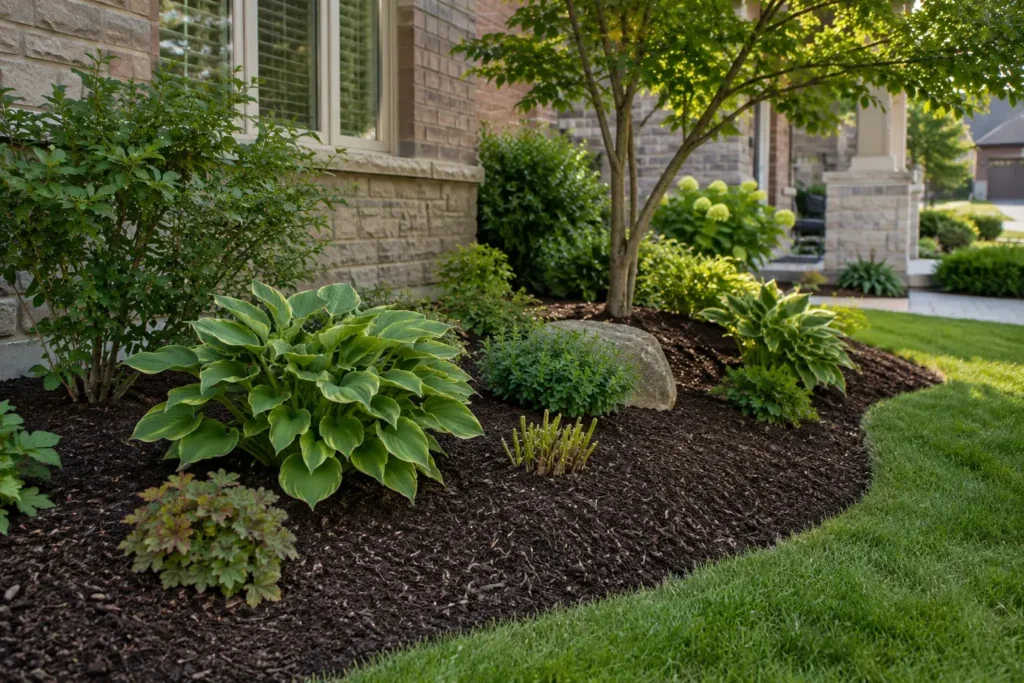
Evaluate whether annuals should be removed, perennials cut back or some stems retained according to the planting and desired winter appearance. Avoid disturbing roots or compacting wet soil for the sake of a uniform bare bed. The end state should let water move, keep paths clear and make spring work manageable. Plant-specific care is more useful than an indiscriminate cut to ground level.
How fall observations guide the next year
Photograph the same pooling area during rain and again after leaves are cleared. If water persists, the problem is unlikely to be only surface debris. Note where salt or snow piles are expected to reach plants. Decide whether a hedge is mature enough to screen a view or whether another layer will be needed later. These observations can inform a spring budget without rushing construction as the ground freezes.
For a quote, identify leaf volume, lawn and bed size, gates, disposal needs and any branches or drainage concerns. The scope can then separate ordinary seasonal care from repairs that warrant a dedicated assessment.
Look at late-season access
Shorter days make lighting and clear paths more noticeable. A garden that grew over the side gate can make leaf removal and snow access difficult. Trim or note the obstruction according to the plant and season, and check the gate itself. Keep a route to bins, equipment and any drainage feature that may need attention during thaw.
Do not confuse appearance with preparation
A completely bare bed is not inherently better prepared than a selectively managed one. Decide by plant condition, disease concerns, runoff and desired winter structure. On the lawn, dense leaf cover may need removal even if a lighter scatter does not. The scope should describe these differences rather than assume the entire property receives identical treatment.
When requesting a fall visit, identify problem spots from previous winters. That history can guide attention to the places where cleanup has the greatest practical value.
A property with a pool, deck or outdoor kitchen may need specific leaf and storage attention. Keep equipment access and drain points clear without moving debris into a planting bed that cannot absorb it. Record any surface that remains wet under fallen leaves; the same spot may need a water-management discussion when the yard is open in spring.
Discuss fall cleanup for your Milton property
Describe leaf coverage, garden areas, access routes and known winter trouble spots. Request fall cleanup with a scope shaped by the actual planting and property.