
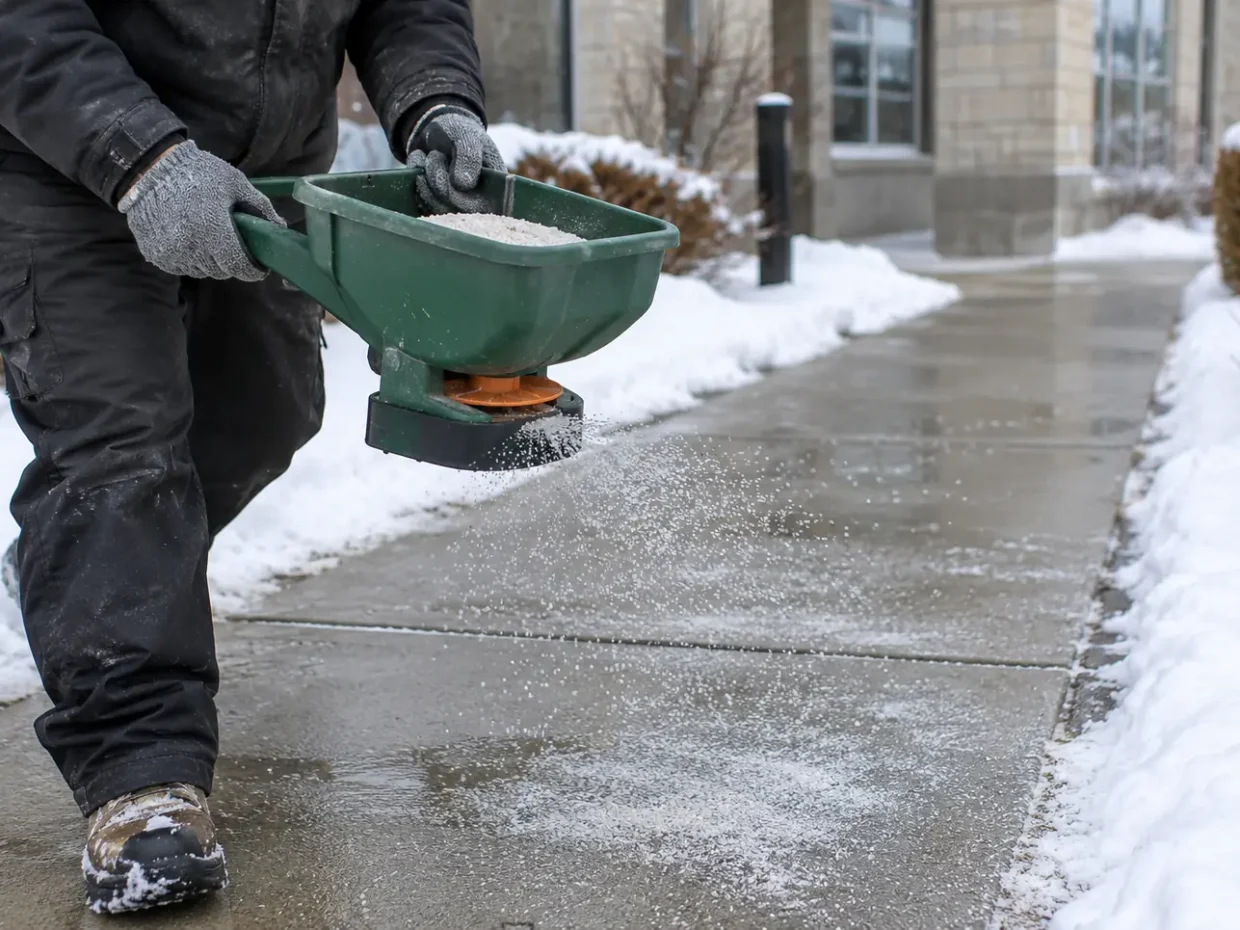
Ice conditions can change between a plow visit and the next morning. Entrances, shaded walks, drainage crossings and parking transitions need deliberate monitoring and treatment terms suited to the property.
What to examine for commercial salting & ice management
Identify high-use surfaces
Map entrances, accessible routes, steps, ramps and pedestrian crossings.
A treatment plan should follow how people actually reach the building.
Note recurring ice locations
Document roof drip, downspout discharge, low paving and areas shaded through the day.
A repeated ice patch may signal a drainage or grading issue that treatment alone will not fix.
Understand weather shifts
Rain, snowmelt, refreeze and drifting conditions create different surface problems.
A static application routine may not fit every event.
Set treatment scope
Define which surfaces, materials, decisions and communication are included for the specific property.
Do not infer a universal trigger or response time from a generic service description.
Coordinate snow storage
Piles and plow windrows can release meltwater across cleared routes.
The location of stored snow is part of ice management.
Consider landscape effects
Salt exposure can affect turf and planting beside treated pavement.
Bed design and spring repairs should account for the winter operating area.
Maintain access
Parked vehicles, tenant deliveries and building hours affect the ability to treat surfaces.
A site map and contacts help resolve blocked areas.
Document observations
Where agreed, site notes and communication can support ongoing adjustments.
Treatment reduces risk but cannot promise that every surface will remain free of ice at every moment.
One shaded entrance may remain slick after an exposed lot has dried. A roof drip or downspout may repeatedly rewet the same square of pavement. Treatment scope can address the immediate condition, while a later drainage correction may reduce recurrence. Recording those patterns is more useful than assuming every ice event has the same cause.
Identify routes that matter most
Map public entrances, accessible approaches, steps, ramps, pedestrian crossings, parking rows and loading routes. A general instruction to treat “the property” can leave uncertainty about a back door or shaded walkway. Note who uses each route and when. The site-specific agreement should distinguish vehicle and pedestrian zones and the way priorities are communicated when weather changes.
Find repeat ice conditions
Look for downspout discharge, roof drip, low paving, shaded corners and meltwater from stored snow. An entrance that refreezes repeatedly may need a drainage or grade correction beyond seasonal treatment. Record the location after events. This helps distinguish a broad weather condition from a persistent site defect that can be addressed when construction conditions permit.

Plan for changing weather
Snowfall, freezing rain, daytime thaw and overnight refreeze can produce different surface conditions. Plowing removes snow from a lot but does not settle the entire ice plan. Treatment decisions, inspection and timing should be defined in the actual service arrangement, without promising that all surfaces remain free of ice at every moment. Occupants should still use care in changing conditions.
Coordinate with snow piles
Stored snow can melt across a cleared path and freeze again. Place piles with drainage, sightlines, entrances and parking capacity in mind. As the season progresses, a storage area may fill and the route may need reevaluation. A summer map that shows catch basins, downspouts and planting beds can make the winter plan more informed.
Consider material and landscape effects
Salting choices can affect adjacent plants, turf, paving and tracked-in material. A treatment plan should match site surfaces and agreed service methods, while spring landscape care should inspect the exposed edges. Do not assume a product eliminates all hazards or has no landscape impact. A bed repeatedly damaged beside a high-priority treatment route may need a more resilient design or different boundary.

Handle access and occupancy
Parked vehicles, delivery schedules and tenant changes can block parts of a lot or walkway. Establish a contact and reporting path for conditions that prevent treatment. A site note can show which area was inaccessible and why, where documentation is part of the actual arrangement. A manager can then coordinate a follow-up decision rather than assuming the route was handled.
Define the scope carefully
Ask which surfaces are included, what materials may be used, how changing conditions are assessed, whether records are provided and how special requests are approved. The actual contract, not a general website article, should determine triggers and response expectations. Zero-slip conditions cannot be promised through a freeze-thaw season; the goal is a considered property-specific plan and clear communication.
Connect winter to future improvement
A recurring ice patch is useful information for warm-weather drainage design. Photograph it and mark the location on the site map. A future paving or downspout project can then address the water source rather than treating the same symptom indefinitely. Snow and landscape work should inform each other without conflating their separate scopes.
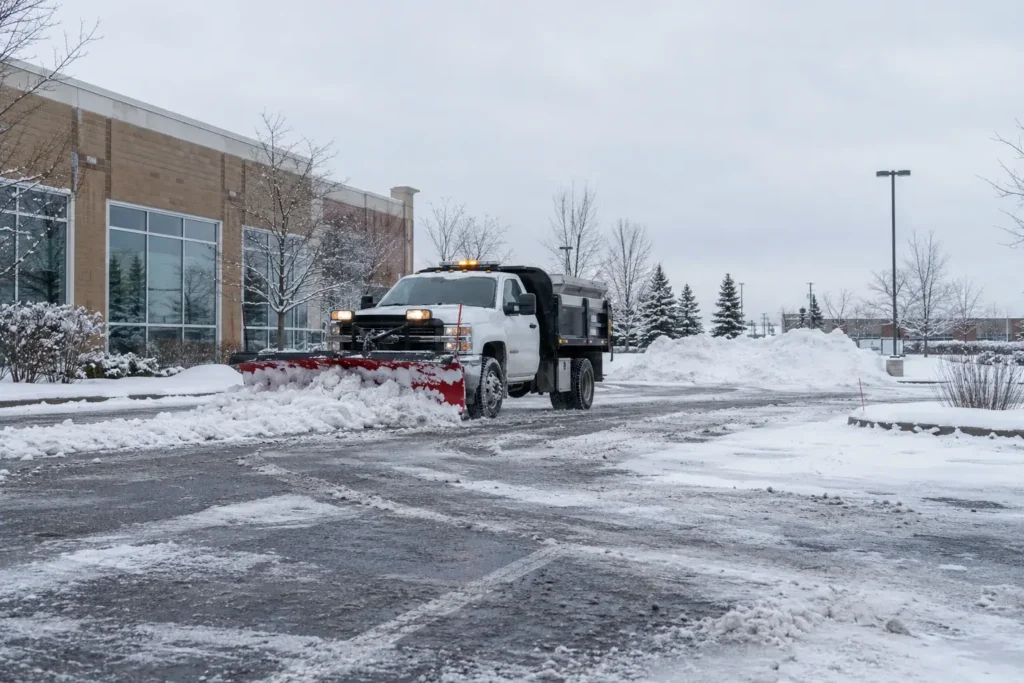
Use observations to improve the plan
After each notable freeze-thaw event, compare recurring ice areas with snow pile placement and drainage. A wet front step may be linked to roof drip; a lot crossing may receive meltwater from a pile. A site-specific record can support better treatment priorities and a warm-weather correction. It also makes a conversation about scope more precise than saying the entire property was icy.
What should management communicate?
Provide current entrances, tenant hours, blocked zones, site changes and any known repeat conditions. Confirm the surfaces included in the agreement and who can authorize extra treatment. Occupants may still need to report a sudden hazard; no plan can promise continuous ice-free conditions. A clear contact path helps observations reach the right decision maker and helps the winter scope respond to actual site use.
The summer landscape design can reduce some winter conflicts. Keeping downspouts from discharging across a busy walk and placing snow storage away from drains and fragile beds can make treatment more effective, though weather will always require ongoing judgment.
What if a surface repeatedly refreezes?
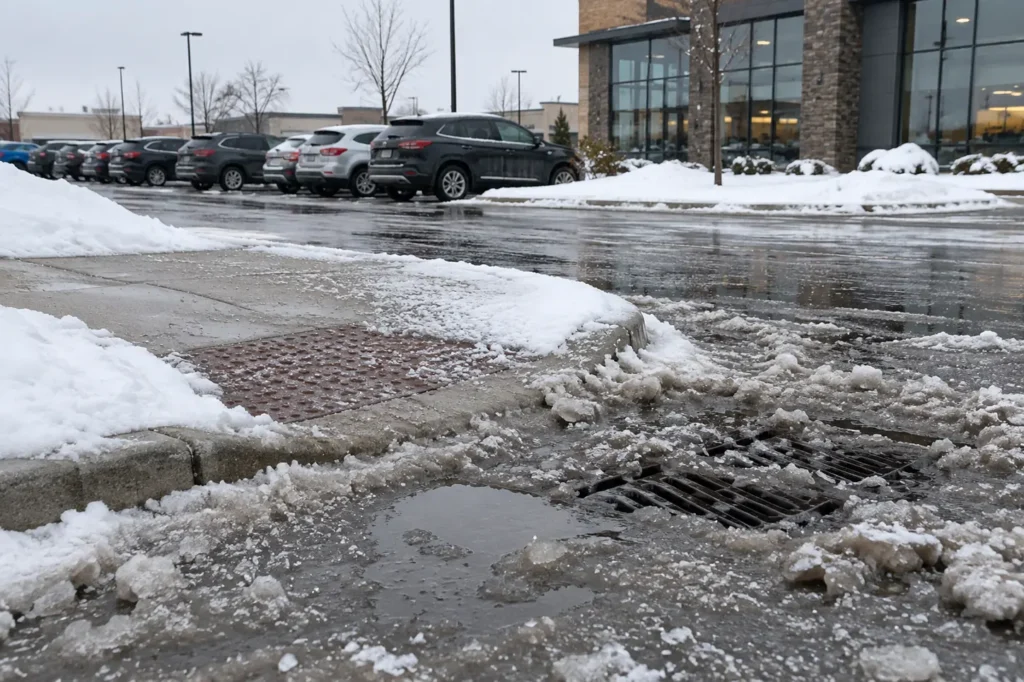
Immediate treatment may remain necessary under the winter scope, but investigate why the surface gets wet. A downspout, low paver section or snow pile can provide a recurring source. Document the condition during both thaw and freeze. In warmer weather, a separate drainage or hardscape improvement may be considered. This does not remove the need for winter observation, but it can address a preventable part of the problem.
Different sites need different maps
An office entrance with a short walk, a plaza with extensive pedestrian crossings and a multi-residential property have distinct patterns. Show priority zones and storage for each rather than using a single colour-coded blanket instruction. Where several parties share the site, agree on a contact who can report new hazards or access changes. A useful map is updated when the site changes.
Make material and reporting expectations explicit in the actual agreement.
Parking-lot islands and raised curbs can be hidden in snow yet affect treatment routes. A preseason site walk can identify them along with the places vehicles regularly block access. Update the map after construction or tenant changes. The agreed scope should define how an inaccessible area is reported and revisited when access becomes possible.
Review whether roof drainage or a leaky irrigation component creates a non-weather source of water. Treating the ice condition during winter and repairing the water source are different tasks, and both may be needed.
Discuss commercial salting & ice management for your Milton property
Map entrances, priority walks and recurring ice locations. Discuss winter treatment with property-specific surfaces, communication and the actual agreement terms.