
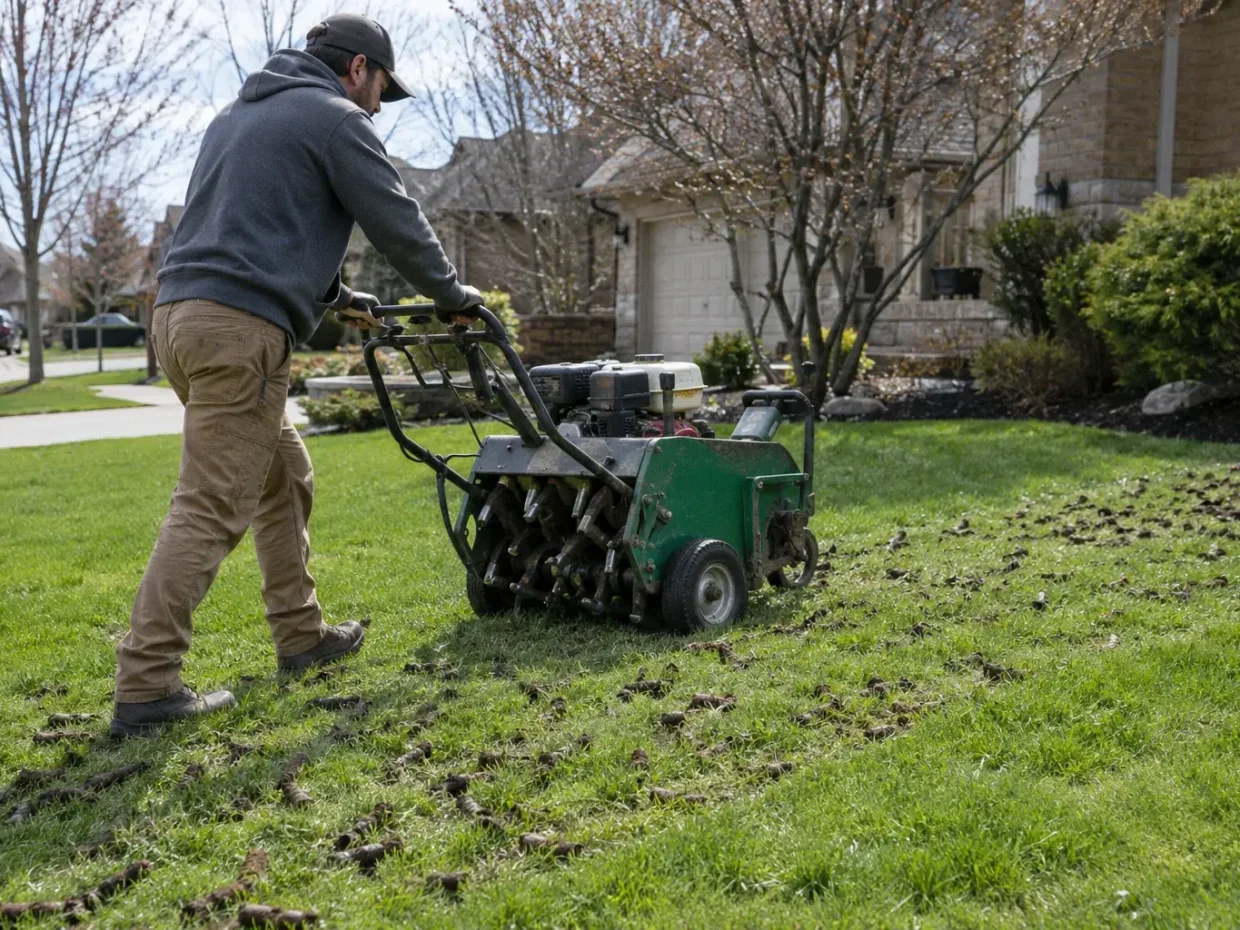
Aeration and overseeding address different but related lawn conditions. Core aeration can help an established lawn where soil compaction restricts air and water movement; overseeding introduces new grass seed into thin areas. Together they can support renovation, but neither procedure guarantees a particular germination rate or corrects deep shade, standing water or heavy daily wear on its own. A Milton lawn should be assessed for the cause of thinning before the treatment is chosen. Soil contact, seed selection, watering and season all affect whether new grass can establish. The aim is a healthier, more even lawn through a practical care plan, not a one-day cosmetic transformation.
Diagnose compaction and thin areas
Inspect traffic patterns, soil firmness, existing grass density, shade from trees or buildings, puddles, irrigation and weed competition. A thin strip beside a driveway exposed to salt may need a different solution from a compacted play lawn. Core aeration may be less useful if the ground is persistently saturated or a buried utility is too shallow in the work area. Determine whether the lawn is sufficiently healthy to improve or whether complete sod replacement and soil preparation would be more sensible. Where drainage is the main issue, its source and outlet should be considered before seed is spread into wet soil. Existing tree roots may limit both cultivation and the ability of turf to thrive.
Match treatment to lawn condition
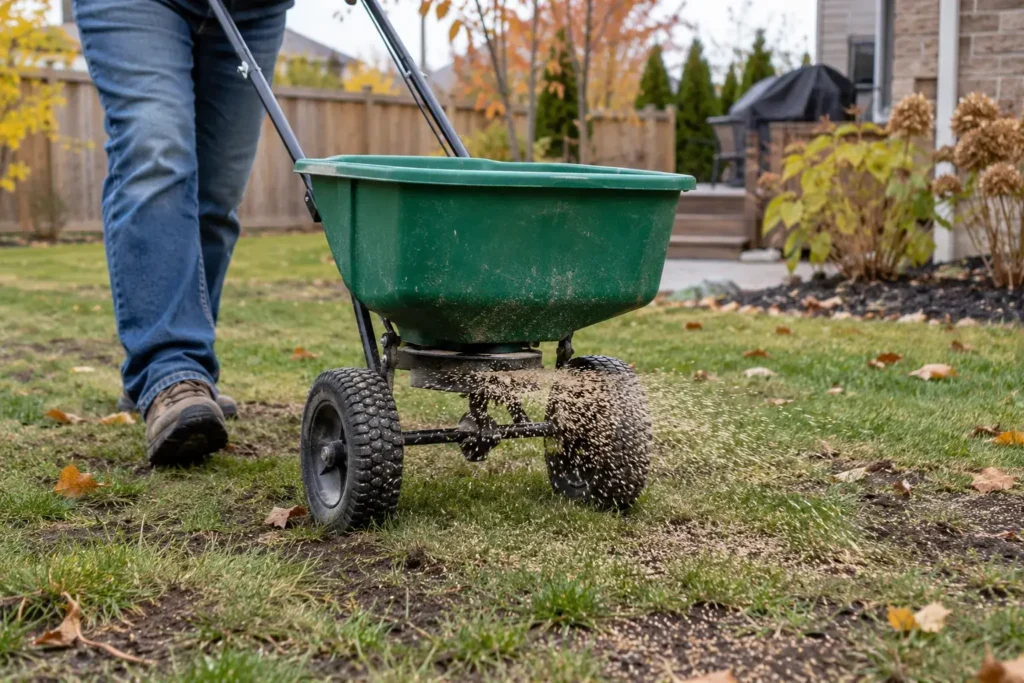
The treatment should be matched to condition. Aeration creates openings in compacted soil, while overseeding works best when seed reaches soil rather than resting in long thatch or on leaves. Preparation may include mowing, debris removal and attention to bare areas, depending on the site. Seed choice should reflect sun, shade and intended use rather than a generic mix for every lawn. Soil amendments or topdressing can be considered when they address a known condition, but a light cosmetic layer cannot fix a bad grade. Protect beds, sprinkler heads and shallow services during work. Plan the timing so the household can provide consistent moisture and limit traffic while seedlings establish.
Give seed the conditions to grow
Weather and watering are major variables. Seed needs suitable soil temperatures, moisture and soil contact, and establishment can be disrupted by heavy rain, drying, birds and foot traffic. Core aeration is generally scheduled around lawn growth and soil condition rather than on an arbitrary calendar date. Irrigation coverage should be checked so the whole treated area receives appropriate water without creating puddles. A newly seeded lawn is managed differently from mature turf, including the timing of mowing. We should not promise a fixed percentage of germination because soil, seed, water, weather and use cannot all be controlled by an installation visit.
Manage timing and moisture
An improved lawn also needs the source of stress addressed. If people repeatedly take the same shortcut across turf, a walkway may protect the lawn and serve the family better. If a wet depression persists, grading or drainage may be needed. If dense shade limits grass, planting or another surface may be more suitable. A low-maintenance redesign can reduce difficult lawn areas instead of reseeding them every year. Aeration and overseeding are tools within a larger property plan; they should be selected because the site fits, not because every spring or fall package lists them.
Keep addressing the underlying stress
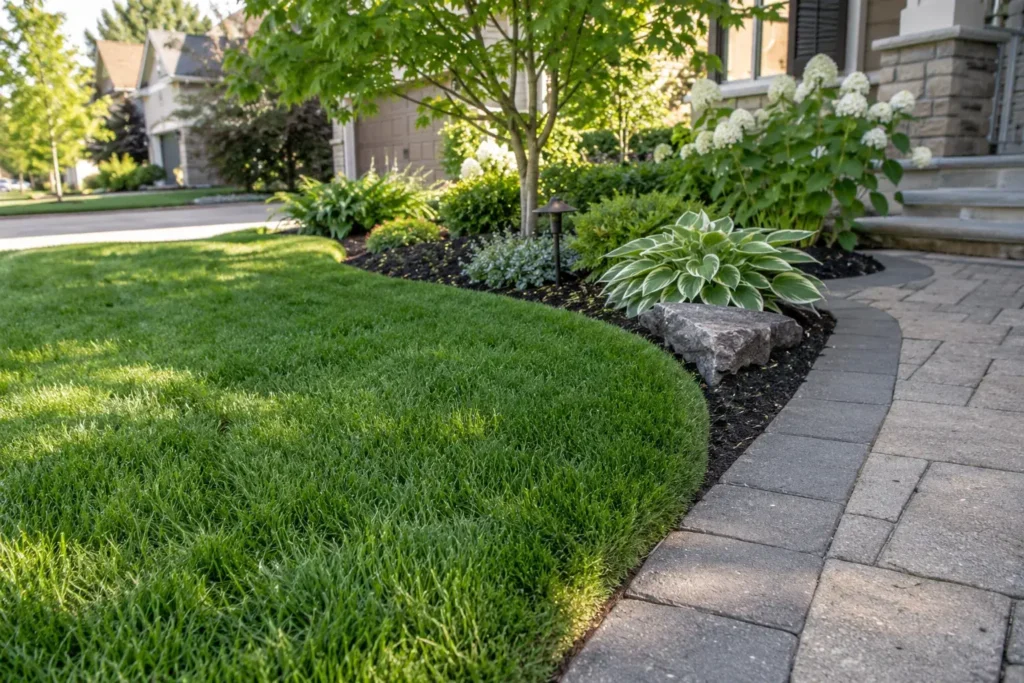
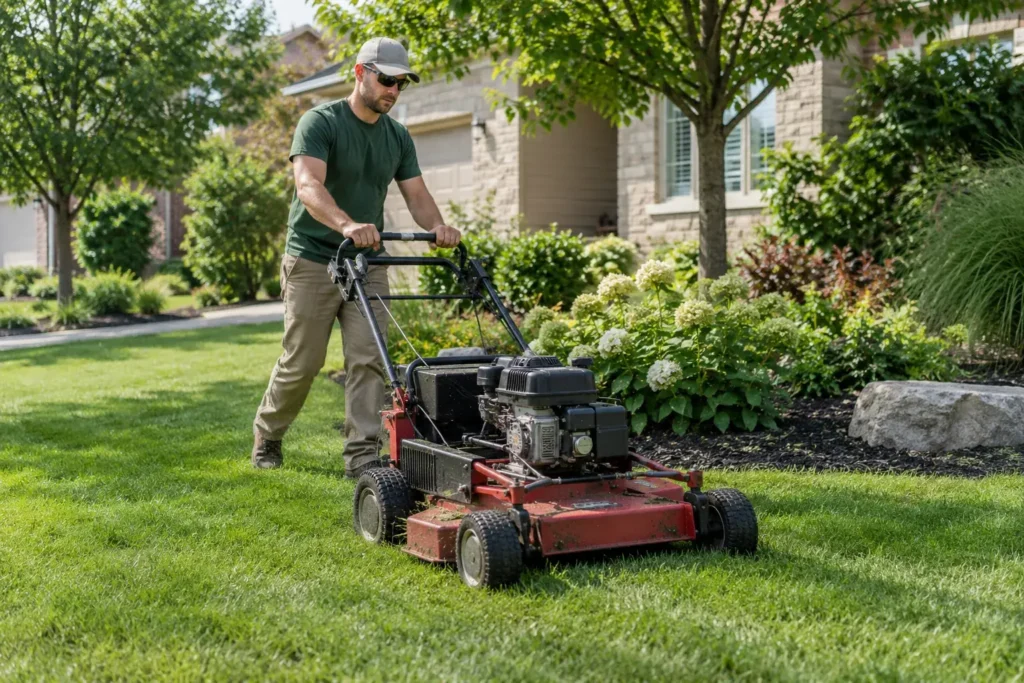
Monitor new growth and maintain watering through establishment according to actual conditions. Some areas may fill more slowly or need later attention, particularly beneath trees or where soil remains compacted. Routine mowing, sensible traffic patterns and continued observation help retain the benefit. Watch for weeds and bare spots without assuming one treatment will create an instantly uniform surface. Keep records of the seed and work areas so later maintenance can respond to what was done. If a large section remains unsuccessful, investigate soil, light and water before repeating the same treatment.
Decisions that shape lawn aeration & overseeding
Compaction evidence
Look for hard soil, heavy traffic and poor infiltration rather than assuming every thin lawn needs aeration.
Seed-to-soil contact
Prepare the surface so seed reaches the soil; loose seed on leaves, long grass or dense debris has poor conditions for establishment.
Watering capacity
Confirm the owner can provide frequent appropriate moisture during the critical early period without overwatering wet areas.
Sun and use
Choose an approach that suits the actual light and traffic; a shaded, heavily used strip may be better redesigned.
Drainage first
Persistent standing water needs assessment before aeration or seed. A hole in saturated soil is not a drainage system.
Practical outcome
Expect a process of establishment and care, not a guaranteed germination percentage or immediate sod-like finish.
Compare lawn aeration & overseeding proposals
A renovation quote should identify which parts of the lawn are treated, preparation, core aeration where suitable, seed selection, any topdressing and the owner's watering role. Broadly scattering seed over an unprepared yard is different from a plan for soil contact and establishment. If a location is excluded because it is too wet, deeply shaded or damaged by traffic, state that limitation. The owner can then decide whether to redesign that area rather than paying repeatedly for seed that faces the same conditions.
Before work, locate sprinkler heads and note shallow features that could be damaged. Consider how existing thatch, debris and mowing height affect seed-to-soil contact. Timing should align with a period when the household can water and limit foot traffic, not simply a date in a marketing calendar. Weather may move a suitable service window.
After germination begins, maintenance changes gradually. New seedlings need moisture and protection, while mature grass still grows around them. Watch the most exposed and shaded zones separately; one watering schedule may not suit every part of the lawn. A follow-up assessment should compare density and conditions, not assert a guaranteed percentage of coverage.
If only a few areas are thin, consider why they differ from the rest of the lawn. A path worn by repeated footsteps may need a paved route. Soil under a large tree may have root competition and deep shade. Treating only the symptom with extra seed can consume effort every season without changing the conditions that stop grass from establishing.
A follow-up photograph from the same location can help compare establishment without claiming a fixed germination percentage.
Questions about lawn aeration & overseeding
Does aeration make grass grow in deep shade?
No. It may address compaction, but insufficient light remains a limiting condition. Consider planting or surface changes where grass repeatedly fails.
Will overseeding fix puddles?
No. Determine the cause of pooling and a suitable water route before investing in seed.
Can we walk on a newly overseeded lawn?
Reduce traffic while seed establishes, especially on bare areas. Specific guidance depends on the treatment, weather and use of the property.
Should I choose sod or overseeding?
An established lawn with localized thinning may benefit from renovation; widespread failed turf or major grade and soil changes may justify sod. A site review helps compare scopes.
Related property work
Sod Installation, Lawn Maintenance, Yard Grading, Wet Yard Solutions, Low-Maintenance Landscaping.
Discuss your lawn aeration & overseeding project
Show the thin or compacted areas and describe shade, traffic, watering and any standing water. Include sprinkler-head locations and the time you can devote to seed establishment. This helps distinguish a suitable renovation from a location that needs drainage or redesign first.