
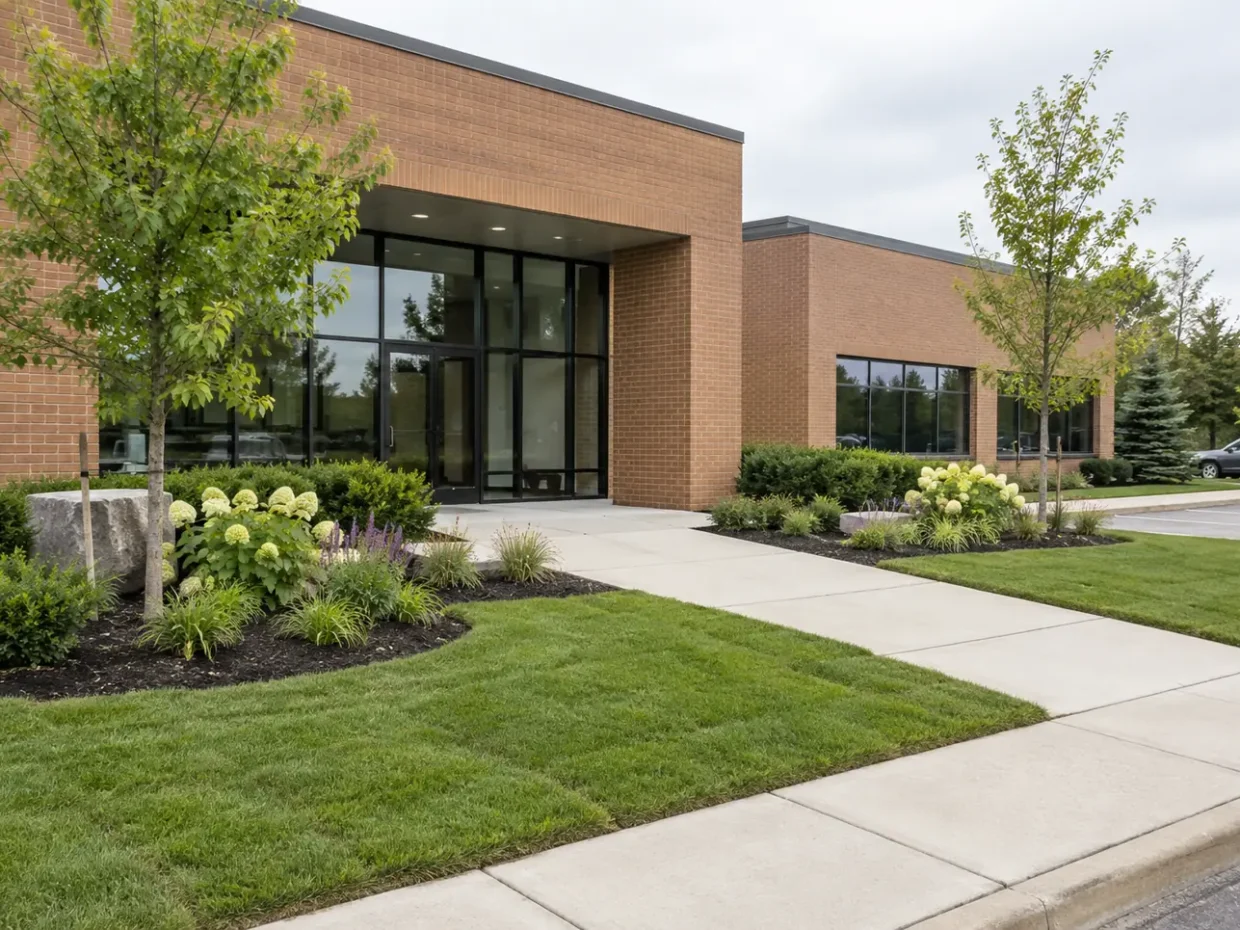
One-time landscape improvement work should answer a specific site problem or opportunity. Worn entrances, failed beds, tired lawn and awkward runoff need different scopes; a refresh is most effective when it addresses the cause of deterioration.
What to examine for commercial landscape improvements
Identify the business goal
Is the priority entrance presentation, safer circulation, easier maintenance or a property transition?
Name that outcome before selecting materials.
Inspect existing assets
Review paving, curbs, plant condition, irrigation and drainage.
Sound elements may be retained; failed base or grade should not be hidden under a cosmetic finish.
Upgrade entrances
Plan planting and hardscape around doors, signs, pedestrian routes and accessible access.
The finished layout must support day-to-day visitors.
Renew beds
Match plants and mulch or stone to sun, snow storage, salt exposure and mature size.
Repeated replacement of the same stressed shrub may be a site-condition problem.
Repair lawn and surfaces
Assess whether sod, soil work, paving repair or a change of use is appropriate.
New grass on a wet or heavily trafficked strip may fail for the same reason as the previous lawn.
Solve water issues
Map roof discharge, low points and pavement runoff before adding raised edges or walls.
A garden redesign should preserve necessary surface drainage.
Stage construction
Plan deliveries, demolition, debris removal and temporary access around operations.
Commercial work often succeeds or fails in its sequencing.
Define handoff
Separate installation scope from ongoing care and specify how new planting or lawn will be established.
This makes both initial investment and later maintenance expectations clear.
Replacing tired mulch is reasonable when the bed is otherwise sound. If plants repeatedly fail beside a salt-heavy parking edge, the project should reconsider exposure, snow placement, soil and species. The visible finish is the last part of that investigation. A one-time improvement should reduce the cause of recurring repairs.
Define the problem with the existing site
A faded entrance, thin lawn, settled pavers and failed planting call for different work. Walk the site with the property’s daily users in mind: where do customers arrive, where do deliveries occur, which area stays wet, and what is difficult to maintain? State the desired result before choosing a product. A one-time improvement should solve a particular property need, not merely replace every visible material.
Upgrade an entrance without blocking it
New planters, beds, lighting or paving can sharpen arrival, but their mature size and placement must preserve door, sign and pedestrian visibility. Draw access routes and any required clearances in the plan. A construction phase also needs a temporary way in. Material delivery, demolition and soil storage should be coordinated around business hours or occupancy rather than blocking a primary door without a plan.
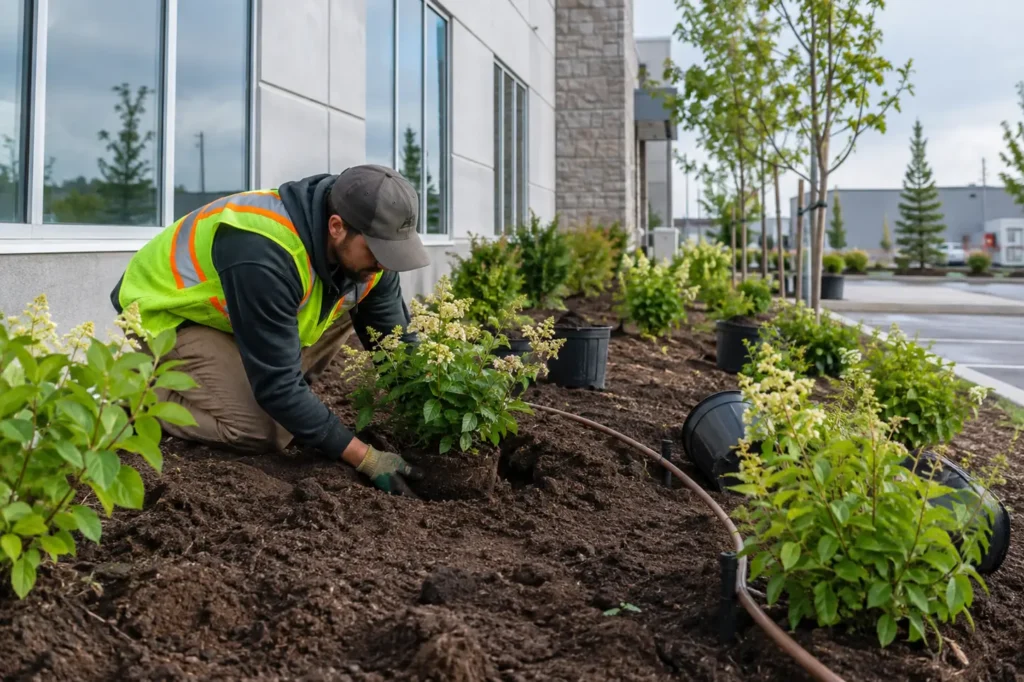
Decide what can be retained
Sound concrete, healthy trees and useful planting can provide a framework for a targeted refresh. Conversely, a failed paver base or compacted wet soil should not be concealed under a new finish. Inspect what remains below and around the visible problem. A selective project can be efficient when retention is based on condition; it becomes costly when the old defect undermines the new work.
Renew beds for their conditions
Parking-edge gardens may face salt, snow piles, reflected heat or compacted soil. Replacing the same failing shrub with another of the same size will not necessarily improve the bed. Consider exposure, drainage, soil, mature size and maintenance access. Mulch or decorative stone can tidy the surface, but should be contained and selected for the planting and runoff, not used to hide a wet area.
Repair paving and lawn with the cause in view
A settled entrance path deserves a base and water assessment before relaying pavers. New sod on a high-traffic shortcut may wear again unless circulation changes. A commercial lawn can be redesigned with a formal walkway or bed where repeated traffic makes turf impractical. These choices distinguish an improvement project from a routine cleaning or mowing visit.
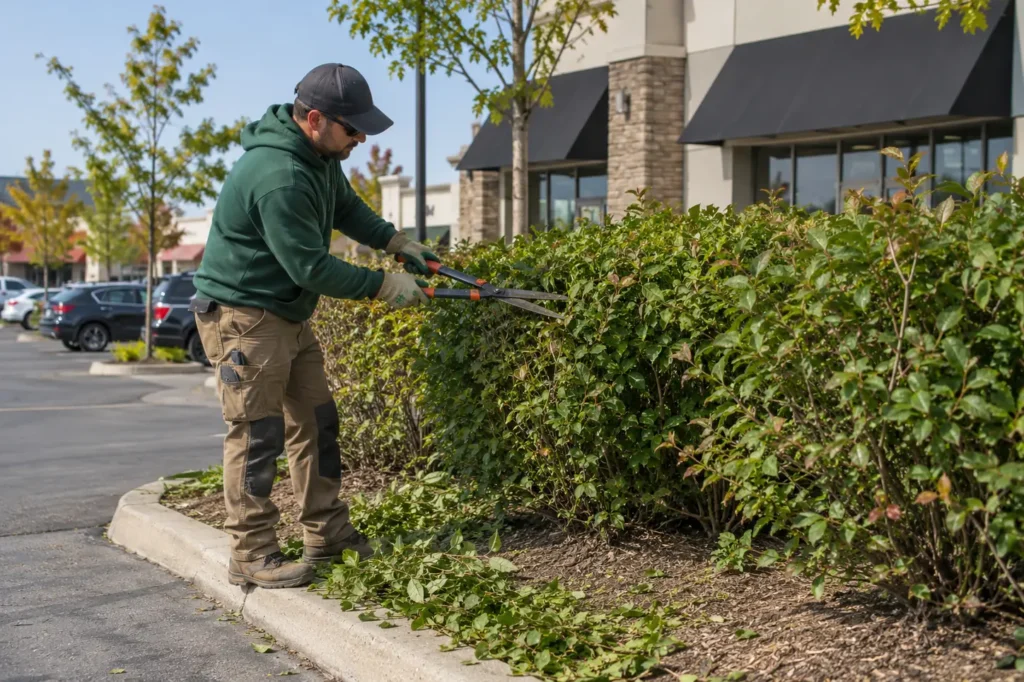
Manage drainage and grade
Roof discharge, catch points, pavement runoff and neighbouring elevations can influence both planting and hardscape. A new raised bed can block surface water or spill onto a walk. If fill or grading changes are planned, check current Milton site alteration requirements for the actual scope. A professional review may be useful where loading, retaining or complex water movement is involved. Do not promise a drain without identifying its outlet.
Stage work and handoff
Separate demolition, earthwork, hardscape, planting and restoration so occupants understand when access changes. Define establishment care for new sod and plants. Then distinguish the ongoing maintenance arrangement from the one-time construction. A property manager should know which observations after completion are normal establishment matters and which suggest a repair or revised scope.
Prepare an improvement brief
Send a site map, photos from entrance and problem areas, occupancy and delivery constraints, the intended budget or priority list, and any known underground or approval conditions. Identify who can authorize a changed scope. This gives the proposal a practical basis and reduces the chance that a cosmetic line item is mistaken for a complete site repair.
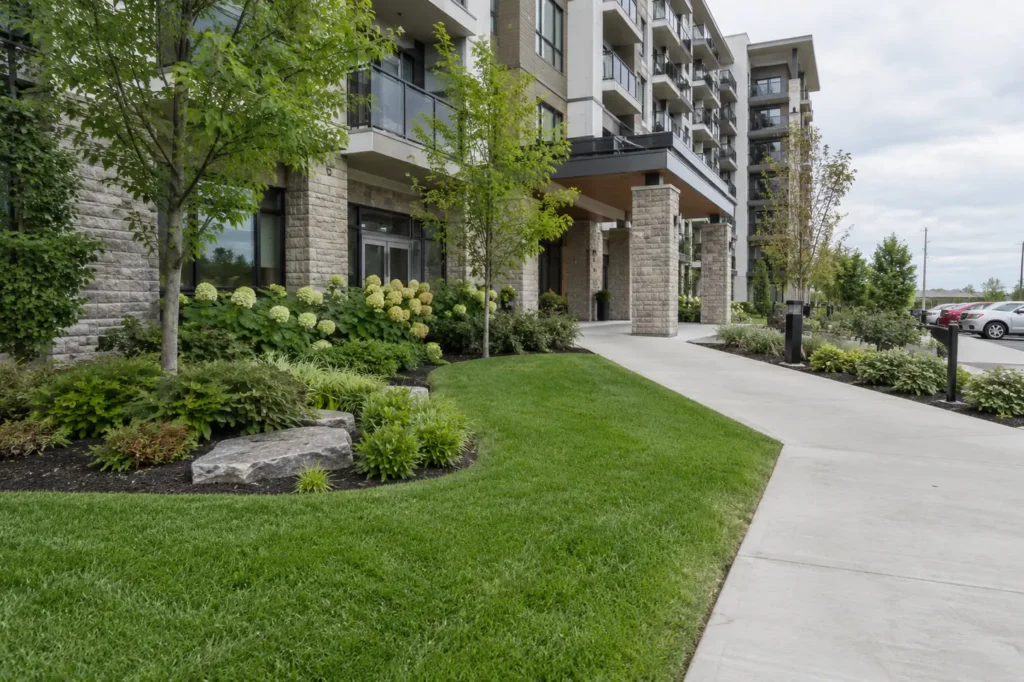
Measure value beyond opening-day appearance
Ask whether the improvement will keep an entrance clear, reduce a recurring water issue, simplify care or improve an underused space. A replacement hedge that blocks a sign after two years is not a durable improvement. A repaired path built over the same failed base may settle again. Performance over seasons should shape material, planting and preparation decisions, not just the first photograph.
Where does a proposal begin?
It should describe the existing condition, intended outcome, what remains, removal and disposal, grades and water, materials, planting, access staging and establishment. For occupied properties, show how entrance routes remain usable. Identify any municipal, utility or technical questions not yet resolved. This lets a manager compare an entrance redesign with a cosmetic refresh as different scopes rather than judging by total price alone.
Some work can be phased by zone. Complete underlying drainage before new beds, and reserve access for later paving or lighting. Each phase should stand on its own without leaving a temporary obstruction to pedestrians or a water trap beside a building.
Prioritize a small, complete intervention
A limited budget may be better used to rebuild a failing entrance segment and its drainage than to spread new mulch across every bed while leaving the main defect. Define a complete zone with sound edges and restoration. Future phases can be planned against it. The first phase must keep routes open and water moving; an attractive but unfinished cut line can create a new maintenance issue.
Account for winter before planting
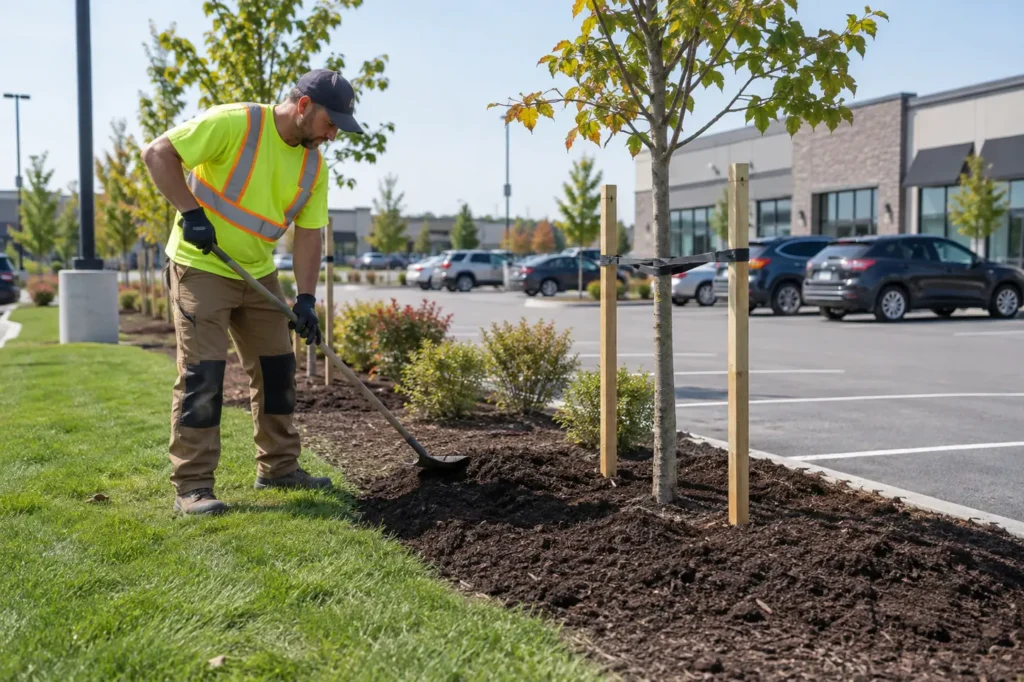
A summer landscape sketch may place delicate shrubs where snow is stored or salt concentrates. Check actual winter operations with the manager. A planting bed can be moved, protected by a durable edge or designed with different species and soil. Better alignment between winter use and summer appearance may reduce repeated replacement and improve the site’s long-term value.
Confirm handoff care for new planting and lawn so a construction improvement is maintained after the installation team leaves.
An entrance upgrade often affects signage, lighting and pedestrian views. Check the completed landscape at day and dusk, with vehicles parked in ordinary positions. A bed that looks balanced in an empty rendering may obscure the door from the parking lot. Use real site viewpoints and mature plant dimensions to test the investment.
Discuss commercial landscape improvements for your Milton property
Send entrance photographs, existing trouble spots and occupancy constraints. Discuss a site improvement that addresses preparation, access and handoff as well as the visible finish.