
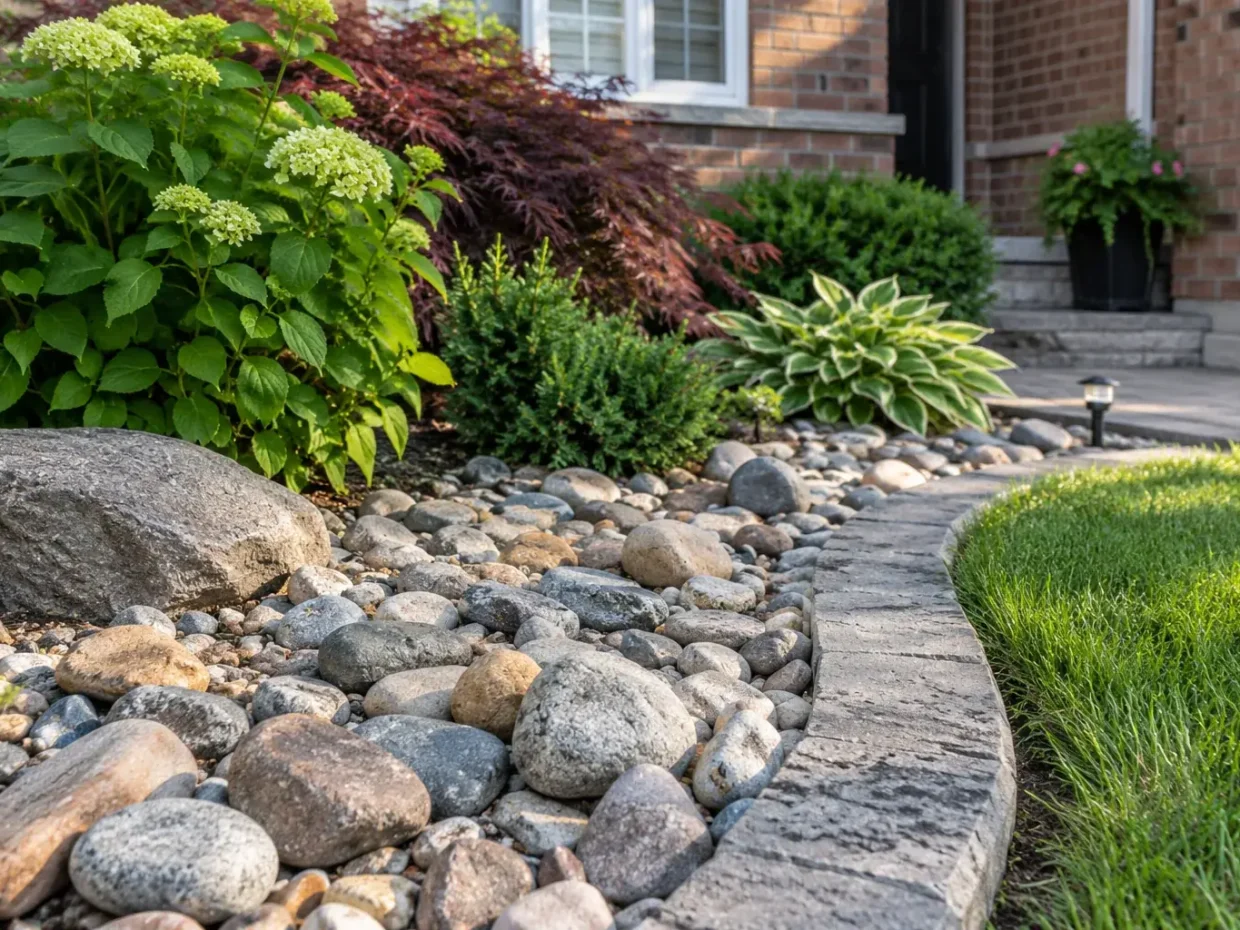
A lower-upkeep landscape is designed around the jobs an owner wants to reduce. For one household, weekly mowing is the burden; for another, it is watering, trimming a fast-growing hedge or keeping weeds out of numerous small beds. Replacing a lawn with stone can eliminate mowing but create heat, debris and a different set of chores. More paving can reduce planting care while increasing the importance of drainage and joint maintenance. Low-maintenance landscaping in Milton should therefore be a measured redesign of surfaces and planting, with practical expectations for all seasons. There is no outdoor yard that needs no care at all.
Name the chores to reduce
List the existing maintenance tasks and their frequency. Measure awkward turf strips, slopes that are hard to mow, beds that dry out quickly, plants that block windows and paved areas where weeds or settlement have appeared. Observe where water runs, where snow is piled and which spaces receive enough sun for lawn or the intended plants. Consider how the household uses the yard: a child or dog may need open soft ground, while a seating-focused yard could benefit from a larger patio and fewer irregular lawn edges. A modest Milton front yard may call for a very different balance than a deep backyard with mature trees.
Simplify the useful yard
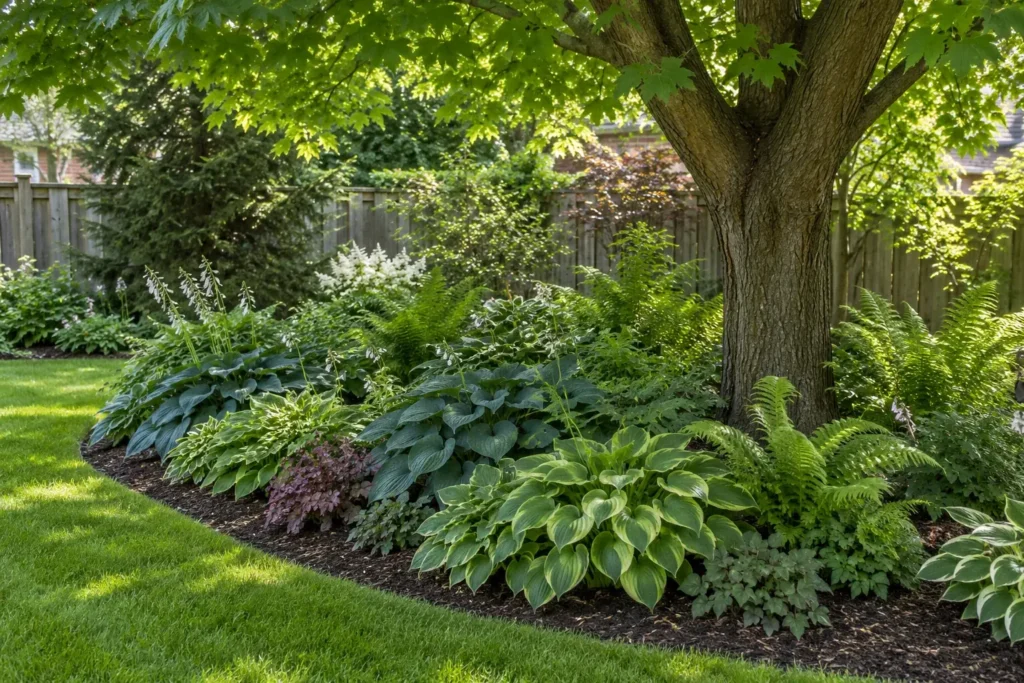
Reduce unnecessary complexity before replacing everything. One useful lawn shape can be easier to care for than several tiny disconnected patches. Beds with durable, appropriately sized shrubs and repeated ground-level planting can be simpler than a large collection of high-care specimens. A well-positioned patio, walkway or deck can replace worn turf in heavily travelled places. Mulch and decorative stone have different effects on soil, temperature and appearance; material choice should follow the site rather than a blanket instruction to cover every bed with aggregate. For privacy, slower-growing planting may mean less clipping, but it also changes the timeline for screening.
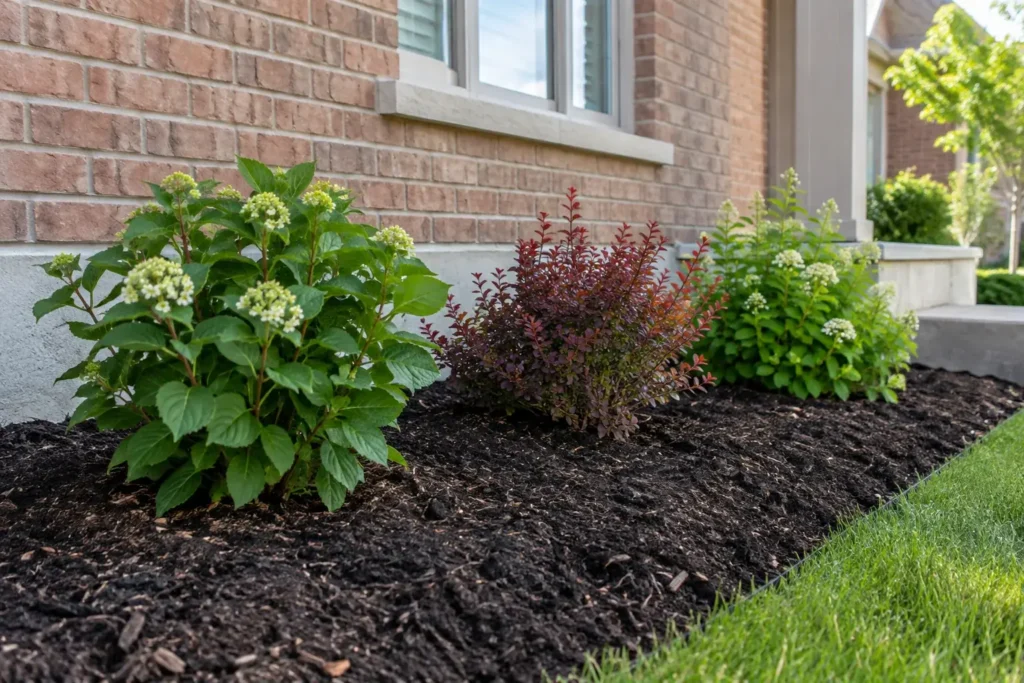
Build durable low-care surfaces
Site preparation still matters. An interlock area needs suitable excavation, base, edge restraint and slope even if its purpose is to reduce mowing. Artificial turf requires a stable, draining base and attention to seams, edges, temperature and cleaning. Decorative stone should not be used to hide an unresolved wet spot or block a drainage route. New planting needs soil suited to its roots and adequate establishment water. If a change to grade, driveway area, boundary structure or drainage is proposed, confirm current requirements for the particular property. Utility locations and access should be checked before digging, and existing trees need protection during work.
Think through every season
Think about how the yard is cared for in February as well as July. Snow clearing can catch a raised paver edge; salt affects plants by a driveway; leaves and seed can collect in decorative gravel. Dense evergreens provide structure but may need selective pruning and inspection. A simple lighting plan can improve safety while using fixtures that are accessible for cleaning or replacement. Irrigation may make establishment and consistent watering easier where appropriate, but it still needs seasonal attention and should not overwater low-use areas. The aim is fewer demanding tasks and a yard that fits the household, not an implausible claim of effortless ownership.
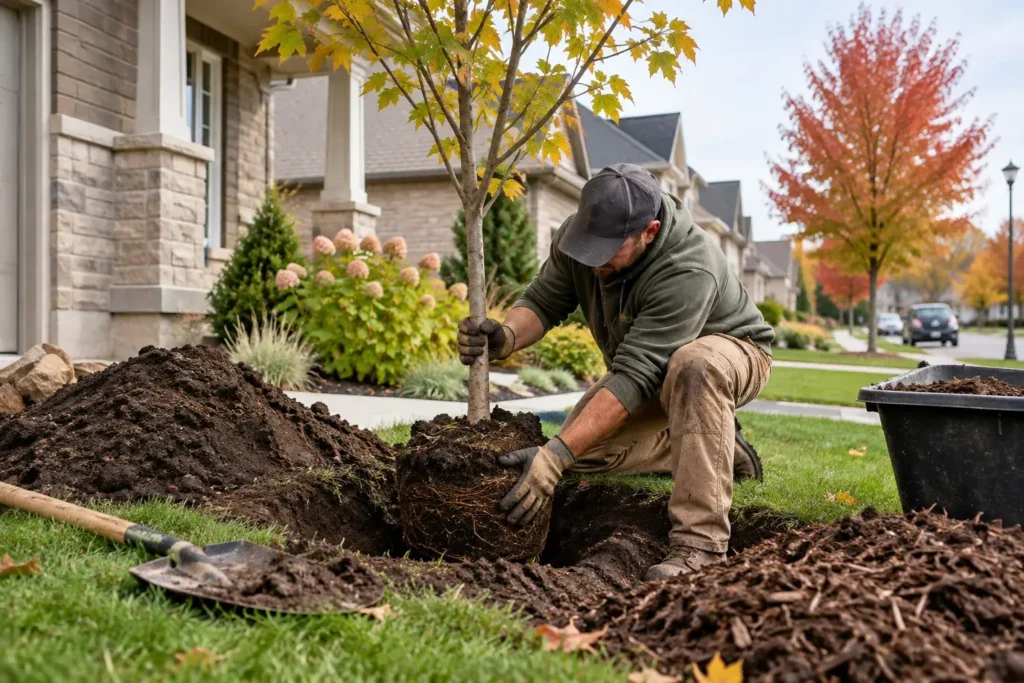
Know the remaining tasks
Write down the expected care before approving a material palette. Turf may need rinsing and debris removal. Pavers may require joint and stain care. Mulch settles and needs renewal. Stone beds collect windblown organic material. Plants still need watering at first, periodic pruning and monitoring. A design is successful when these chores are understandable and acceptable compared with the present workload. If the property is used by tenants or as a commercial site, access and maintenance responsibilities should be equally clear. The same principle applies to phasing: avoid a temporary finish that will later be torn out to install the final drainage or main path.
Decisions that shape low-maintenance landscaping
A smaller functional lawn
Keep enough turf for the intended use and simplify its edges. Avoid narrow strips against fences and tightly curved corners that make mowing and edging harder.
Durable hardscape
Put paving where foot traffic repeatedly wears grass, with proper support, drainage and transitions. Surface durability depends on the build beneath it.
Simplified planting
Select plants for mature size and the available light, soil and water. Repeated groups can look composed while reducing the number of different care routines.
Mulch or stone
Match the material to the bed, plants, runoff and desired look. Neither option prevents every weed or eliminates the need to remove leaves and debris.
Irrigation decisions
Consider watering zones and access, especially for new plants. An automated system needs monitoring and seasonal care; it does not solve unsuitable soil or drainage.
Winter routines
Check snow-storage space, walkway clearing, salt exposure and whether surface details could interfere with safe maintenance.
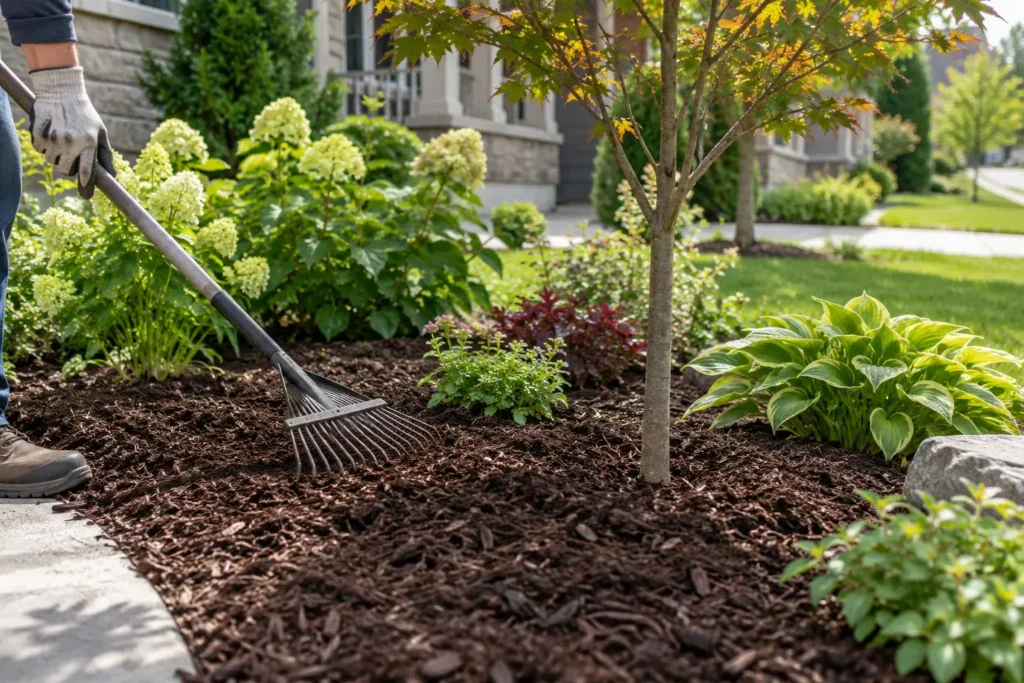
Compare low-maintenance landscaping proposals
A quote should name the work that is being reduced and the work that replaces it. Removing 300 square feet of lawn may avoid mowing that area, yet a large gravel field needs leaf removal and occasional weed control. Replacing it with interlock creates a usable hard surface but requires base construction, snow care and joint attention. Replacing it with a durable shrub bed introduces establishment watering and future pruning. These are legitimate choices with different daily consequences, not interchangeable versions of a generic low-upkeep finish.
The order of work can make a major difference in cost. Resolve drainage, unsuitable soil and underground services before installing the final visible surface. Then build stable paths or patios, form beds with manageable edges and choose plants for mature size. If the project must be phased, specify how unfinished areas will drain and how the later phase will meet the first. A shortcut that leaves a temporary wet corner can undermine the reduced-care goal.
For a property with a small front lawn, reducing mowing may be less valuable than improving the route to the door or replacing a difficult hedge. In a large backyard, the opposite may be true. Describe present hours and costs of care, then compare the proposed chores after installation. That is a better measure of success than the percentage of yard covered in stone.
Questions about low-maintenance landscaping
Is artificial turf maintenance-free?
No. It avoids mowing but needs cleaning, debris removal and attention to drainage, heat and pet use. Suitability depends on the site and how it is used.
Will decorative stone stop weeds permanently?
No. Preparation and edging help, but windblown seed and organic debris still need attention. Stone also changes the way the bed looks and warms.
Can I eliminate all lawn?
That can be considered where it fits the property, drainage, use and any applicable rules. Often a smaller, well-shaped lawn is a better compromise than covering every soft area.
How do we define low maintenance?
Tell us which tasks you want to reduce, how much time you can spend, and what the yard must still support. Those answers shape the balance of lawn, planting, stone and paved space.
Related property work
Artificial Turf, Mulch & Decorative Stone, Interlock Patios, Lawn Maintenance, Garden Design & Planting.
Discuss your low-maintenance landscaping project
Identify the tasks you want to reduce—mowing, weeding, watering, hedge trimming or snow clearing—and show the areas causing the most work. Include existing drainage issues and how the yard is used. The scope can then trade chores deliberately rather than simply replace one surface.