
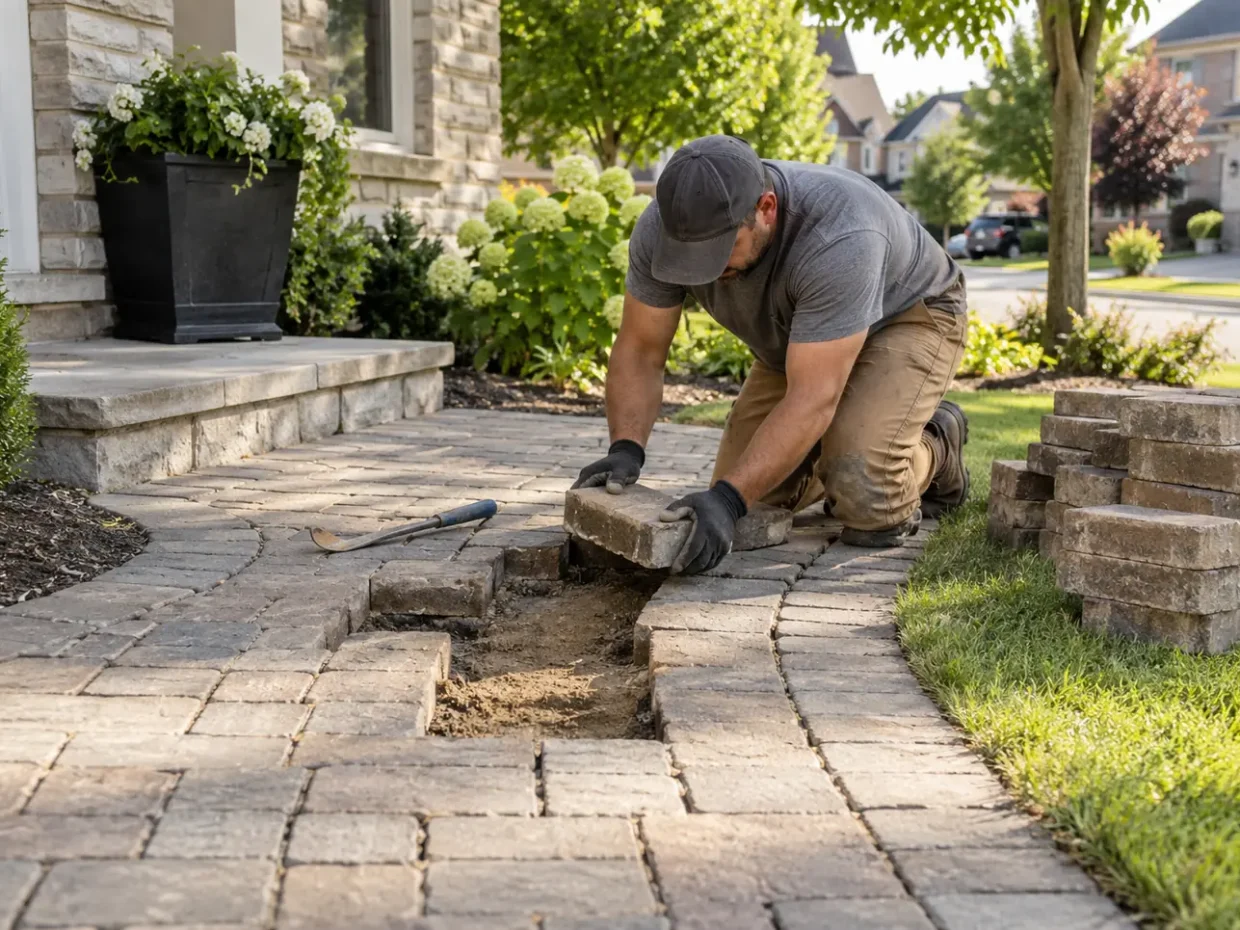
A sunken paver is a symptom, not a diagnosis. Interlock repair and relevelling in Milton should start by finding why the surface moved: water washing through a base, poorly compacted disturbed ground, an unsupported edge, utility excavation, tree roots or loads the area was never designed to carry. Resetting the top course without addressing the cause may produce the same dip again. Localized repair can be a sensible choice when most of the driveway, patio or walkway remains sound. The goal is to restore a usable level and stable transitions while preserving existing pavers where practical.
Diagnose the movement
Map the pattern of movement. A broad dip, one displaced edge and a ridge beside a tree point toward different underlying conditions. Photograph the surface after rain and in winter if pooling or icing is part of the complaint. Note downspouts, irrigation lines, driveway tire paths, the garage threshold, basement entrances and any recent underground service work. Lifted roots may affect surrounding soil, while a settled trench may follow a clear straight line. Check whether the pavers themselves are intact and whether enough matching units are available. A repair can look technically sound but visually patchy if weathered material cannot be matched.
Choose a proportionate repair
The appropriate scope depends on what is found below. A small trip area might be lifted, the bedding and support corrected, then the same units relaid. A moving border may require the edge restraint and adjacent base to be rebuilt. Widespread settlement or poor drainage can justify reconstruction of a larger field rather than repeatedly treating individual spots. The finished grade must reconnect to doors, walks, drains and lawn without creating a new low point. If tree roots cause movement, protect the tree and assess whether a changed route or material is wiser than cutting roots. A repair should explain what is reused, replaced and restored.
Restore support and slope
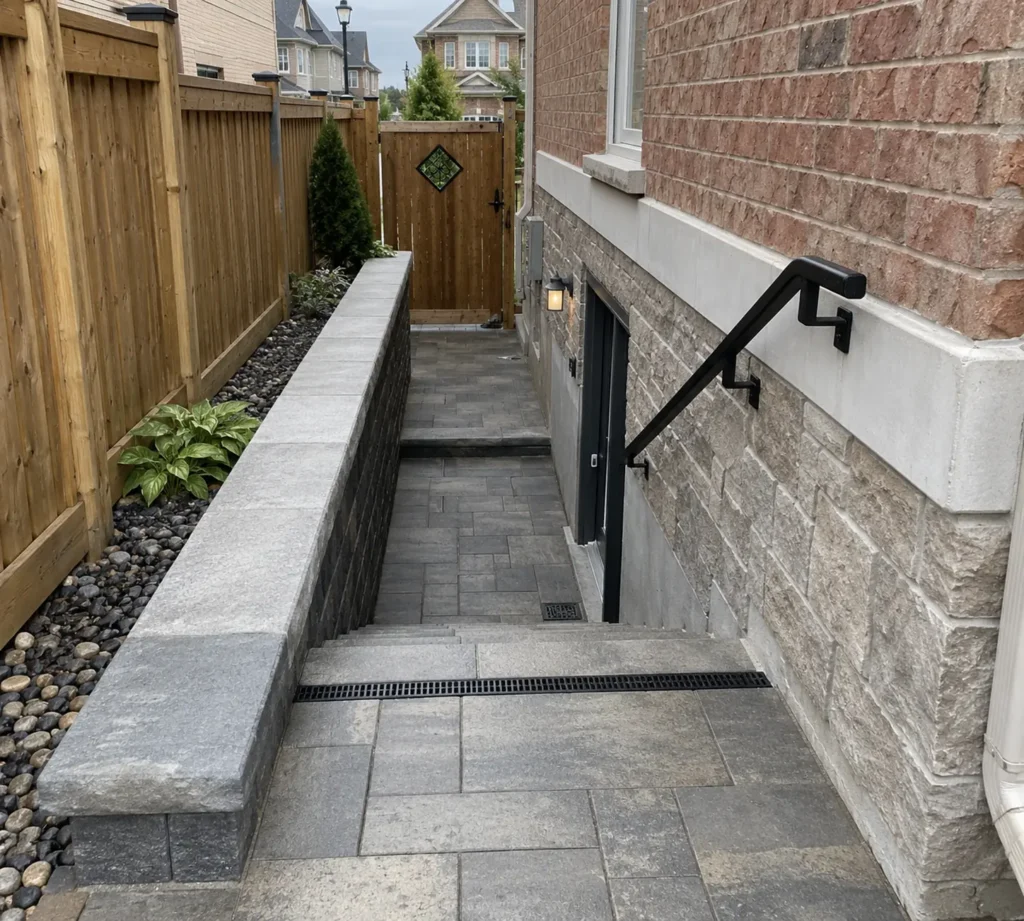
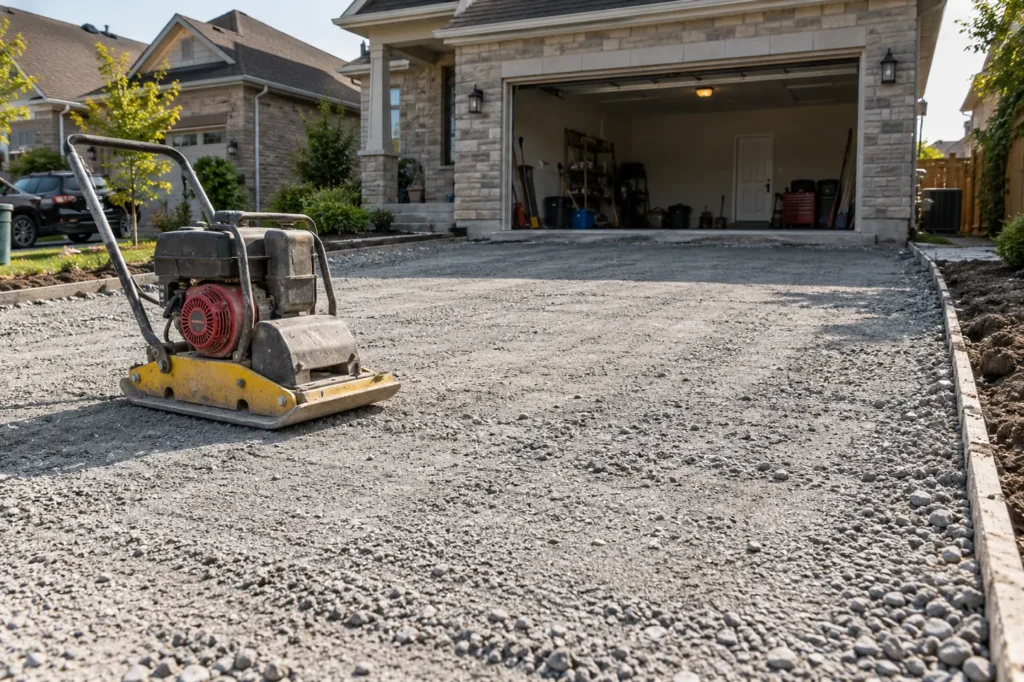
Lift the affected pavers carefully when reuse is feasible, inspect the bedding and base, and correct damaged or inadequately supported areas. Base material must be placed and compacted to suit the original use—especially a vehicle driveway. Re-establish the intended slope and stable edges before relaying and jointing. Investigate water entering from a downspout, adjacent grade or failed drain rather than simply adding more bedding. Arrange utility locates before deeper excavation, particularly where a settled service trench is suspected. Changes to grade or drainage can raise property-specific planning questions. The repair should leave utility covers accessible and not direct runoff onto neighbouring land.
Blend function with the older field
A corrected area should feel continuous underfoot and look deliberate within the older field. Pavers naturally weather, so colour differences in replacement material should be discussed. Turning some retained units can sometimes change the appearance; the priority remains a sound, even surface. A front-walk repair should resolve trip points at the porch and driveway, while patio repairs should keep furniture stable and water moving away from the house. If the surface was consistently too small, repair may be an opportunity to plan a proper extension, subject to the same base and municipal considerations as new work. Do not mistake a cosmetic reset for a full solution when multiple failures are visible.
Watch for renewed settlement
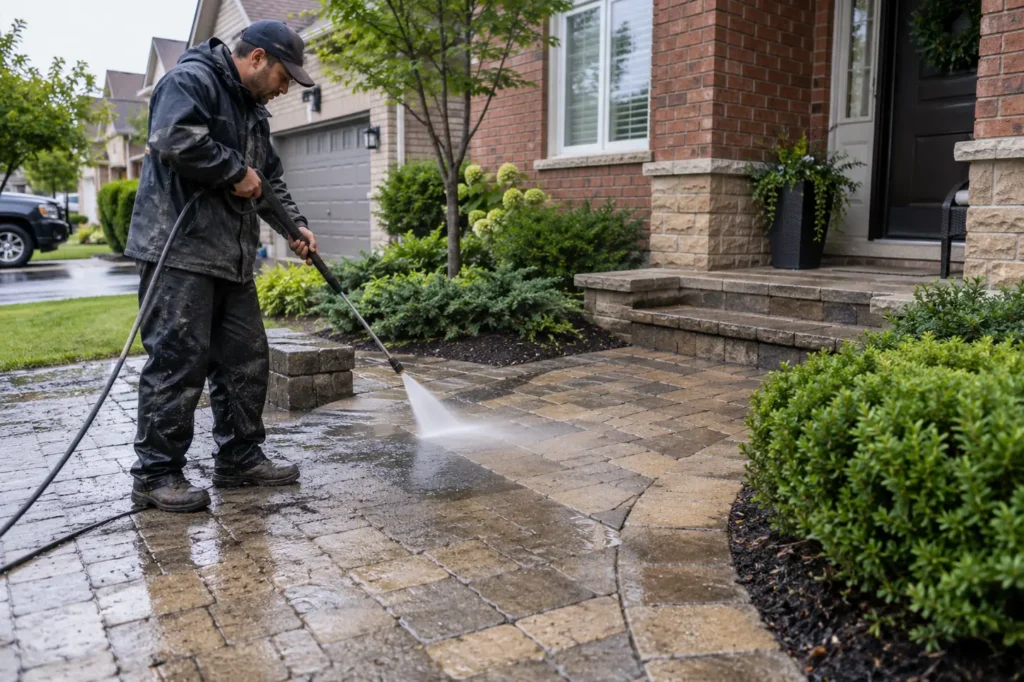
After repair, monitor the area through rain and seasonal temperature changes. Keep joints and edges in good condition, redirect improper roof-water discharge and note any renewed settlement. If a tree continues to enlarge against a rigid edge, the long-term design may need more clearance. Cleaning and optional sealing do not strengthen a defective base. The owner should understand what was discovered, what was corrected and whether another portion of the pavement is likely to need work. That practical record makes future maintenance more informed.
Decisions that shape interlock repair & relevelling
The cause of movement
Check water, base, load, roots, utility trenches and unsupported edges. Resetting without diagnosis can repeat the same failure.
Extent of repair
Distinguish a localized defect from a failing field. A larger rebuild can be more sensible when movement occurs in many connected areas.
Paver reuse
Inspect existing units for damage and availability. Reuse can preserve character, but replacement colours and weathering may differ.
Corrected grade
Restore drainage and transitions at garage, door, step or lawn; making one dip level must not create a new pond elsewhere.
Vehicle loading
Driveway repairs require support and edge details appropriate for cars, not the lighter approach used for a garden path.
Future access
Keep utility covers accessible and plan for any upcoming work that might reopen the surface.
Compare interlock repair & relevelling proposals
The repair estimate should identify the affected area, the likely cause, what will be opened for inspection and how the scope may change if deeper failure is found. A small reset and a reconstructed base are not the same service. Discuss the condition and availability of retained pavers, the expected visual match and the reinstatement of jointing and borders. If adjacent lawn or planting is disturbed, restoration belongs in the plan.
An inspection should compare the repair with the remaining surface. A low point by a garage may indicate the whole drive has an incorrect slope; fixing a small patch to match the old field may preserve the drainage flaw. A patio edge that has spread may need a new restraint extending beyond the one visible gap. Service-trench settlement may continue if the disturbed ground was not compacted properly. Root-related movement may call for a less rigid route instead of repeated resets.
Ask about future use before choosing the repair detail. If vehicles now park on an area built as a pedestrian path, support must reflect that load or the use must change. The aim is not merely a flat opening-day surface; it is a repair whose cause, limits and expected maintenance are understood.
Photographs over time can help establish whether a dip is stable or spreading, especially when a utility trench or tree may be involved. Note the first season the change appeared and how water behaves there. This information will not replace inspection beneath the units, but it can direct attention to the likely source and help define a sensible repair area.
Describe whether the problem occurred slowly or after a particular excavation or winter; that history can focus the inspection.
Questions about interlock repair & relevelling
Can the same pavers be reused?
Often intact units can be lifted and relaid, depending on condition and the repair scope. Damaged or missing units may require replacements that differ in colour.
Why did my pavers sink near a downspout?
Concentrated water may contribute to soil or base movement, but inspection is needed to confirm the cause and find a suitable discharge route.
Will sealing fix a low spot?
No. Sealer affects the surface appearance and maintenance; it does not correct support, grade or drainage beneath the pavers.
When is a full rebuild preferable?
When settlement, base failure or drainage defects are widespread, a series of isolated resets may be less durable than reconstructing the affected field.
Related property work
Interlocking, Cleaning & Sealing, Landscape Drainage, Interlock Driveways, Retaining Walls.
Discuss your interlock repair & relevelling project
Photograph the affected field from several angles and after rain if possible. Note when the dip or edge movement appeared, previous utility excavation, nearby trees and whether vehicles use the area. The proposed repair can then focus on the likely cause and affected extent.