
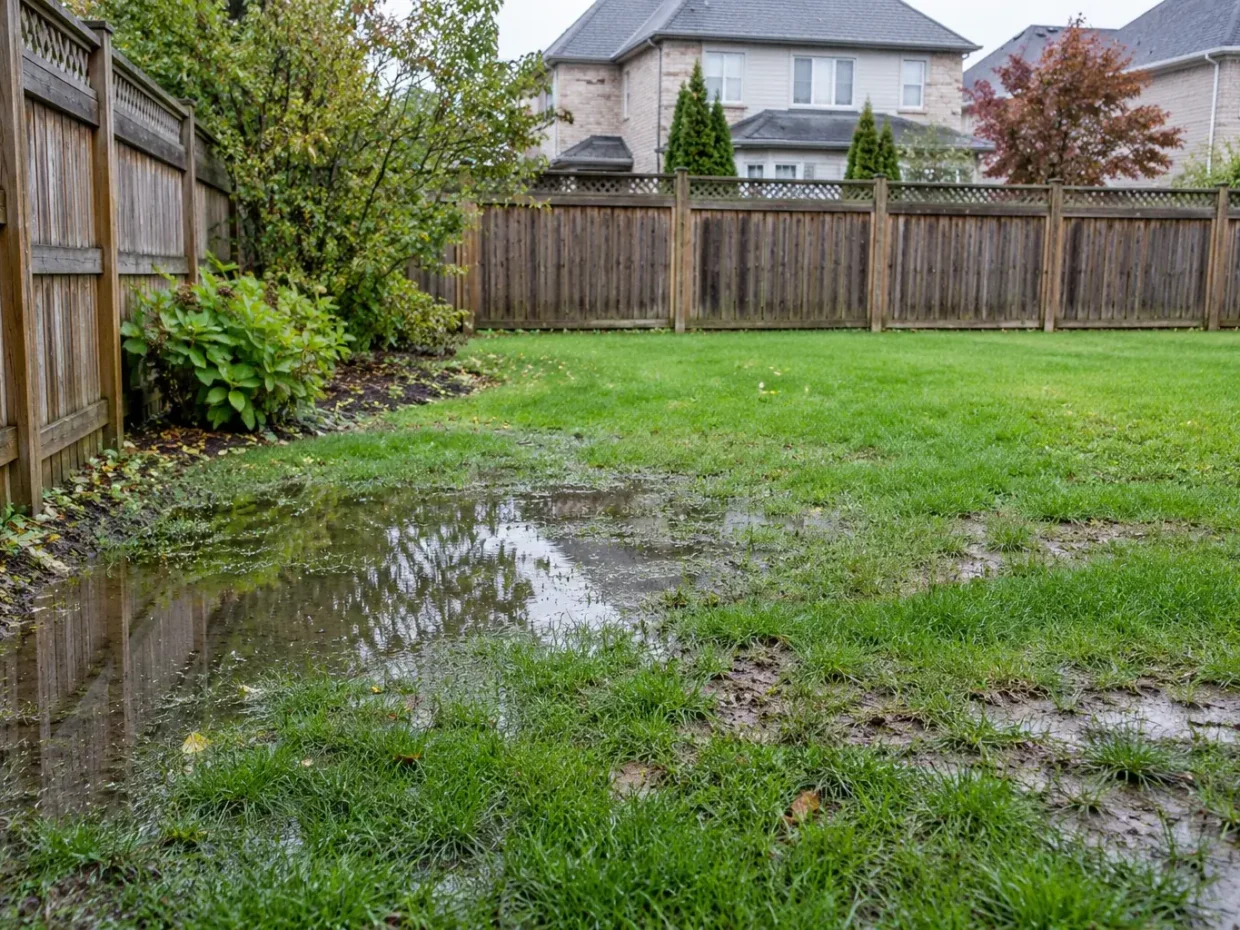
Standing water and soggy grass are symptoms with several possible causes. A wet Milton backyard may receive roof runoff, collect flow from higher ground, have compacted soil, contain a low pocket or lack an appropriate outlet. The amount of time water remains after rain matters. A lawn briefly soft during a major storm is a different problem from a patch that stays saturated for days and cannot be mowed. Wet-yard drainage work begins with observation and a plan for where water should travel, not an automatic prescription for a French drain. Sod, gravel or artificial turf placed over the same unresolved condition will not make the water disappear.
Observe when the yard stays wet
Take photographs during rain, just after it stops and when the surrounding lawn has dried. Note the size of the ponded area, whether it expands from a downspout, and whether water flows across the property or rises from beneath. Check existing grades, swales, patio edges, retaining walls, shed pads, soil texture and construction traffic history. A side-yard trench that settled after utility work can create a line of low ground. A new fence edge or garden bed may have blocked the route water once used. Existing tree roots, shade and compacted soil affect drying and how well turf grows, even when no deep pond remains. A survey or original grading information can help, but current site conditions should guide the assessment.
Find the source and exit route
Possible responses include regrading a localized depression, restoring a swale, managing roof-water discharge, changing a patio edge, improving the soil or providing a suitable collection and outlet system. The choice depends on where water comes from, available fall and a legitimate destination. A French drain or subsurface line can have a role for certain conditions, but it cannot be the universal answer to every wet lawn. Surface water is often best understood and managed at the surface. Where the yard is nearly level or surrounded by higher ground, a more specialized drainage plan may be needed. A redesign of lawn, planting or circulation can also avoid repeatedly fighting a small area that is poorly suited to grass.
Choose a site-specific response
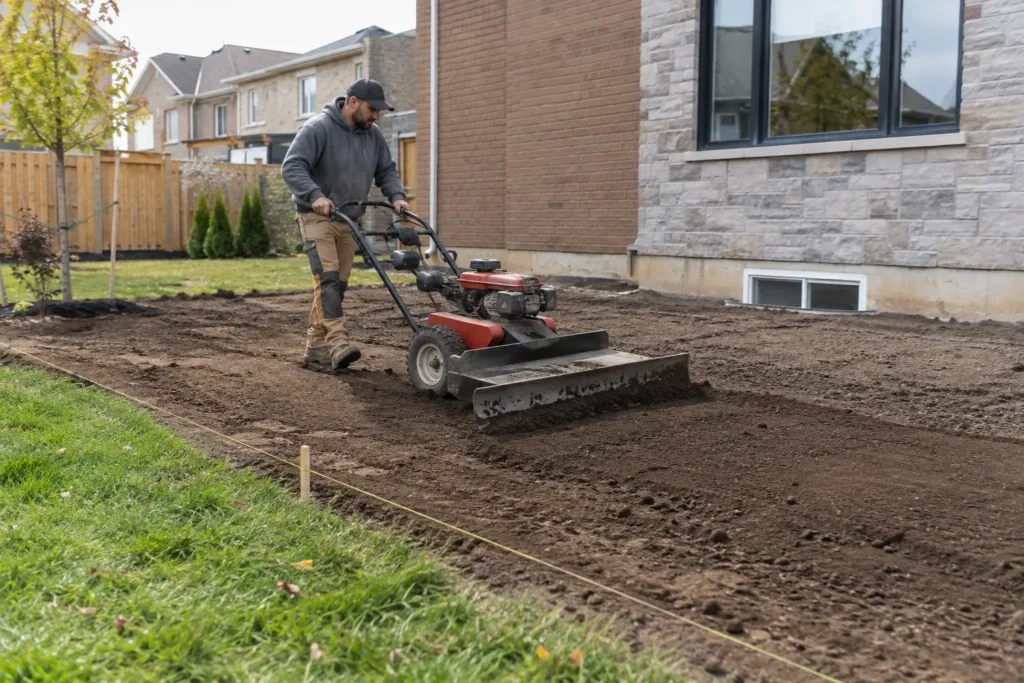
Construction should preserve the whole-property drainage pattern. Regrading one low spot can move water to another if the route beyond it is not planned. A drain must be set at a useful elevation and connected to an appropriate outlet with maintenance access. Check whether nearby hardscape, fences, foundations or neighbouring grades limit the options. Utility locates precede excavation. Changes in site grade or discharge may require property-specific review under current Milton rules; do not assume either that all lawn repairs require a permit or that drainage changes are automatically exempt. The final soil and sod restoration should follow a resolved grade, not be laid as a cosmetic cover before the system is tested.
Restore a usable lawn or garden
A wet area affects how the whole yard functions. Children and pets track mud from a soggy play lawn; a mower leaves ruts; a patio may drain toward a puddle that attracts traffic across it. A carefully graded lawn should connect with patios and paths without an abrupt ridge. Planting can be chosen for site conditions, but a planting bed should not be used to hide uncontrolled runoff. If water approaches a basement entrance or foundation, the relationship to building protection deserves separate attention. Lighting and safe circulation may be important where a low area interrupts the only side passage. The goal is a usable property, not merely the absence of a visible puddle in one photograph.
Watch performance after storms
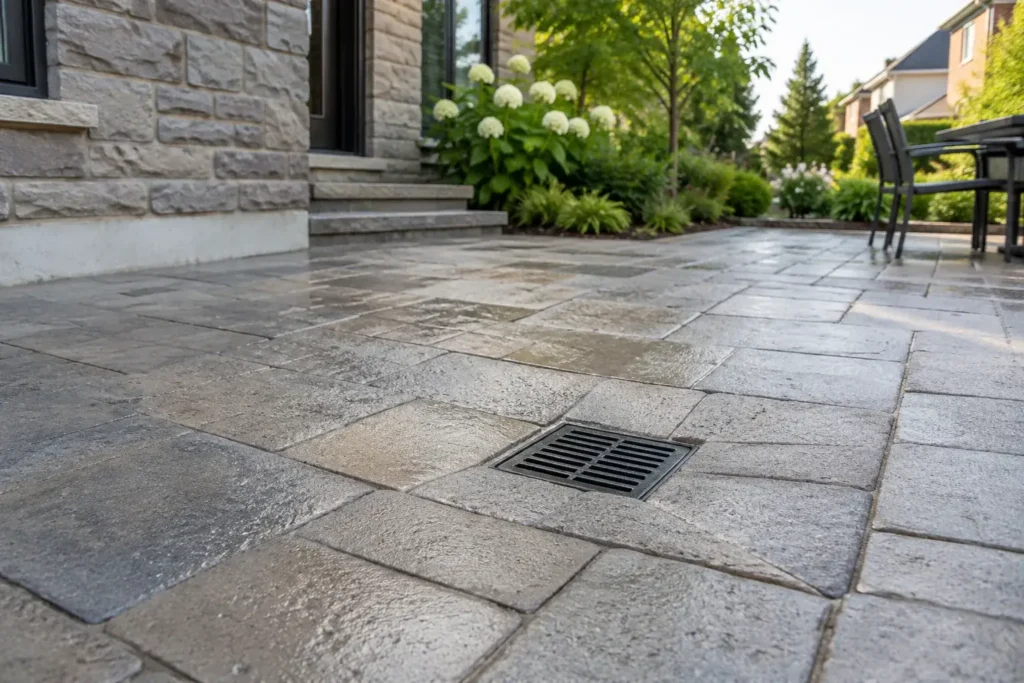
After work, observe performance across more than one rain. Different storm intensity and antecedent moisture can reveal whether a low point was resolved and whether the outlet remains clear. Keep grates, swales and discharge ends free of leaves, mulch and snow. New sod requires watering through establishment, which should be balanced against the already-wet condition. If the lawn remains thin after water management improves, compacted soil or deep shade may be a separate problem requiring aeration, soil renovation or an alternative planting plan. Record the intended flow path so a future patio, shed or fence project does not obstruct it.
Decisions that shape lawn drainage & wet yard solutions
Duration of wetness
Document how long the yard stays soft after typical rain, not just the deepest pond during a storm.
Water source
Separate roof discharge, overland flow, low grade, soil compaction and possible underground sources before choosing work.
Outlet feasibility
Determine where water can leave appropriately and whether enough grade exists for the chosen system.
Swales and neighbours
Preserve drainage paths and avoid solving one lawn by shifting runoff to an adjoining property.
Lawn restoration
Prepare soil and final levels after drainage work; fresh sod does not itself correct saturation.
Use of the area
Consider traffic, mowing, pets and access so the final condition is practical as well as drier.
Define the lawn drainage & wet yard solutions project
A quote should describe what was observed, what is believed to cause the wetness, the proposed grade or drainage changes, the destination of collected water and how the disturbed yard will be restored. If excavation may reveal unsuitable soil, define how that uncertainty will be handled. A plan that lists a drain by length without showing an outlet does not explain whether the yard will improve. The owner should be able to trace the proposed water route from source to destination on a simple drawing.
Compare lawn drainage & wet yard solutions proposals
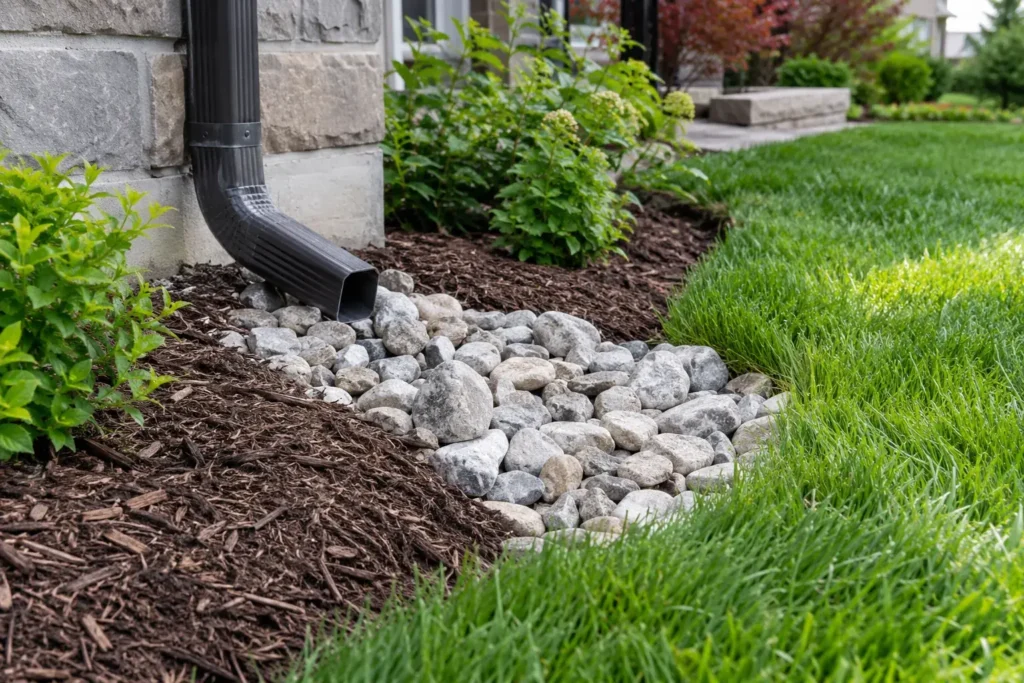
A useful site record can distinguish temporary surface runoff from a persistent ground condition. Note whether water first appears at a downspout, the base of a fence, a patio edge or the lowest lawn pocket. Record whether it remains for hours or days, and whether the same spot is wet during dry weather. That pattern can change the investigation. It also gives a way to judge the finished work after construction without expecting the property to be completely dry during every storm.
An apparently simple raised bed or walkway can make the problem worse if it becomes a barrier to flow. Before adding hardscape, mark the existing surface route across the yard and identify the proposed destination. Where a low area is filled, the displaced water still needs a route. If no appropriate outlet is apparent, further technical planning is preferable to placing a drain whose pipe ends in another saturated corner. The final plan should restore usable lawn levels and consider how a mower and family traffic move across the repaired zone.
Questions about lawn drainage & wet yard solutions
Why does my yard stay wet after my neighbour's dries?
Soil, grade, runoff, shade and drainage outlet conditions can differ even between adjacent lots. Observation and site levels help find the particular cause.
Should I install a French drain?
It may be appropriate in a specific design, but first identify the water source, available slope and outlet. It is not a default solution for every soggy lawn.
Will replacing sod solve pooling?
No. Address grade and water movement first, then prepare soil and install sod where turf can establish.
Does every grading repair require a permit?
Requirements depend on the extent and effect of the work. Current Town rules should be reviewed for the actual property and drainage change.
Related property work
Landscape Drainage, Yard Grading, Downspout Drainage, Sod Installation, Milton Grading Guide.
Discuss your lawn drainage & wet yard solutions project
Show the whole yard and the wet area immediately after rain and again once other ground has dried. Describe how long water remains, recent grade or patio changes, downspouts and any known outlet. A survey or grading plan is helpful when available.