
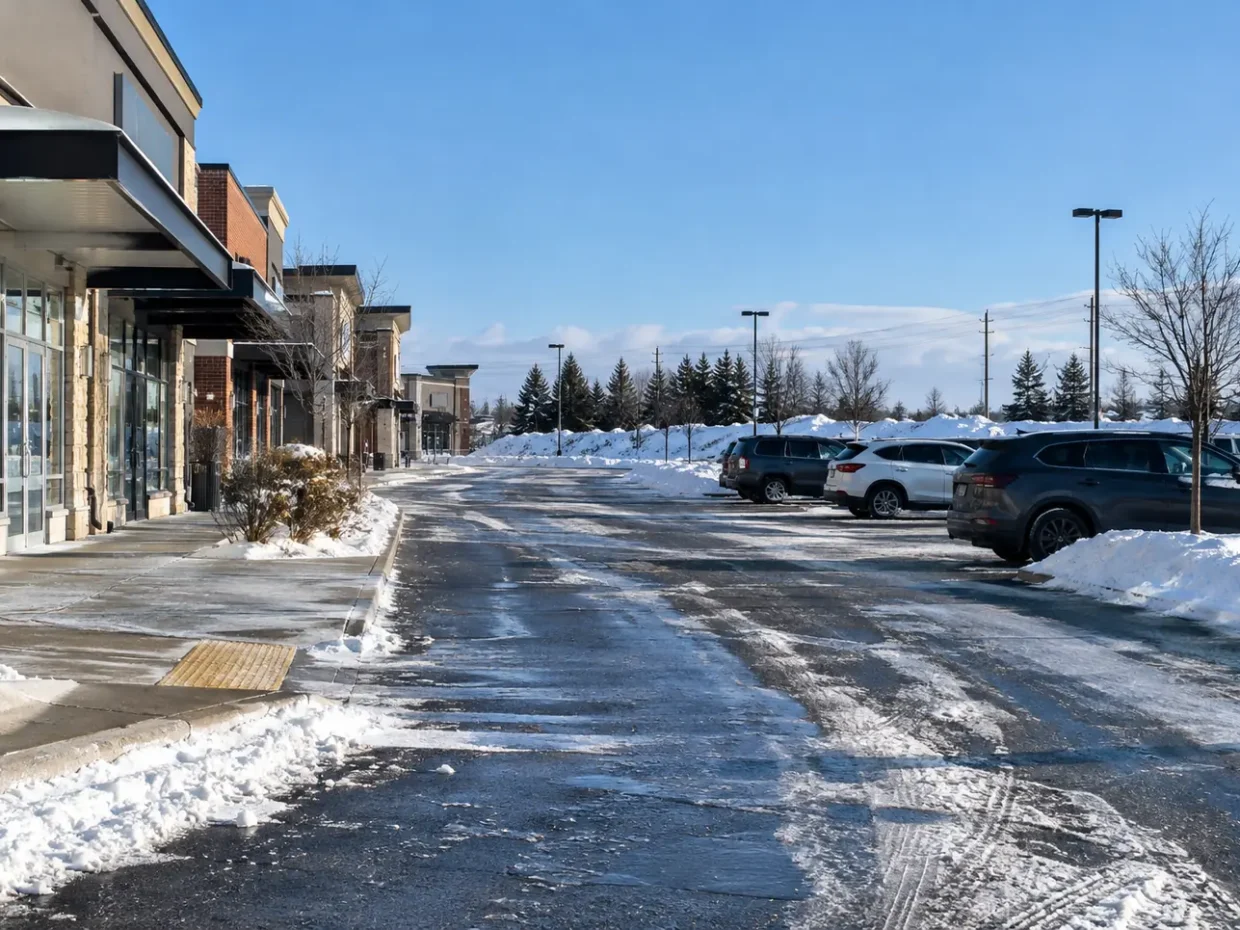
Managing several properties through winter requires site-specific instructions within a consistent communication process. A condominium drive, plaza entrance and industrial loading area cannot share one undifferentiated snow plan.
What to examine for snow removal for property managers
Inventory every site
Map entrances, lots, sidewalks, loading, accessible routes and drains separately for each address.
A usable portfolio plan avoids relying on memory during a storm.
Set priorities
Identify essential access and the order in which areas should be addressed under the agreed scope.
Tenant and visitor needs may differ across buildings.
Choose storage
Mark snow placement while preserving sightlines, pedestrian access and meltwater routes.
Available storage can shrink after repeated storms.
Coordinate ice treatment
Describe where salting or other agreed treatment is needed and how freeze-thaw changes are handled.
Ice management requires its own instructions rather than an assumption that plowing covers it.
Plan communications
Establish contacts for site-specific access issues and changes in occupancy or construction.
A blocked lot section or new curb should be reported promptly.
Account for property transitions
Tenant moves, renovations and changes to parking affect routes during the season.
Site plans should be revised when the property changes.
Review landscape impacts
Note salt-sensitive beds, damaged lawn edges and drainage trouble for spring planning.
Winter operations influence the cost and scope of later grounds care.
Clarify contract terms
Triggers, monitoring, records and timing should be set by the actual arrangement.
Avoid reading a generic website page as a guarantee of particular storm response or surface condition.
A portfolio manager may receive simultaneous calls from a plaza, rental property and condominium during one event. A site-by-site priority map and agreed contact path make the scope intelligible. Document new obstacles, access restrictions and changes to snow storage as the season progresses; the winter plan is a living site record.
Make each address legible before a storm
A portfolio may contain a condominium drive, retail plaza and rental property with very different priorities. Map the pedestrian entrance, accessible route, parking, loading, drains and snow storage at each address. Include gates, curbs, landscape islands and obstacles that will be hidden by snow. A single generic instruction for all sites can miss the one route each property depends on.
Set priorities with the manager
Identify which entrances, walks and vehicle routes serve essential access and how competing needs are handled under the agreed scope. A resident entrance may have different timing and communication needs from an industrial loading area. Do not invent a universal storm trigger or response guarantee from a general service description. The actual contract should document priorities, access and expectations for each property.
Plan snow storage over a season
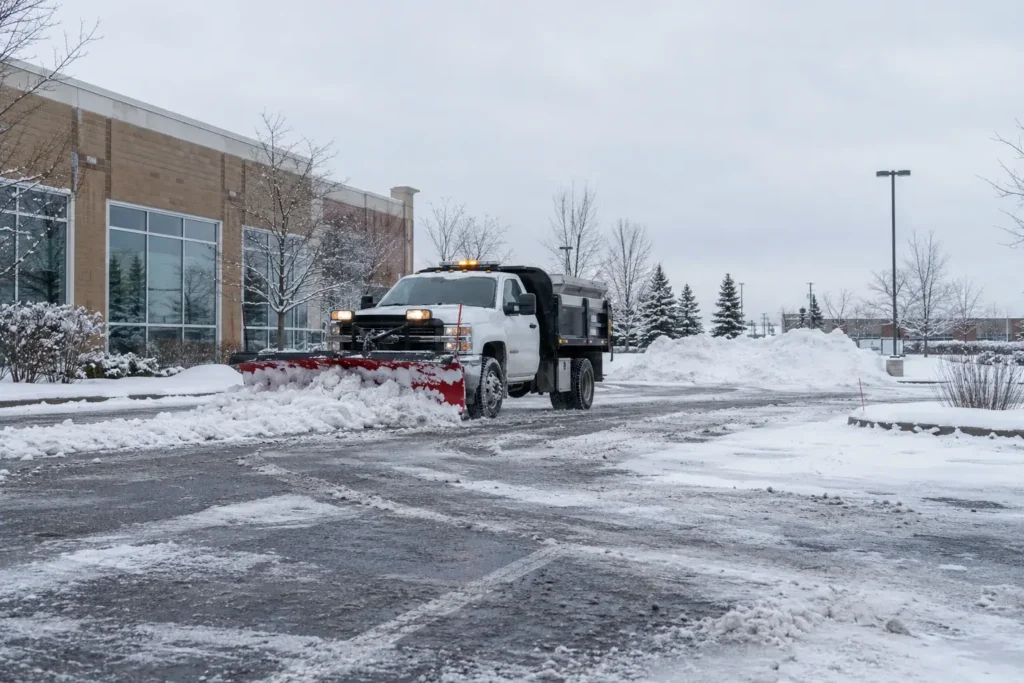
A pile that fits after one event may occupy parking, cover a sign or send meltwater across a walkway after several storms. Mark preferred and alternate locations with drainage and sightlines in mind. Avoid valuable planting, hydrants and service doors. Revisit the map when occupancy or construction changes. Snow storage is a finite part of the property, not a blank corner on a drawing.
Coordinate ice decisions
Salting and ice management require named surfaces, materials and monitoring terms where those services are included. Shaded routes, downspout discharge and thawing piles can create repeat ice. Keep records of those patterns so a summer landscape or drainage improvement can address the source. Treatment reduces risk but cannot guarantee a surface will never become slick.
Organize communication across sites
Establish a contact for access issues, tenant changes, emergency information and approval of extra work. A property manager may need one portfolio summary while occupants need address-specific answers. Document site conditions and changes where the arrangement calls for it. A blocked parking row or newly installed landscape island should be reported promptly, not discovered under a plow route.
Protect grounds during winter
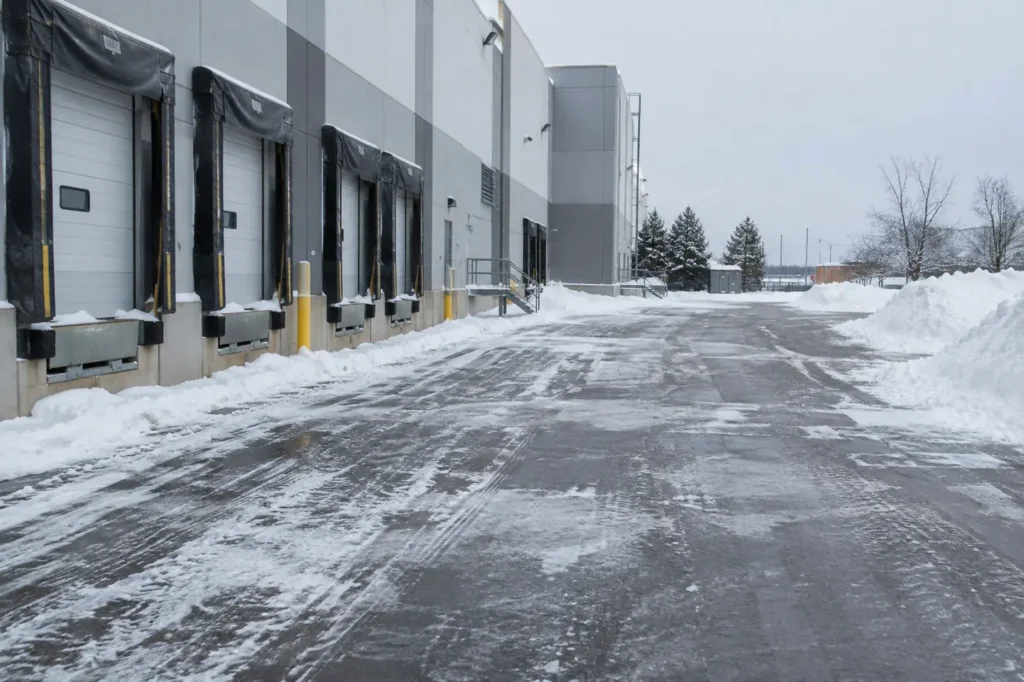
Curbs, pavers, lawn edges and shrubs can be vulnerable when concealed by snow. Preseason markers and site photographs can help identify them. Salt and piles affect beds and turf, so spring assessment should compare winter impact against the original site condition. This can guide repair, replanting or a change to the storage plan the next season.
Separate seasonal scopes
Recurring summer maintenance, one-time landscape improvements, plowing and salting are distinct commitments. They should share site information but have clear service boundaries. A manager should know whether an ice treatment, pile relocation, sidewalk clearing or record is included in the winter arrangement. A broad phrase such as “full property care” does not replace a site map and written terms.
Prepare a portfolio handoff
Provide address maps, known drainage or ice locations, service priorities, snow storage, occupancy hours, contacts and a process for updating changes. Ask which photos or records will be useful to your management team. A disciplined handoff makes a winter plan practical across multiple properties while acknowledging that each site remains different.

Review after storms and after winter
Compare the planned pile positions and routes with what happened when lots were occupied and snow accumulated. Note where visibility was reduced, meltwater crossed an entrance or a landscape edge was damaged. Update site maps before the next season. A spring walk can identify turf, curb, paver and planting repairs, distinguishing ordinary wear from a recurring layout problem.
Questions for a multi-site agreement
Which address and zones are included? How are priorities, plowing, sidewalk work and ice treatment defined? What are the triggers and communication expectations? How will inaccessible areas be recorded? What happens if storage fills or a new obstacle appears? The answers should be agreed explicitly; none should be assumed from the phrase snow removal.
A portfolio map should still preserve property-specific detail. Even two similar plazas can differ in drainage, occupancy and pile space. Clear records and contacts make later adjustments possible without pretending that one configuration fits every site.
Think through a full winter, not one storm
Storage fills, parking use changes and landscape edges disappear under repeated snow. A manager should know where an alternate pile could go and when a site plan needs revision. Meltwater from larger piles may cross routes that were dry early in the season. Take photographs and note those changes. They can help revise both current priorities and the following winter’s layout.
What belongs in the handoff after winter?
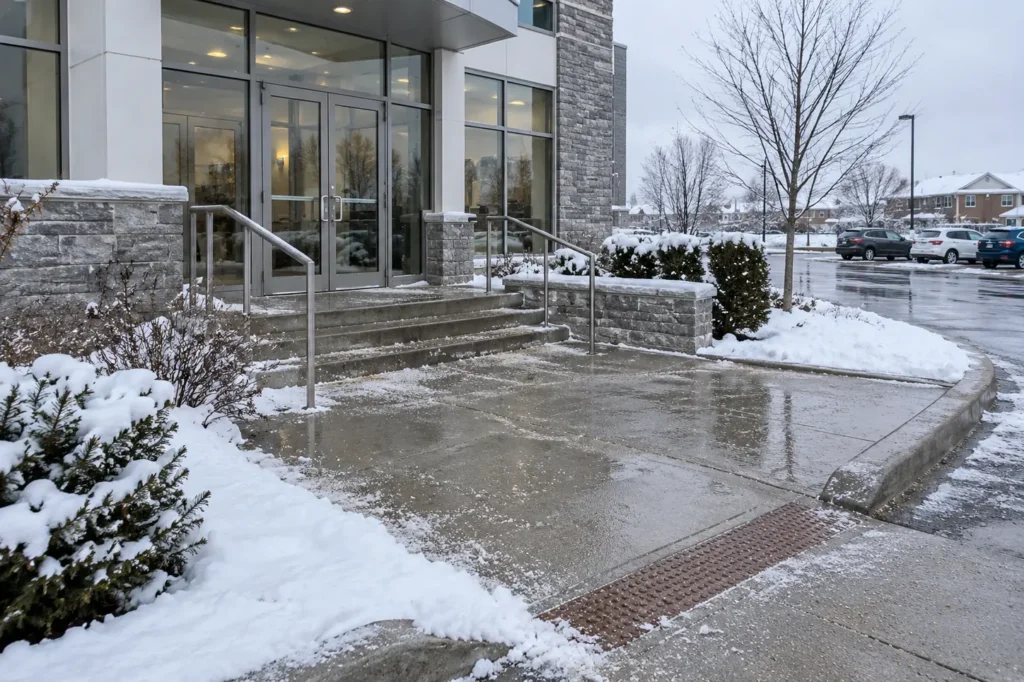
Inspect damaged curbs, pavers, lawn and planting and identify recurrent ice locations. Separate repairs caused by an isolated event from redesign that would prevent a repeat problem. The warm-weather landscape team can use the winter map to understand salt exposure and storage constraints. The manager can then budget grounds improvement and future snow service with one coherent site record.
Each property still needs its own priorities even when a single management office oversees the portfolio.
At a condominium or multi-residential site, pedestrian paths may include routes to mail, waste, transit or visitor parking as well as the front door. Map those destinations explicitly. On a retail property, delivery and customer routes can compete. A property manager’s site knowledge helps prioritize what a generic lot outline would miss.
Record who approves changes during a storm if the original pile location becomes unusable. That small decision path can prevent an improvised placement that blocks a drain, sign or accessible route.
Discuss snow removal for property managers for your Milton property
Provide each property address, winter map, storage areas and contacts. Discuss multi-site snow service with separate priorities for the people and vehicles using each site.