
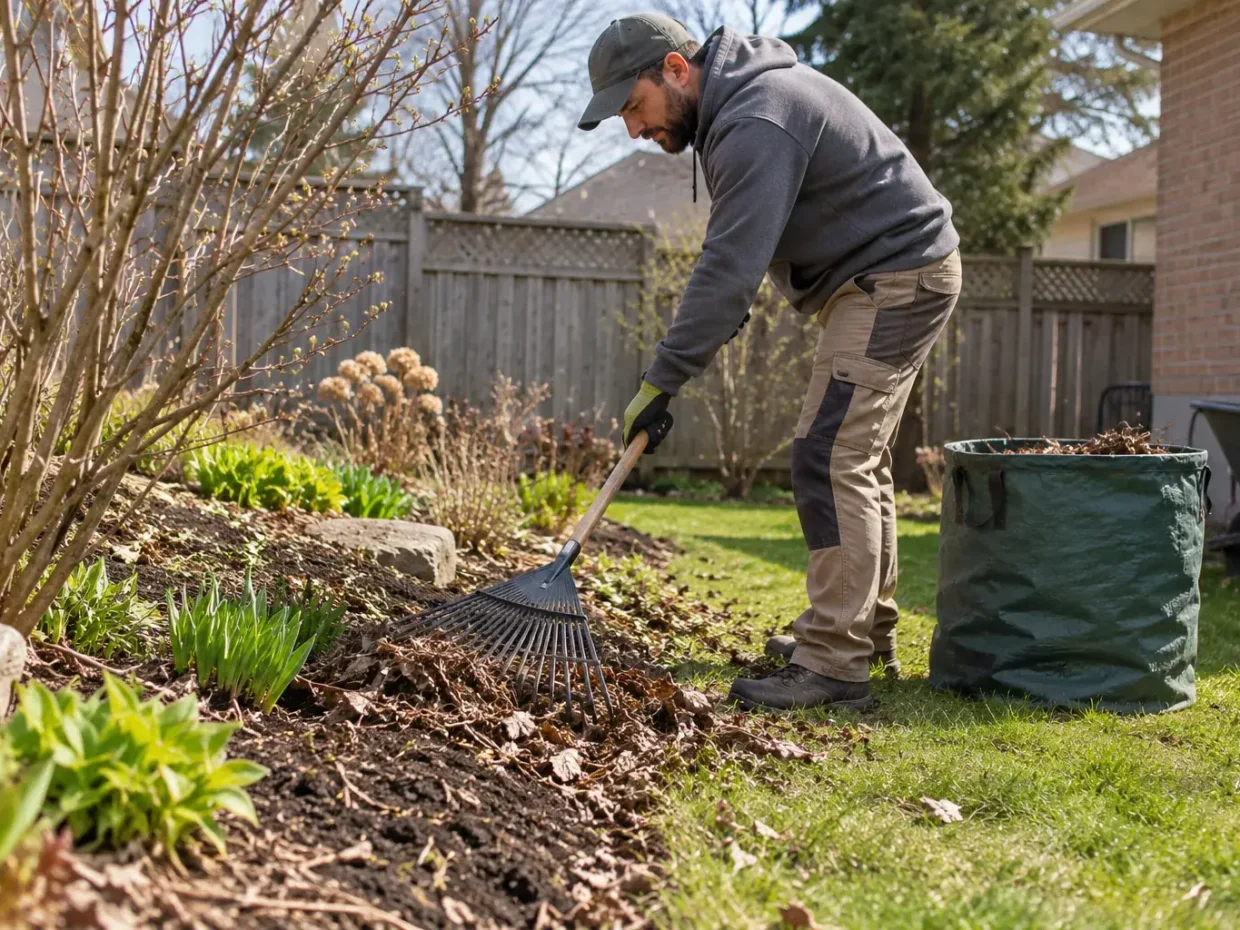
The first visit to a yard after winter is a chance to see more than leaves. Meltwater, displaced edging, winter debris and plant damage can reveal what needs repair before the growing season begins.
What to examine for spring cleanup
Inspect before clearing
Walk paths, lawn, beds and drainage outlets while debris still shows where winter material accumulated.
Record any pooling or movement before the evidence is raked away.
Remove debris carefully
Gather leaves, litter and fallen branches without damaging emerging plants.
Dense material left on turf can hide thin areas and slow an even spring recovery.
Assess lawn condition
Look for compaction, bare patches, salt exposure and low spots.
A cleanup can inform aeration, overseeding or sod planning, but those are separate improvement decisions.
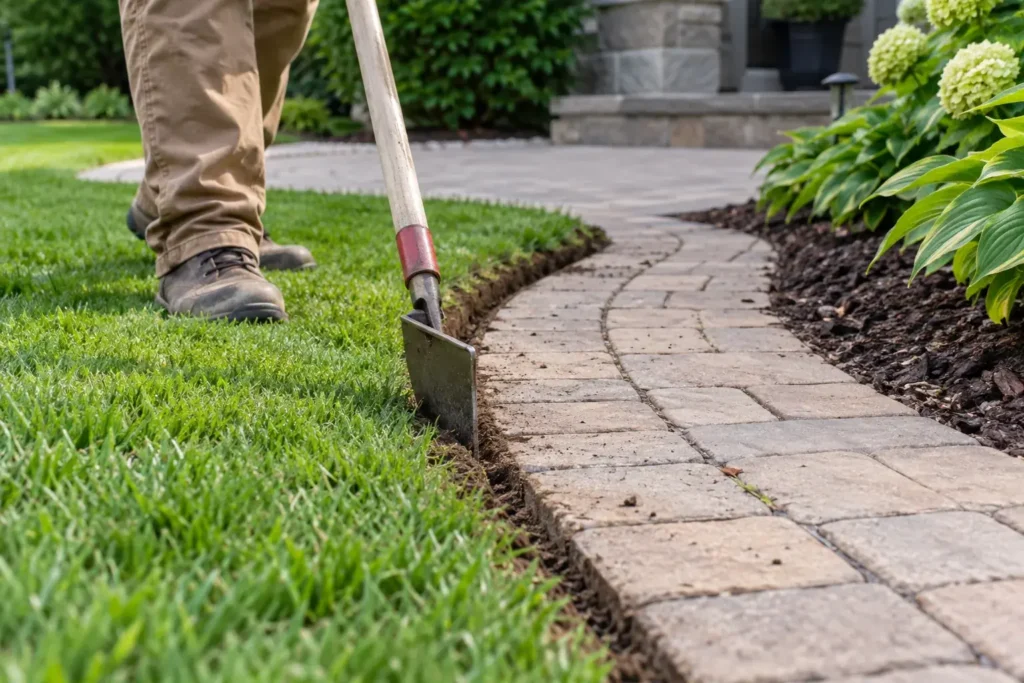
Refresh bed edges
Re-establish the shape of beds and prevent grass from creeping into planting.
A clean line makes the property look orderly and helps later mulching stay contained.
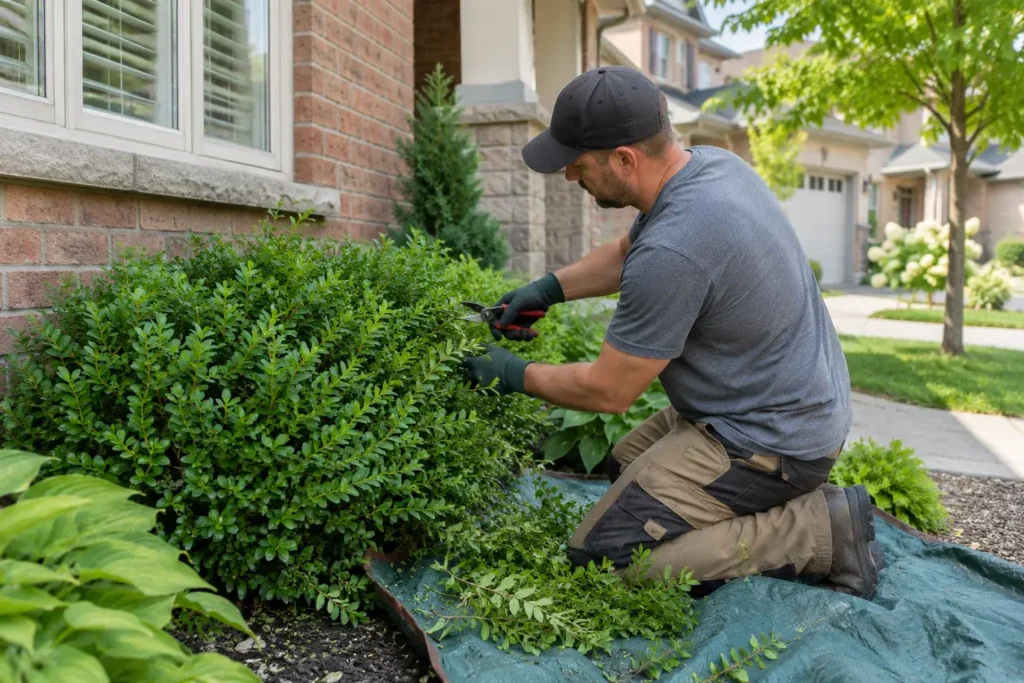
Evaluate pruning
Identify dead or damaged wood and consider the timing suited to each plant.
Indiscriminate hard pruning can remove buds or distort a young hedge.
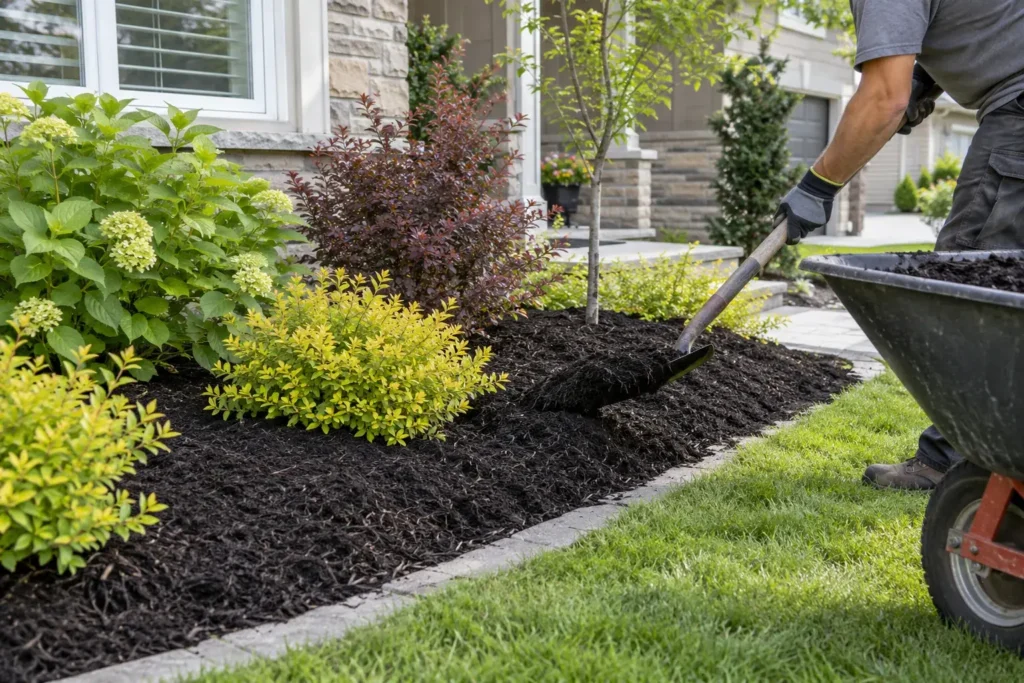
Prepare mulch areas
Remove excessive old debris and check soil moisture before adding material.
Mulch should serve the planting and edge detail rather than bury trunks or cover a drainage issue.
Check paved areas
Notice winter heave, washed joints, surface stains and blocked catch points.
These observations can be scheduled for repair before heavy summer use.
Plan the next work
Prioritize immediate cleanup, lawn recovery and any construction separately.
Installing new plants before a major patio or grading project can expose them to unnecessary disruption.
Early spring soil can be soft. Carrying heavy equipment across saturated turf may create ruts that require later repair. Choose the sequence according to ground conditions: clear accessible hard surfaces, inspect beds and return to delicate lawn work when appropriate. This is more useful than treating the first warm day as an automatic full reset.
Wait for workable ground conditions
One warm day does not mean the lawn can handle repeated equipment traffic. Soil may remain soft after thaw and rain, and crossing it too early can create ruts or compaction. Inspect hard surfaces and accessible beds first if the turf is saturated. Schedule more delicate lawn work when the surface can tolerate it. This protects the property from damage caused by the cleanup itself.
Read what winter left behind
Before sweeping everything away, note where gravel, leaves or eroded soil collected. Those deposits can point to meltwater routes or a downspout problem. Check paver edges for heave or settlement, garden borders for movement and trees for broken branches. Photographs preserve the evidence for a later repair discussion after the visible debris is gone.

Clear paths, drains and access
Remove litter and branches from entrance routes and check visible drainage points. A blocked outlet can allow spring rainfall to stand where lawn and beds are trying to recover. Keep gates usable for later mulch, soil or patio work. Debris should be handled without sweeping it into a swale or neighbouring property. On a commercial or shared property, access priorities may change the sequence of the visit.
Care for turf without assuming renovation
Rake or remove heavy material where appropriate, then assess coverage and soil condition. A thin area under shade, a salt-affected strip and a low wet patch call for different responses. Aeration, overseeding or sod may be considered separately once the cause and timing are understood. The cleanup itself improves visibility and appearance; it does not promise full lawn recovery.
Give beds a considered reset
Identify emerging plants before clearing. Remove unwanted weeds and winter debris while avoiding damage to new growth. Re-establish bed edges where grass has encroached and evaluate mulch before topping it up. An excessive layer can obscure soil and trunks. Check whether a raised edge has trapped water or moved against paving, then correct the condition rather than simply hiding it under fresh material.
Prune selectively
Dead or broken wood may be evident, but the right timing for broader pruning depends on the species and its flowering habit. A uniform spring haircut can remove buds or reduce a young shrub unnecessarily. Look for branches obstructing paths and gates, then distinguish urgent clearance from shaping that should occur later. If a tree presents a larger structural concern, seek appropriate specialist assessment.
Prepare the next phase
After cleanup, the owner can see where the lawn needs repair, which beds need planting and whether an interlock section has settled. Prioritize underlying grade or drainage issues ahead of sod and decorative mulch. If a backyard renovation is planned, keep the material access route free and delay planting that heavy work would disturb. A spring visit can be an inventory for the year, not just a one-day cosmetic reset.
Useful information before the visit
Tell us about gates, water problems, fragile new plants, known buried features and the areas to prioritize. Photos from thaw can reveal conditions no longer visible by the appointment. Specify whether the request is debris cleanup only or includes lawn and bed improvements so those can be discussed as distinct scopes.
Do not cover a problem too early
Fresh mulch can make a bed look ready for the season, but it can also hide soggy soil, a buried outlet or a shifting edge. New sod can conceal a lawn depression for a short time without changing runoff. Inspect and record these conditions before a cosmetic finish. If a repair is needed, it may be more efficient to do it before purchasing plants and soil.
What if a landscape renovation is planned?
Use the cleanup to clear access and map the existing conditions. Heavy patio or fence work may use the side yard for materials. Delay delicate planting on that route and decide which beds can be retained. Mark any irrigation heads or lighting cables that could be disturbed. The property can be made safe and orderly for spring while the larger construction scope is designed.
A useful cleanup request specifies the debris, lawn and garden areas, access and desired level of pruning. Photographs of winter accumulation help estimate the work, while a separate list of improvements keeps a simple cleanup from becoming an undefined renovation.
Watch salt and snow effects
Front-yard planting and lawn beside a driveway may show winter stress or debris deposited with plowed snow. Inspect the edge before replacing plants. If the same bed suffers every year, review snow placement, salt exposure and species rather than repeating the same installation. Hardscape borders may also be shifted or chipped. A cleanup can document these conditions for a separate improvement plan.
Use a sensible order for mulch and planting
Clear the bed and identify plants, address edging and water issues, then decide whether soil or mulch work is needed. New material should not be piled onto a saturated bed merely for quick colour. If a tree or shrub needs replacement, consider mature space and watering access before digging. Leave room for later patio or fence work that would otherwise disturb the refreshed bed.
The final walk-through should identify what was cleaned and what still needs a repair decision.
For a large yard, describe where debris is concentrated rather than estimating scope by lot size alone. A small area under several mature trees can produce more handling than an open lawn. Note whether there is a compost or disposal preference and whether branches are ordinary loose debris or part of a larger tree-care concern.
Discuss spring cleanup for your Milton property
Show winter debris, lawn condition and the beds you want refreshed. Request spring cleanup while identifying any drainage or repair questions that need a separate scope.