

Recurring commercial care is an operating plan for a site, not merely a mowing visit. A property may include customer entrances, loading edges, lawn, ornamental planting and drainage points that deserve different attention.
What to examine for commercial property maintenance
Inventory the property
Mark lawn sections, beds, hedges, entrances, debris areas and difficult access.
A clear site map supports a comparable service scope.
Set appearance priorities
Customer-facing doors may need a different presentation standard from a service yard.
Define the distinction so effort follows real property use.
Care for lawn
Mowing, trimming and edge work keep routes and turf orderly.
Report thin, wet or damaged spots that routine cutting cannot repair.
Maintain beds and shrubs
Weeding, pruning, mulching and plant observation should match species and seasonal growth.
Oversized shrubs can block signs or sightlines if mature size is ignored.
Watch drainage
Keep visible outlets and flow paths in view while noting pooling or erosion.
A maintenance program can identify a problem but may require a separate improvement scope to resolve it.
Plan seasonal cleanup
Spring debris, summer growth and fall leaves each affect the site differently.
Schedule details around actual occupancy, public access and weather.
Clarify reporting
Agree on how repairs or unexpected conditions are identified and authorized.
A documented process is useful when several managers or tenants interact with the property.
Distinguish winter service
Snow removal and salting have separate priorities and terms.
Landscape maintenance planning should still consider salt exposure and snow storage for later plant care.
A maintenance specification is strongest when it identifies the precise limits of lawn, beds and pruning, then names how unexpected repair work is handled. An eroded bed or settled walkway should not disappear inside a vague recurring line item. It needs a separate decision, even though a regular site visit may be how the issue is noticed.
Define the site by zone
A retail entrance, service yard, parking edge and lawn around an office can need different frequencies and presentation standards. Map each zone and identify who uses it. Customer-facing beds may need more frequent litter checks; a drainage strip may need monitoring rather than ornamental planting. A clear inventory lets a manager compare maintenance proposals for the same ground rather than a vague description of an entire address.
Separate routine care from repair
Mowing, trimming, edging and garden weeding can be recurring tasks. A settled walk, failing retaining edge or persistent wet area needs investigation and often a separately approved improvement scope. The regular visit can identify and report it, but repeating the same cosmetic treatment may waste money. Establish how photographs and repair recommendations reach the decision maker.
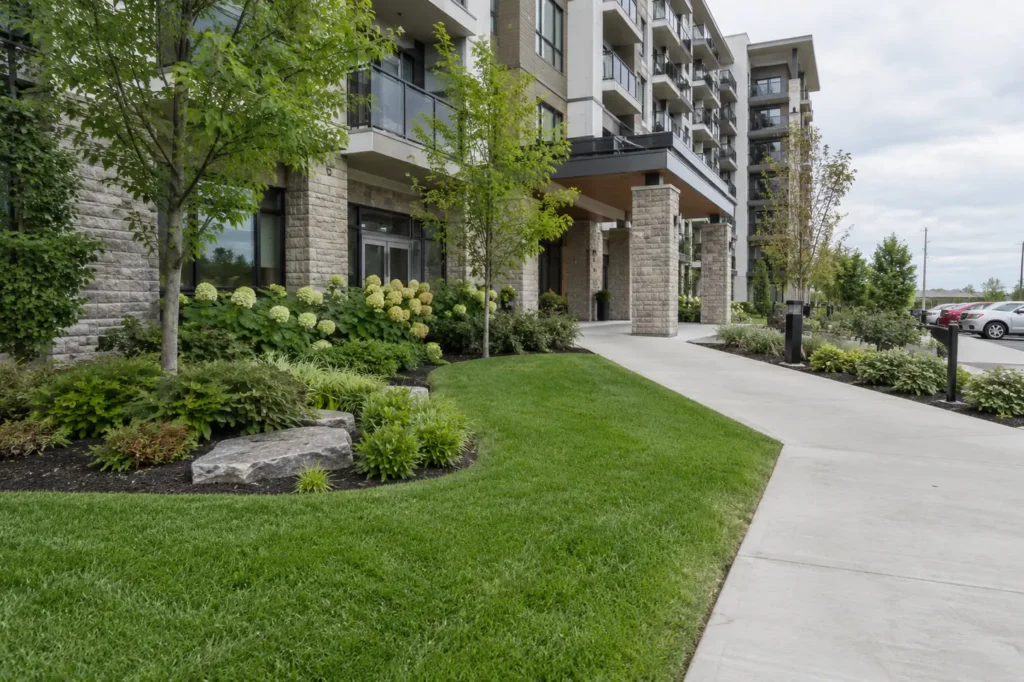
Plan for occupancy
Commercial grounds remain in use during maintenance. Check business hours, deliveries, tenant entrances and any sensitive access route. Debris handling and equipment movement should not unnecessarily block the site. A property manager may need advance coordination for work near a busy doorway or parking section. The schedule should fit actual use, not just lawn growth.
Maintain planting for sightlines
Shrubs can obscure signs, windows and paths as they mature. Pruning should balance clearance and plant health rather than repeatedly cutting everything to one height. Choose replacement plants for sun, salt exposure and mature dimensions if a bed repeatedly fails. Mulch and decorative stone need contained edges and upkeep; they do not remove the need to inspect soil and weeds.
Watch water and hardscape
A blocked catch point, downspout splash area or settling paver may affect entrance appearance and access. Note where rain collects and whether snow piles add meltwater later. Surface cleaning can improve presentation, but it cannot correct an unsound base or grade. Coordinating the landscape and drainage observations helps the owner prioritize capital work.
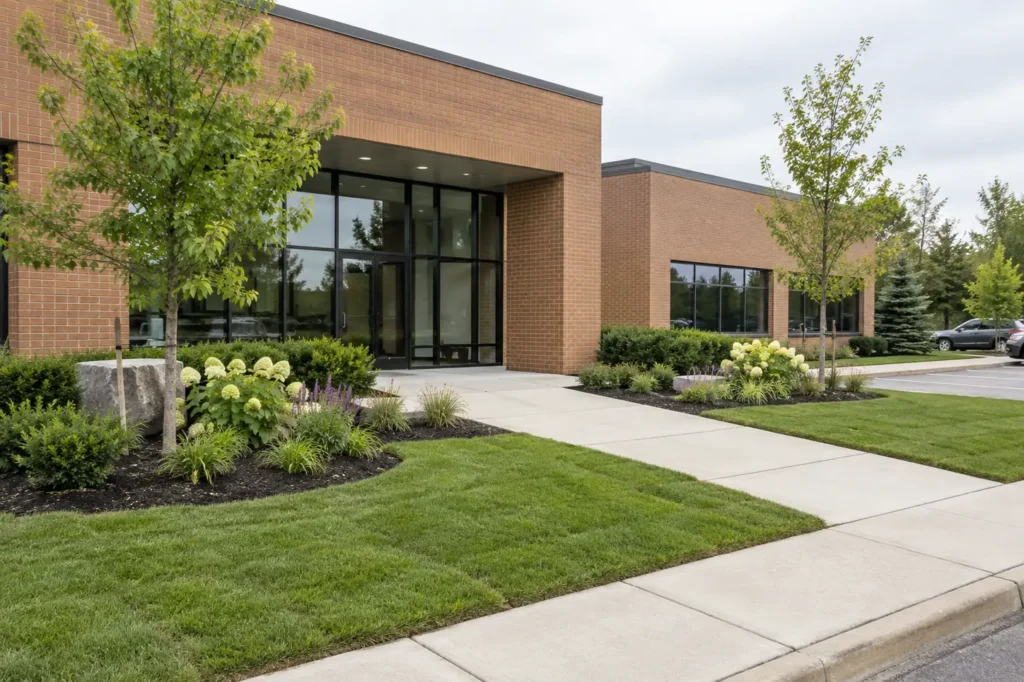
Organize seasonal tasks
Spring can involve debris, salt damage and lawn recovery. Summer brings mowing and growth control. Fall leaf accumulation can obstruct paths and drains. Winter snow removal and ice treatment should have their own defined terms, but their storage and salt effects need to be considered when maintaining beds and turf. A yearly plan can identify what should be inspected at each transition.
Document the service agreement
List addresses, zones, included tasks, visit expectations, access windows, debris disposal and reporting channels. Distinguish one-time improvements, irrigation work or specialist tree care if those are outside the routine scope. Do not assume a generic website description implies a particular frequency or performance promise. The useful agreement is one tailored to the property’s needs and occupants.
Review the grounds over time
Photograph recurring trouble spots from consistent viewpoints. If a bed fails in the same place or turf stays thin after repeated care, review soil, shade, traffic, runoff and salt exposure. A maintenance program should help reveal those causes. It can then support an informed choice between changing the care routine and investing in a landscape improvement.
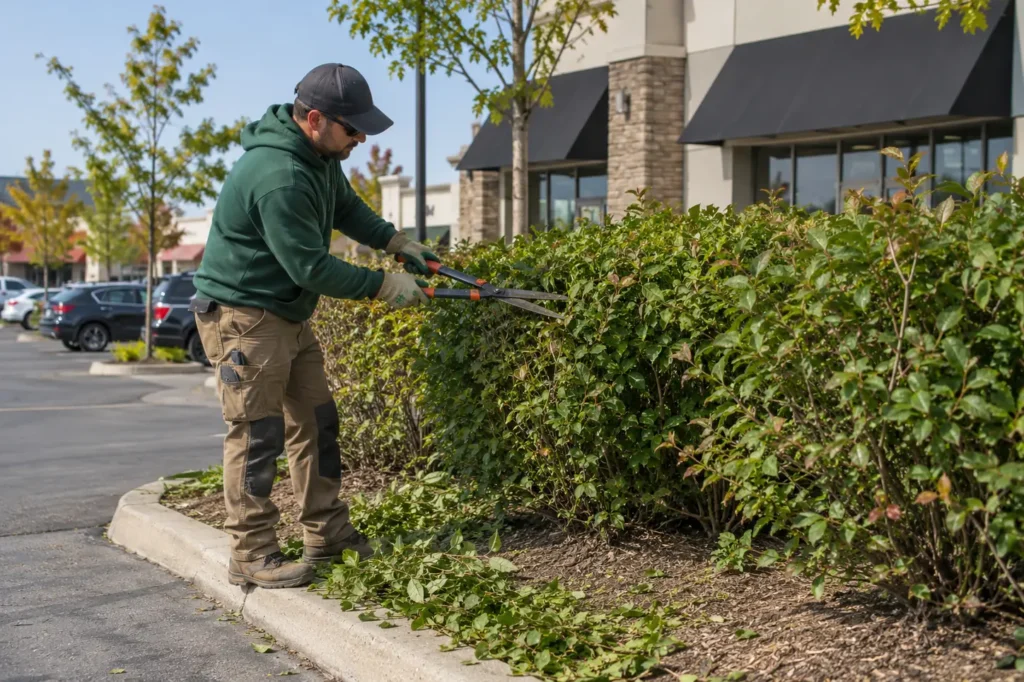
Compare recurring service proposals
Check the site boundaries, included beds and lawn, trimming, pruning, litter, seasonal cleanup, disposal and reporting expectations. A low total can omit a difficult rear strip or a high-visibility entrance. Define how a manager approves additional repairs. Visits should reflect growth and occupancy needs, while any promised frequency or outcome must come from the actual agreement rather than a general description online.
What if several buildings share a contract?
Create an address-level schedule and map for each. One location may have a plaza frontage with constant foot traffic; another may contain larger turf and few beds. Common reporting helps management, but a single uniform treatment can underserve both. Record site changes such as a new tenant entrance or revised snow pile location and update the maintenance map.
Before pricing, provide maps, photos, access windows and known trouble spots. Identify areas requiring one-time improvement. A maintenance contractor can then discuss recurring care separately from corrective construction and avoid burying a capital project in a mowing line item.
Keep budgets tied to specific outcomes
A manager may want a clean public entrance, a consistent lawn appearance and fewer repeat repair requests. Define which maintenance tasks serve each outcome and how they are observed. Repeatedly replacing plants in a salt-exposed bed is not a sound recurring strategy if site conditions remain unchanged. A separately budgeted improvement may lower future care effort.
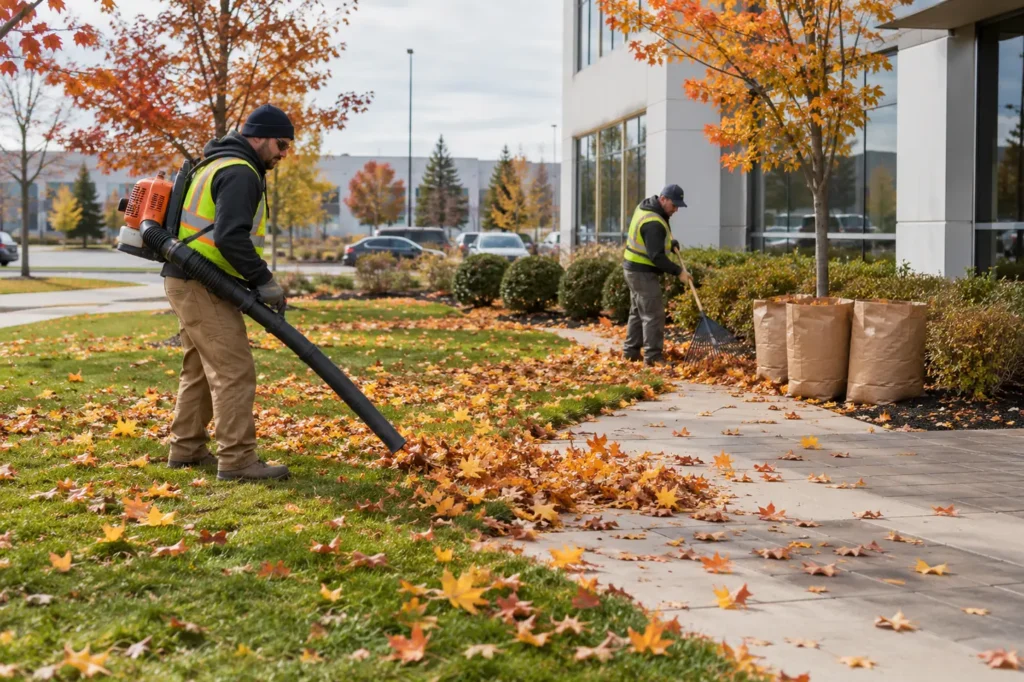
Plan handoff when management changes
Retain maps of included areas, plant or irrigation information if available, known wet spots, recent repairs and winter storage zones. New staff can then understand why a bed receives a certain care routine or why an entrance needs special attention. A service record supports continuity without claiming that every site has been rebuilt or inspected below grade.
Review the map after tenant or construction changes; a new path or parking island can alter the maintenance boundary.
Walk the site from a visitor’s point of view, then from the maintenance access. An entrance bed can look attractive from a car while hiding litter behind a wall or blocking a worker’s route. Confirm that the proposed routine includes the areas that actually affect appearance and safe access, and that any unserviceable design is flagged for improvement.
Where irrigation exists, note heads that overspray pavement and any controller schedule contributing to soggy turf. Adjustments or repair may be a separate scope, but documenting the pattern can prevent repeated plant loss and water use.
Discuss commercial property maintenance for your Milton property
Provide a site map with lawn, beds, public entrances and access windows. Discuss commercial care so routine tasks, reporting and corrective improvements can be defined.