
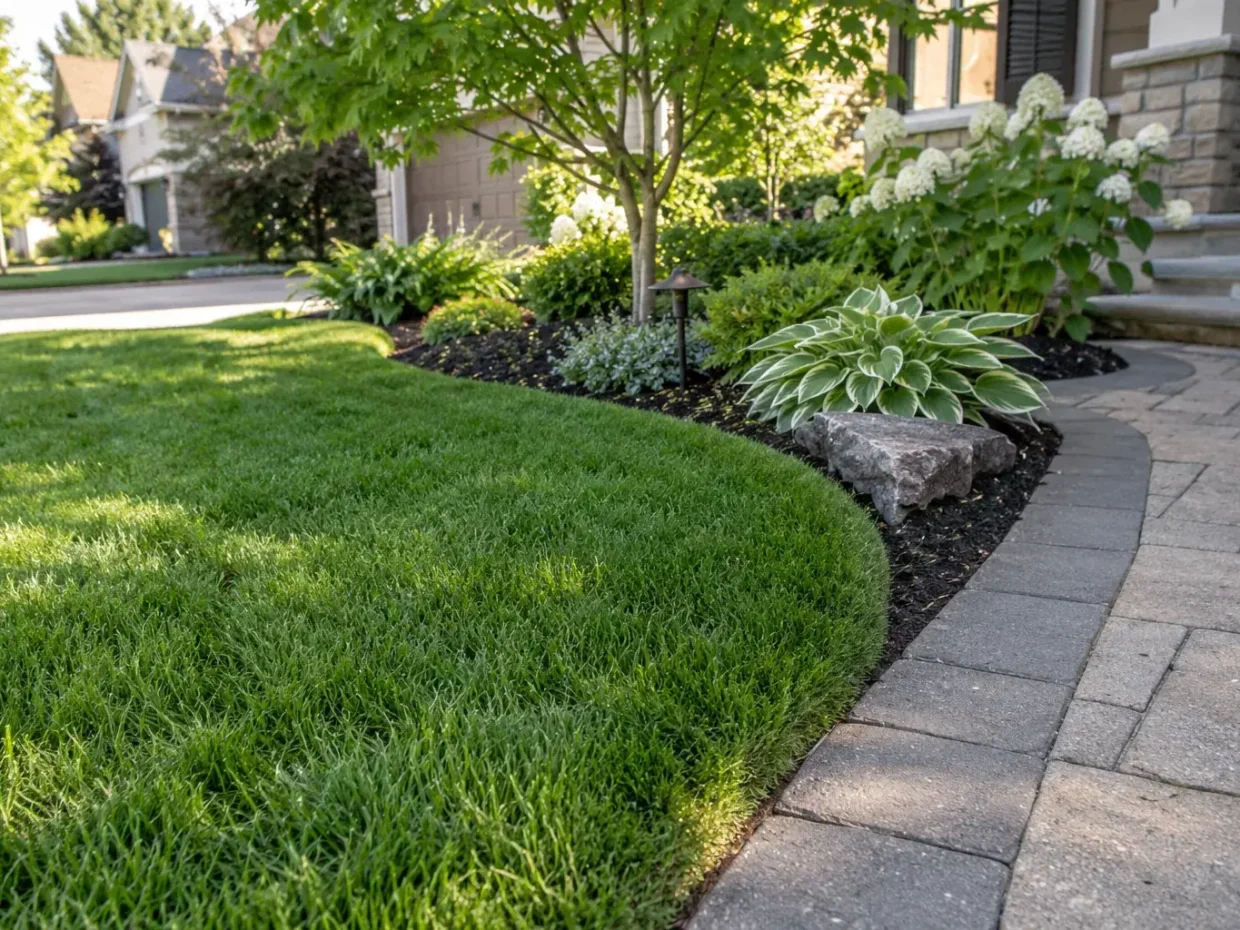
A healthy lawn and a useful garden begin with the ground beneath them. Before choosing sod, seed, artificial turf or a planting palette, consider grade, soil, light, water and how people use the yard. A new finish may create an immediate visual change; lasting usefulness depends on those conditions.
What is the property asking for?
A family lawn, narrow side yard, shaded garden and front entrance bed do not need the same surface. Mark routes people take, where water remains after rain and where existing plants thrive or struggle. A compact Milton yard may have little space to waste on unusable turf strips. An established lot may have mature tree roots and shade. These are conditions to observe on the specific property, not assumptions about a neighbourhood.
Think about maintenance capacity early. A smaller, well-located lawn can be easier to care for than grass squeezed around several awkward paving edges. A garden with plants suited to mature size may need less corrective pruning than one planted densely for an immediate effect. Reduced-maintenance choices still need some care; no living or constructed surface is maintenance-free.
Prepare the grade and soil before a lawn finish
Low spots, concentrated roof runoff, compacted soil and raised hardscape edges can all undermine turf. Photograph pooling after rain and trace water to its source and outlet. Yard grading may be part of a restoration if the final levels are wrong, but any fill or drainage change should be screened against current Milton requirements for the actual scope. Sod laid over a wet area is a finish over a problem, not a drainage solution.
Soil preparation should respond to what will grow and how the site has been disturbed. Construction traffic can compact a yard. An old patio may conceal unsuitable fill. A lawn restoration proposal should explain removal, final grade, soil, installation and establishment care rather than list turf area alone.
Sod installation: a new living surface
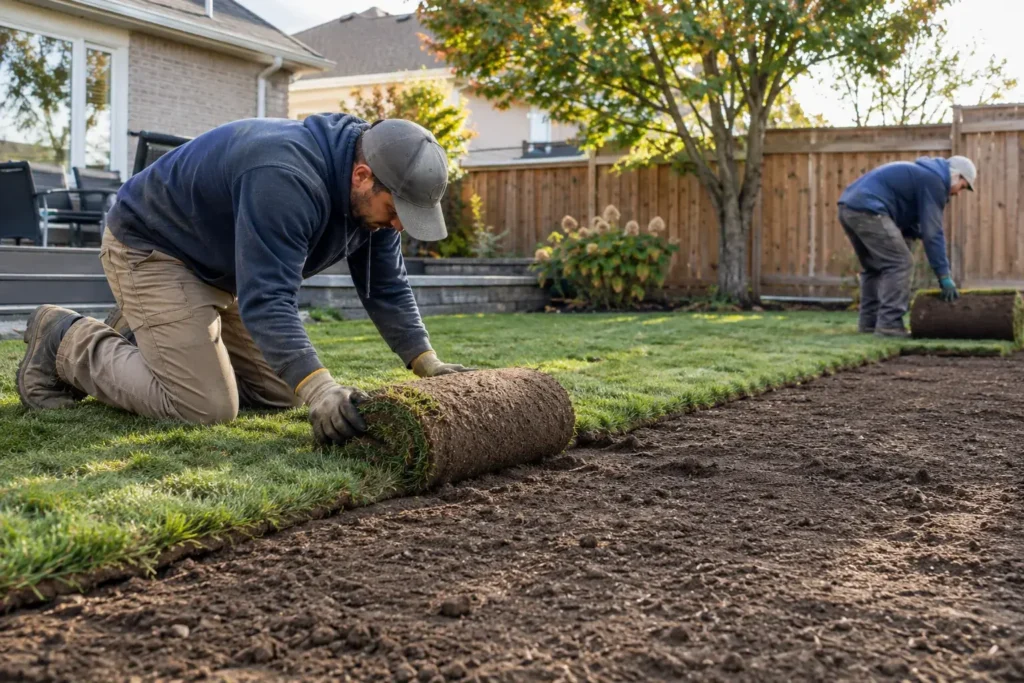
Sod installation can transform a failed lawn or complete a yard after construction and grading. The existing surface may need removal, soil preparation and an even finished elevation. Watering during establishment matters, and the household should understand when and how the area can be used. The most attractive roll of sod will not remain successful if water stays trapped beneath it or traffic repeatedly follows one narrow shortcut.
New sod is particularly dependent on connected work. If a patio or fence is still planned, heavy access can damage the restored lawn. Establish final hardscape edges and material routes first where practical. At the lawn boundary, leave a sensible mowing transition rather than a steep, muddy strip.
Maintain or renovate an existing lawn
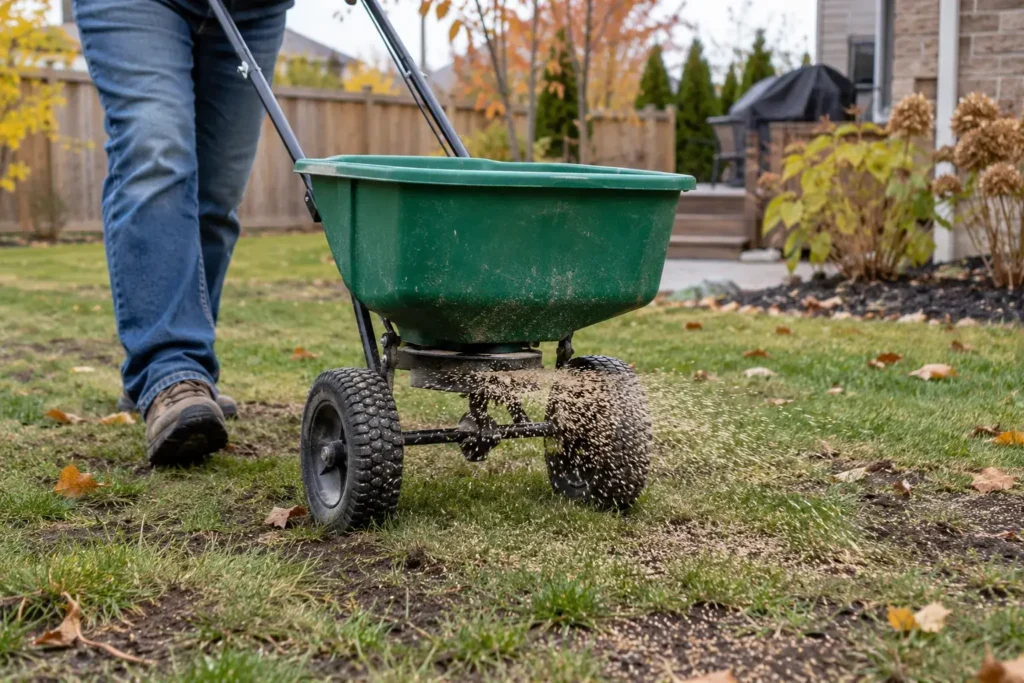
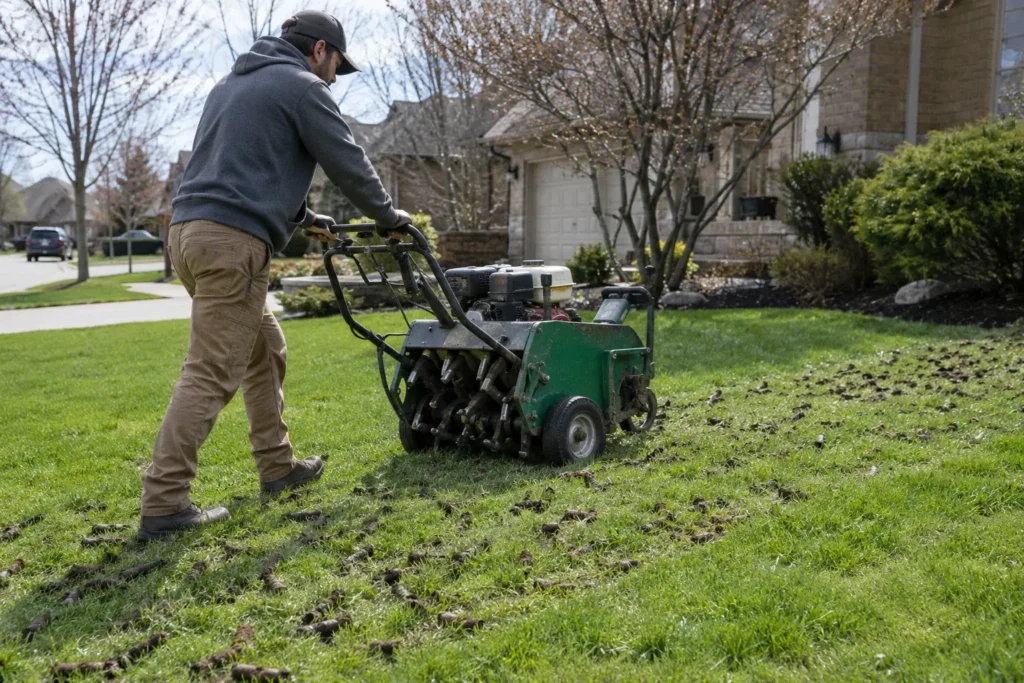
Lawn maintenance concerns regular mowing, edging and trimming. It preserves an existing landscape but does not rebuild soil or redirect runoff. If the turf is thin and the basic site conditions are workable, aeration and overseeding may be considered. Seed needs good contact, suitable timing and watering. Results vary with weather, shade and traffic; no germination percentage can be promised for every yard.
Choose the method based on the cause. A compacted high-traffic route might need a path. A patch under heavy shade may require a different use or planting design. A downspout that saturates one area should be addressed as a water issue. Repeating the same turf treatment without changing the limiting condition can waste effort.
Artificial turf for selected areas
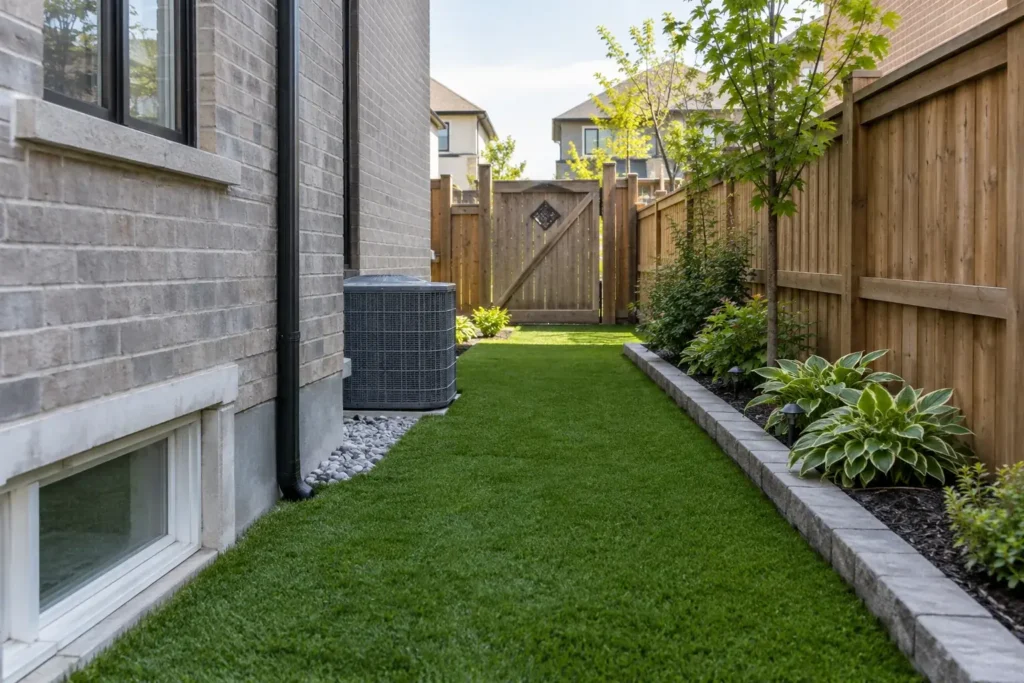
Artificial turf can be considered for a compact yard, side strip or a particular high-use area. Its base, drainage, seams and edges are part of the installation. Surface heat in sun, debris, pet use and cleaning are part of ownership. It is not zero-maintenance, and it does not make a poorly graded site drain correctly by itself.
Plan transitions to patio, natural lawn and beds. An artificial patch can look deliberate when it answers a clearly defined use, but forcing it into every corner may leave awkward interfaces and extra maintenance. The decision should follow the site and the owner’s routine.
Plant trees, shrubs and hedges for maturity
Trees, shrubs and hedges provide shade, privacy, structure and seasonal interest, but each needs enough room for mature canopy and roots. Check sun and wind, proximity to utilities, walkways, fences, foundations and neighbouring property. Young planting can help start a privacy plan; it should not be represented as an instant opaque screen.
Watering and early care help establishment. A new tree placed where future patio excavation is expected may suffer later disturbance. A hedge planted too close to a gate may make routine access difficult as it fills out. Show the mature outline on the plan before ordering plant material.
Build garden beds as maintainable spaces
Garden design can use layers of height, texture and seasonal interest while responding to sun, shade and soil. Edges should be clear enough to keep lawn and planting separate. Beds need access for weeding, pruning and watering. A deep bed against a fence can be attractive, but if nobody can reach its back after shrubs grow, care becomes difficult.
Mulch and decorative stone play different roles in appearance, moisture, edge definition and maintenance. Neither corrects a wet grade or removes the need to manage weeds and debris. Select material with the plants and drainage path in mind, not just its colour in a small swatch.
Garden and hedge care through the seasons
Garden and hedge maintenance includes plant-specific pruning, bed care, weeding, mulch attention and monitoring of plant condition. A spring cleanup can expose winter damage and drainage trouble. Fall cleanup can keep paths and outlets clear without indiscriminately cutting every plant back. The appropriate schedule depends on the garden and its use.
Routine care should make problems visible. If the same bed repeatedly floods or plants fail at a salty driveway edge, a one-time change to grade, snow storage, soil or species may be more useful than repeating the same maintenance action. Separate that improvement decision from the regular service scope.
Coordinate the softscape with the whole property
Plants and lawn are often the last installed layer, but they should be planned from the beginning. A patio size determines how much contiguous grass remains. A deck changes shade. A fence alters wind and views. Irrigation can support new planting but should not overwater a wet lawn. Lighting routes may be easier to prepare before soil and bed finishes are complete.
If work changes grade or water movement, consult the Town’s current site alteration guidance for the exact proposal. Before digging for trees or irrigation, use Ontario One Call for public utility locates and consider separate private lines. The scope should connect the visible garden to the conditions beneath it.
Which service is the right starting point?
What if the entire lawn failed?
Investigate grade, soil, water, shade and use. Sod may provide a new finish once preparation is sound; another use may fit part of the yard better.
What if existing grass is only thin?
Assess whether healthy turf remains and whether aeration and overseeding have suitable conditions. Repeated shade or traffic may need a layout change.
What if the goal is privacy?
Map sightlines and use planting with a practical mature size and growth period. A fence or screen can offer a more immediate layer where current rules allow.
Share site photos, the problem pattern and the finished use you want. Request a Milton lawn and garden estimate so preparation, planting and maintenance can be discussed as one connected scope.