
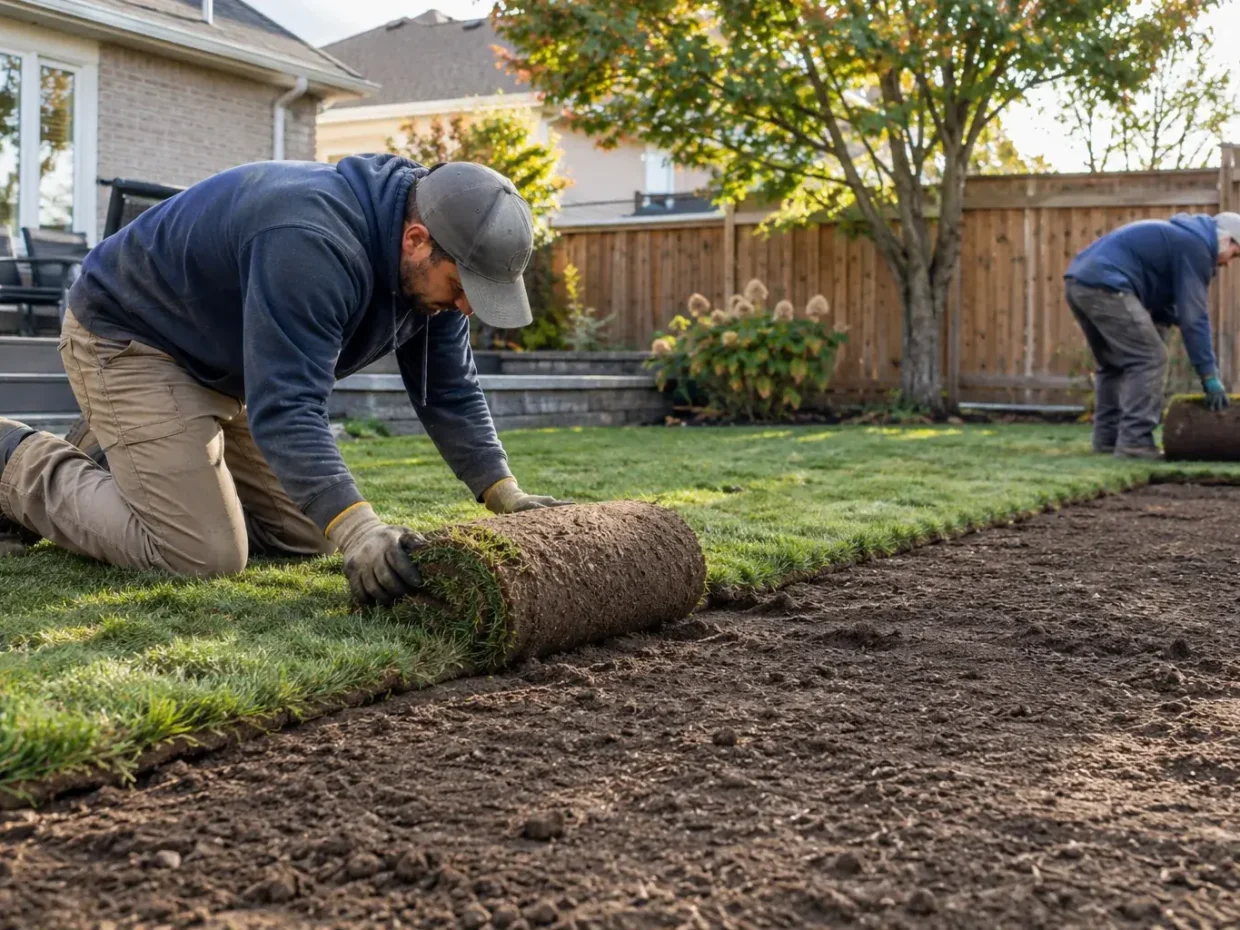
Sod can turn a bare area into a lawn quickly, but it does not erase problems beneath it. A new Milton lawn depends on the removal of unwanted existing growth, appropriate soil, prepared grade, drainage and an establishment watering plan. A fresh green surface laid over a low, compacted or persistently wet yard can soon show the same trouble. Sod installation should be discussed as a ground-preparation and restoration project, whether it follows a new patio, replaces a worn front lawn or completes a larger landscape renovation. The type of use, shade, irrigation access and timing influence how the finished lawn establishes.
Find the reason the lawn failed
Inspect the current lawn or bare soil and ask why it is being replaced. Thin turf under dense shade needs a different discussion from grass damaged by construction traffic. Identify standing water, hard compacted ground, uneven settlement, downspout discharge, weeds and tree roots. Measure the area and access for removal of old material and delivery of soil and sod. Check how the lawn meets paths, patios, drives and fences, and whether the grade next to the foundation already works. A compact Milton yard may need meticulous level control, while a broader lawn may need attention to swales and the movement of water across the property. Existing irrigation can help only if it is functioning and properly adjusted.
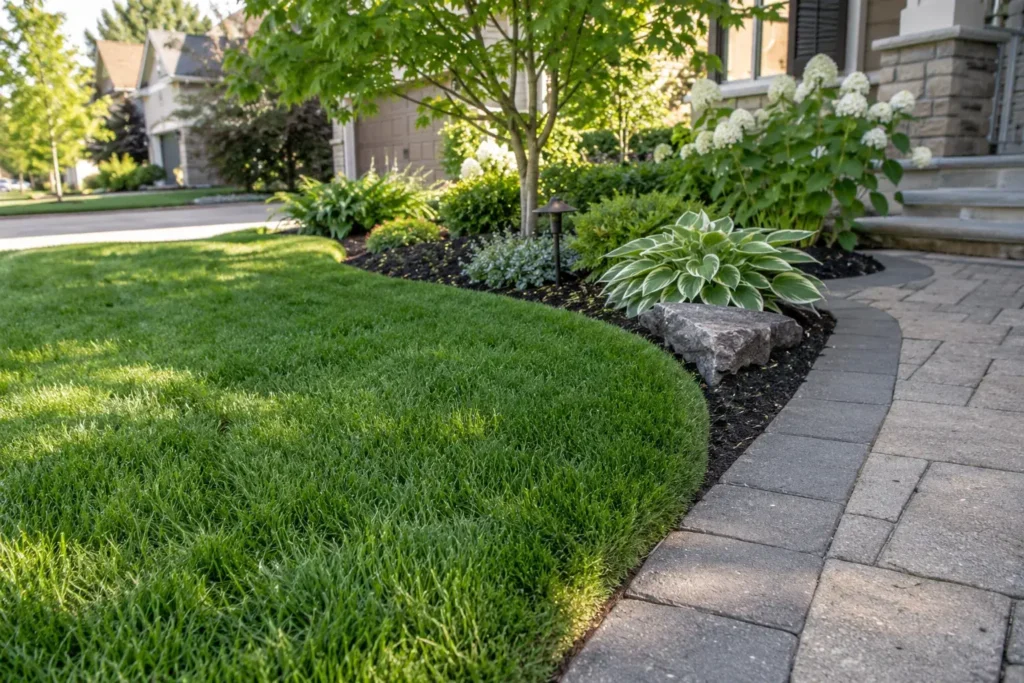
Set a lawn that can be used
Plan a usable lawn shape and level. Narrow, shaded slivers between hardscape and fence are difficult to mow and may never perform like an open lawn. The finish should meet patios and walks without a trip edge or soil washing onto pavers. If significant low spots are present, determine their cause and the appropriate grading or drainage response before sod is ordered. Choose soil preparation based on what remains after the old lawn is removed; adding a thin layer of topsoil over compacted debris is not a substitute for a suitable root zone. Preserve drainage paths and avoid raising soil against siding, vents or hardscape thresholds.
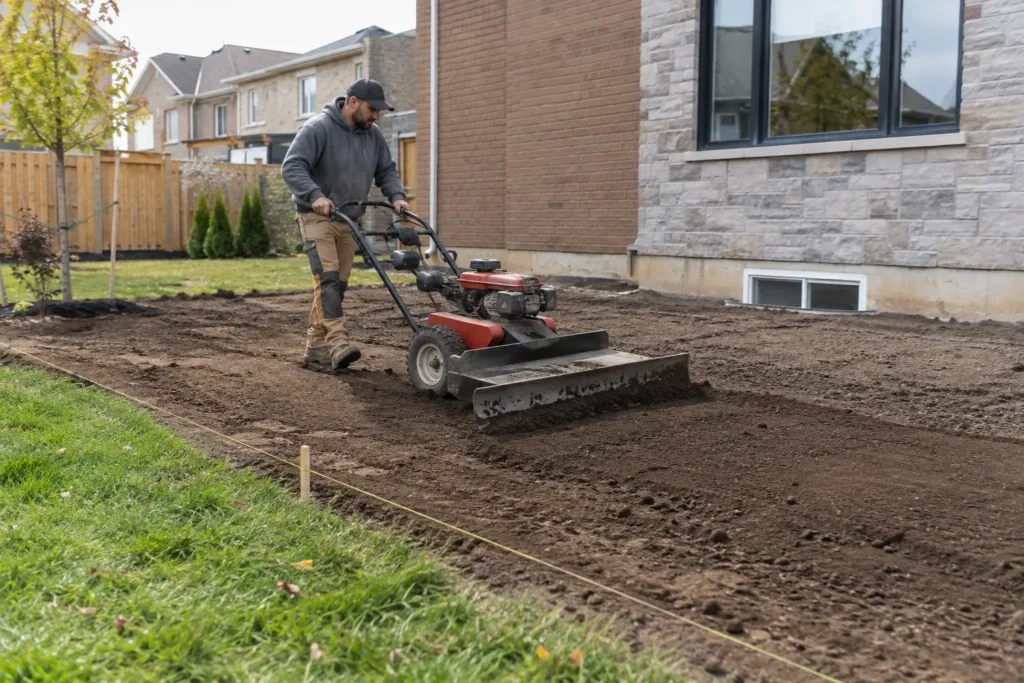
Prepare soil and final grade
The installation sequence normally includes removal or preparation of the old cover, addressing unsuitable material, shaping and firming the soil, establishing final grade, laying fresh sod with tight joints and initial watering. Actual steps vary with site conditions and project scope. Site access and weather influence timing, and new grass needs prompt care after placement. Sod cannot be used as a fix for an unresolved water outlet or major grade conflict. Where a proposal changes drainage or grade, confirm current property-specific requirements rather than assuming every lawn restoration has identical rules. Utility locates are relevant where deeper grading or irrigation work is planned. Adjacent planting and paving should be protected during soil delivery.
Water through establishment
The first weeks make a large difference. The owner needs a practical watering routine suited to weather and soil, along with guidance on foot traffic and the timing of initial mowing. Overwatering a persistently wet area is not helpful; underwatering newly placed sod is equally damaging. Trees may create uneven moisture and shade, requiring practical expectations about turf in those zones. If children or pets need immediate use, discuss how access can be managed during establishment. A new lawn can be integrated with gardens, edging and walkways so that ordinary mowing and watering are straightforward later.
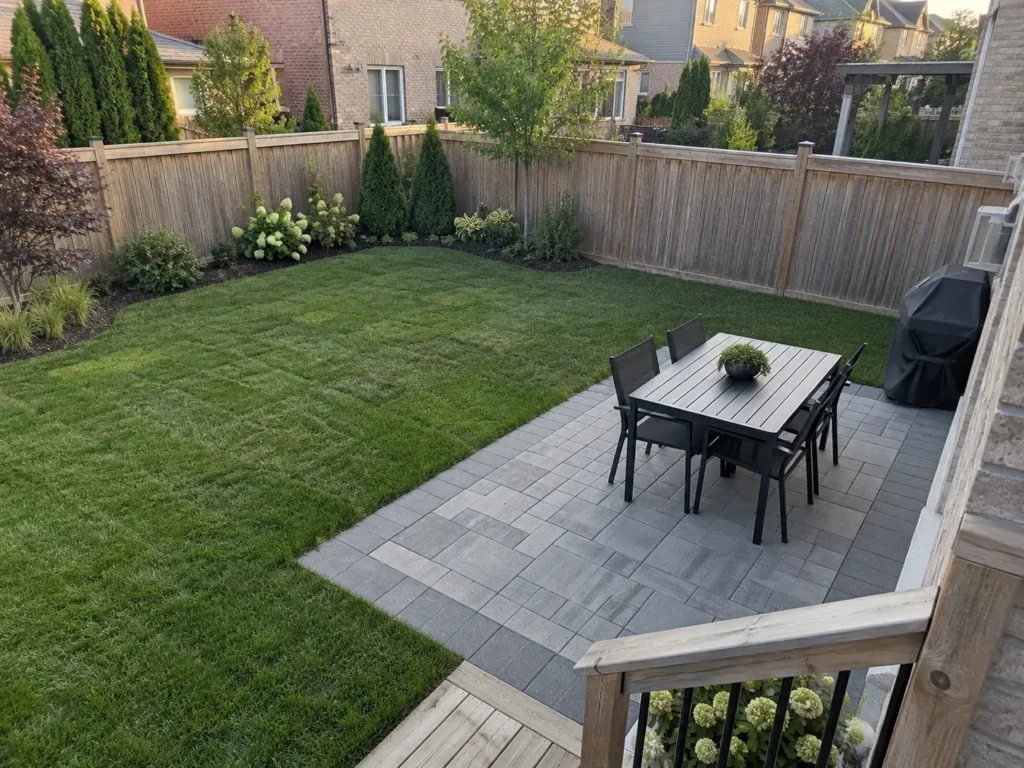
Care for the established turf
Once established, the lawn still needs mowing, appropriate watering and observation for thinning or compacted areas. An aeration and overseeding program may be useful for some older lawns, but it is not automatically necessary immediately after sod work. Watch for renewed puddles, erosion near downspouts or a transition that has settled against a patio. If the underlying condition returns, investigate it rather than replacing the grass repeatedly. A good scope explains the soil and grade work beneath the sod, the watering responsibility after installation and how damaged neighbouring areas will be restored.
Decisions that shape sod installation
Reason for replacement
Diagnose shade, compaction, drainage, wear or construction damage before repeating the same lawn conditions with new turf.
Removal and preparation
Address weeds, debris and unsuitable existing material. Prepare a root zone rather than spreading a cosmetic topsoil skin.
Final grades
Maintain appropriate surface drainage and elevations at walks, patios, fences and the house. Sod follows a solved grade plan.
Water access
Confirm that the new lawn can be watered promptly and consistently; assess existing irrigation coverage where applicable.
Establishment timing
Coordinate sod delivery and laying with weather, site access and the owner's ability to provide post-installation care.
Usable lawn shape
Keep turf areas wide and connected enough to be mowed and used without repeatedly damaging garden or paver edges.
Compare sod installation proposals
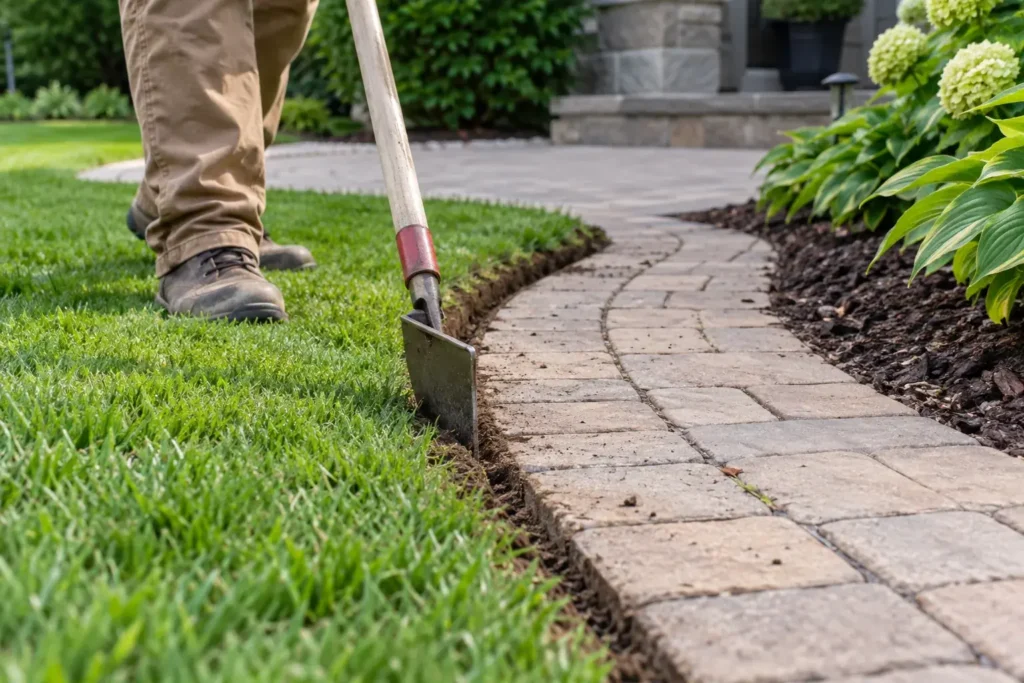
A sod proposal should say exactly what happens to the old lawn and its roots, how much soil work is included, which low areas are addressed, and how the finish meets walks and structures. Surface preparation cannot be evaluated by sod area alone. If a lawn has failed twice in the same shaded or wet location, ask what changes in the new plan. A different grass mix may not overcome deep shade or prolonged saturation. A garden, path or drainage improvement could serve that part of the yard better.
Schedule and access should be discussed before delivery. Fresh sod needs to be laid and watered promptly, while soil should not be worked into a muddy, compacted condition just to meet a date. If a new fence, patio or irrigation system is also planned, heavy work and underground lines should precede turf. The owner needs a working water source and clear aftercare responsibility.
Once sod begins to root, review its colour and moisture across the whole area rather than assuming all corners behave alike. A south-facing edge by stone can dry faster than a shaded low corner. Adjust care to actual conditions and address any emerging drainage problem directly.
For a lawn damaged by a recent construction project, inspect how equipment and stored material affected the soil. Regrading and soil preparation may be more important than the choice of sod. Rebuild a clear route for future access if repeated traffic caused the damage. The completed lawn should fit ordinary use without forcing everyone across its most vulnerable area.
Keep the first mow and watering plan visible to everyone using the property, so the new lawn is not accidentally treated as established turf.
Questions about sod installation
Will new sod fix a wet backyard?
No. The water source, grade and outlet need assessment first. A green surface over persistently saturated ground will not correct drainage.
When can we walk on the new lawn?
Initial traffic should be limited while the sod roots into the prepared soil. Conditions and watering affect the establishment period, so follow the specific aftercare plan.
Do I need topsoil before sod?
That depends on existing soil condition, grade and removal scope. The aim is a suitable prepared root zone, not a universal layer of material.
Can sod be installed beside a new patio?
Yes, once final patio elevations and drainage are settled. The soil and turf should meet the edge cleanly without burying pavers or trapping runoff.
Related property work
Yard Grading, Wet Yard Solutions, Aeration & Overseeding, Lawn Maintenance, Landscape Design & Build.
Discuss your sod installation project
Show the entire lawn and close views of thin, wet, shaded or compacted areas. Note previous attempts to repair it, site access and the available watering setup. A quote should account for preparation and establishment, not only square footage of sod delivered.