
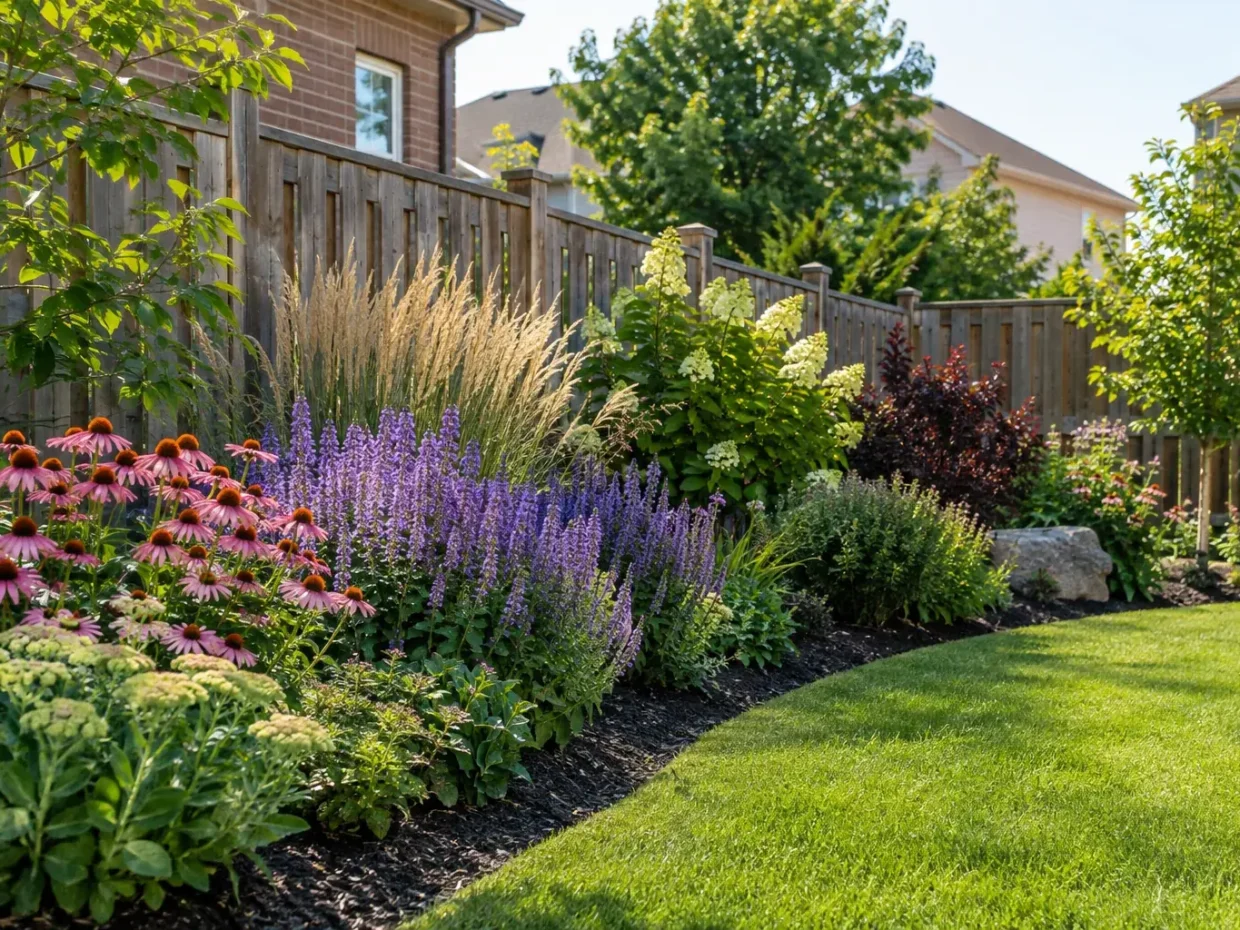
A garden should make sense from the windows, paths and outdoor rooms that overlook it, and it should make sense to maintain. Garden design in Milton can turn a bare lawn edge into layered seasonal planting, soften a new patio, frame a front entrance or organize existing trees into a more usable yard. The work begins with sun, shade, soil, drainage and the eventual size of each plant. A dense nursery display cannot simply be transplanted to a narrow bed and expected to stay in proportion. We plan beds, planting layers, mulch, access and watering as one system so the garden looks intentional at installation and has room to develop.
Understand light and soil
A site visit should record sunlight at different times, the shade cast by buildings and mature trees, soil texture, wet or dry areas, wind exposure and existing roots. Check downspouts and snow-storage areas before assigning delicate plants to those locations. The width between a wall and a walkway determines what can mature there without constant cutting back. The owner should identify views to improve and features to screen, as well as favourites to keep. A garden beside a Milton townhouse patio has different space and maintenance limits from a broad front border. Soil conditions can also change across one property, especially where construction backfill or old hardscape has affected the ground.
Shape beds before selecting plants
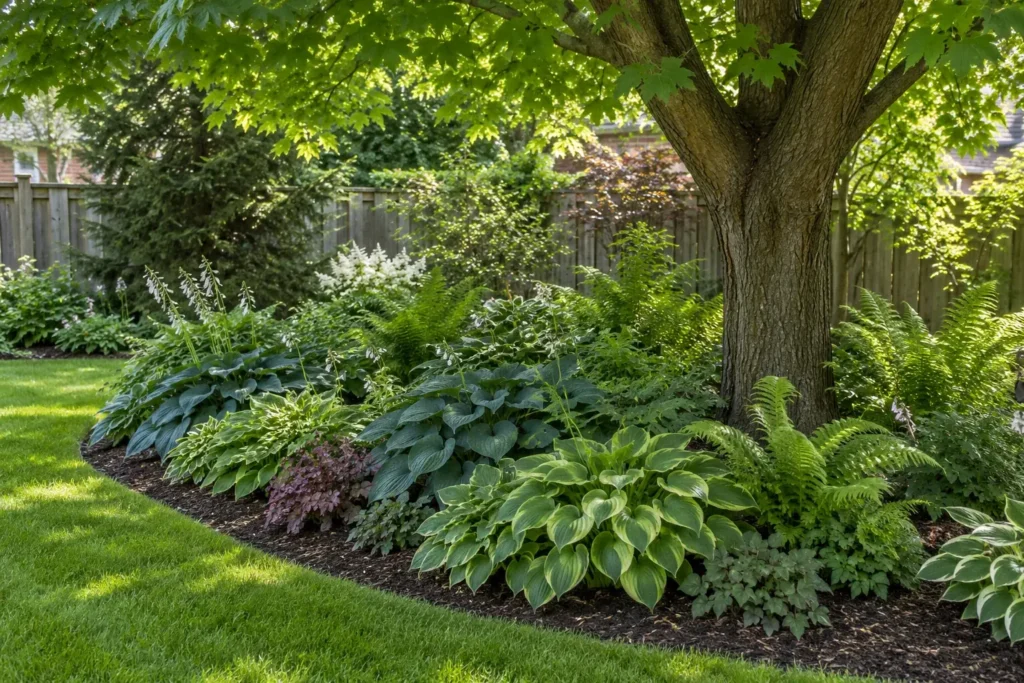
Define the bed shape and circulation first. The garden should frame a route, seating area or view without trapping a narrow strip of grass against a fence. Taller structural plants can form a background, with medium shrubs and perennials arranged for complementary texture and bloom periods. A mix of evergreen and deciduous material can avoid an empty winter border, but plant choice must suit available light and root space. Plan mature spread and height so windows remain usable, sidewalks stay clear and neighbours are not crowded. A garden under an existing tree deserves special care: competition for water, roots near the surface and deep shade may limit what thrives there. An attractive design leaves room to reach every bed for care.
Prepare a viable planting area
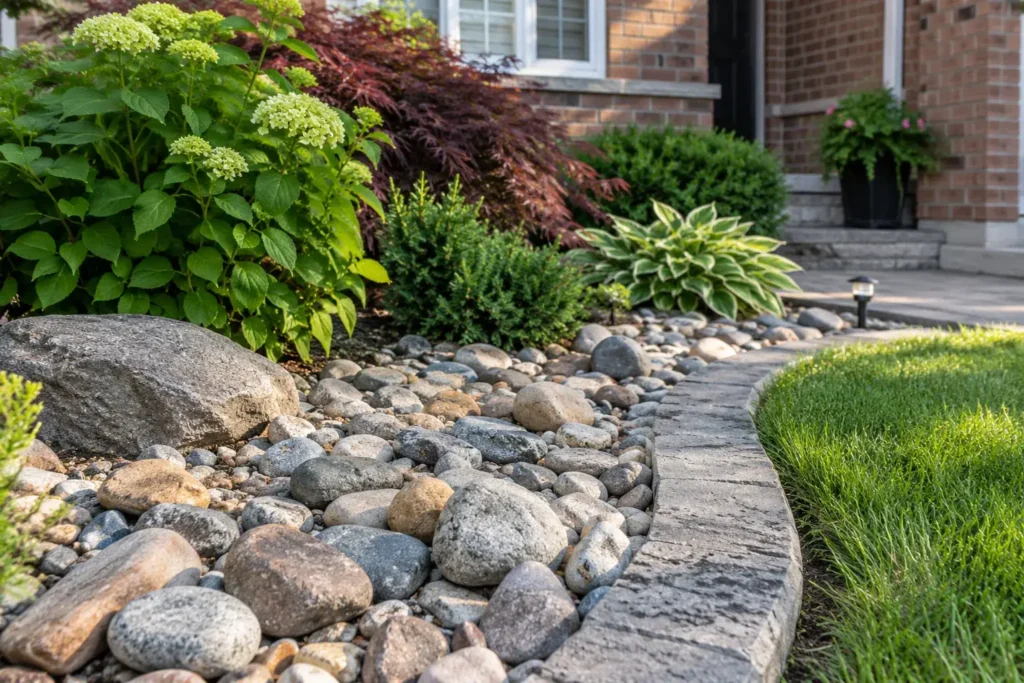
Preparation influences the long-term result more than simply increasing plant numbers. Remove persistent weeds and unwanted growth, assess the existing soil and amend or replace material where justified by the site. Grade beds so they do not trap runoff at the foundation or block an established swale. Mulch can help moderate soil moisture and suppress some weeds, but depth and placement matter around stems and trunks. Edging should be chosen for ease of mowing and the connection to adjacent interlock, lawn or stone. Where irrigation is appropriate, group plants with compatible water needs and keep spray from wetting walls and paved surfaces. Utility locates are important before deeper excavation for trees, edging or service lines.
Compose the seasons
Think beyond one flowering week. A front entrance may need year-round structure, while a backyard bed beside the patio can be more seasonal and personal. Fragrance, pollinator interest, fall colour and winter stems may all have a place, depending on the household's priorities. Simplifying the species palette can make a small space calmer and easier to manage; a larger property can use repeating groups to connect separate garden rooms. Lighting can reveal a specimen tree or help visitors follow the path, but fixtures and cables should be coordinated with planting growth. The best planting plan supports the entire landscape rather than treating beds as decoration after the paving is finished.
Support the first years of growth
The first seasons require watering and observation. New plants are establishing roots even when top growth appears modest. Mulch settles, weeds arrive, and pruning needs depend on the species rather than an arbitrary uniform trim. A bed that was designed for mature size should not be filled with short-lived extras merely to erase every opening on day one. Review irrigation coverage as plants expand and watch for places that remain saturated. A manageable maintenance rhythm includes seasonal cleanup, checking plant condition, renewing mulch where needed and keeping bed edges clear. If the owner wants less work, that preference should shape the design from the outset.
Decisions that shape garden design & planting
Bed proportions
Size beds for eventual plant spread, not only the small material delivered initially. Leave access to walls, fences, windows and utilities.
Sun and shade
Record actual exposure through the day. Planting near a north-facing wall, under a tree and beside a sunny driveway calls for different selections and watering.
Soil and drainage
Check whether water drains, pools or runs across the proposed bed. Soil improvement cannot compensate for a blocked surface route or prolonged saturation.
Seasonal layers
Combine structural shrubs or trees with lower planting for successive interest. Choose a winter view intentionally rather than relying only on summer flowers.
Mulch and edges
Prepare the bed and set a deliberate edge against lawn or paving. Mulch assists care but requires appropriate placement and periodic renewal.
Water and access
Group similar irrigation needs and plan how a person can reach each bed for weeding, pruning and plant checks without trampling it.
Compare garden design & planting proposals
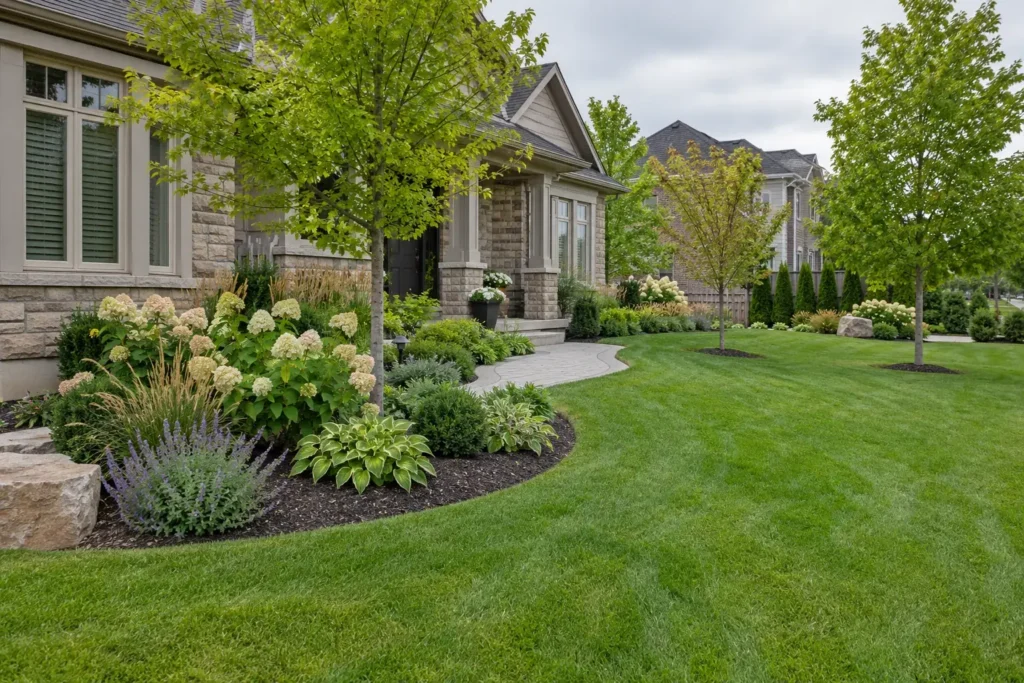
A planting schedule should identify a sequence for the work: protect trees to remain, prepare soil and drainage, form beds and edges, place larger plants first, then lower planting, irrigation adjustments and mulch. If a patio or walkway is being built, heavy excavation belongs before delicate plant material arrives. The proposal should make clear whether existing plants are relocated, removed or protected. Relocation has risks, especially for mature plants, and should not be treated as a guarantee of survival.
Cost comparisons depend on more than plant counts. Larger starting sizes can create an immediate effect but cost more and may demand careful establishment water. Smaller plants leave visible spaces initially but can have room to grow. Soil preparation, edging and access for future care are investments that a simple list of shrubs does not show. Ask for the mature sizes and intended maintenance pattern so the garden remains readable when the plants fill in.
A planting plan can record quantities and spacing while leaving room for seasonal adjustments after the site is prepared.
Questions about garden design & planting
Should we choose plants before drawing the bed?
First decide the bed's purpose, dimensions, light and connection to the landscape. Those conditions narrow the suitable plants and help avoid crowding.
Can planting improve privacy?
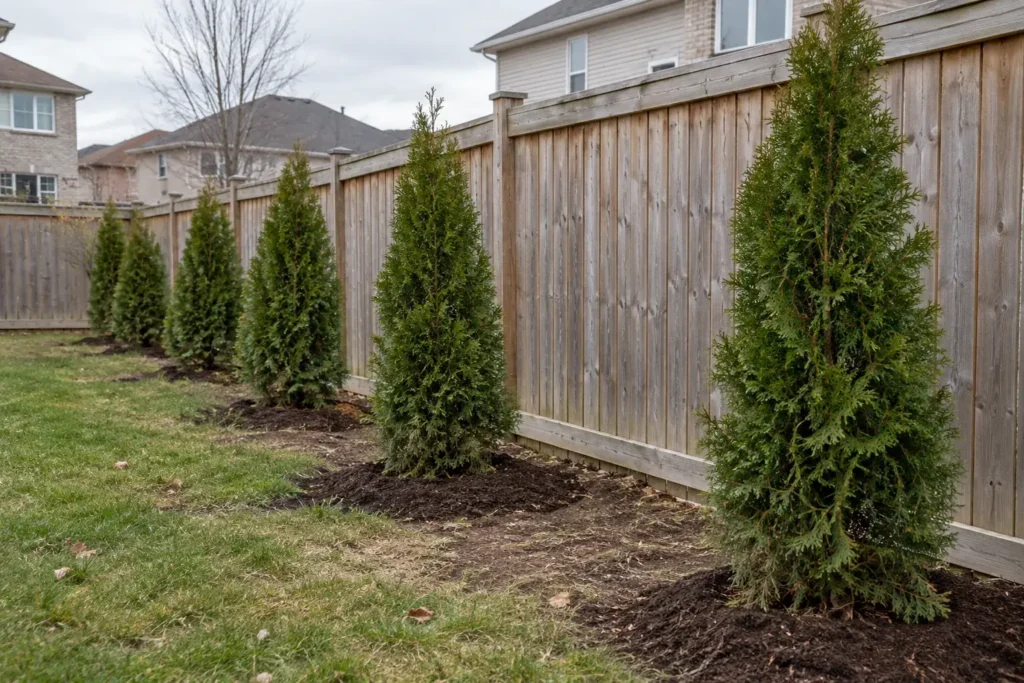
It can soften and eventually screen a view, but growth takes time and the result changes with seasons. Evaluate the exact sightline and mature size; use a structural screen where immediate privacy is required.
Does mulch stop all weeds?
No. Proper preparation, suitable depth and ongoing care reduce pressure, but seeds can still germinate and perennial weeds may return.
What should I share for a garden plan?
Provide photographs in morning and afternoon if possible, the bed dimensions, existing plants you want retained, wet or dry trouble spots, and how much time you can devote to care.
Related property work
Tree, Shrub & Hedge Planting, Mulch & Decorative Stone, Garden & Hedge Maintenance, Privacy Landscaping, Irrigation Systems.
Discuss your garden design & planting project
Share photographs of the beds through the day, the plants you want to keep and any places that stay wet or dry out rapidly. Tell us the desired look, seasonal interests and how much watering and pruning you can do. This helps choose planting that fits the property.