
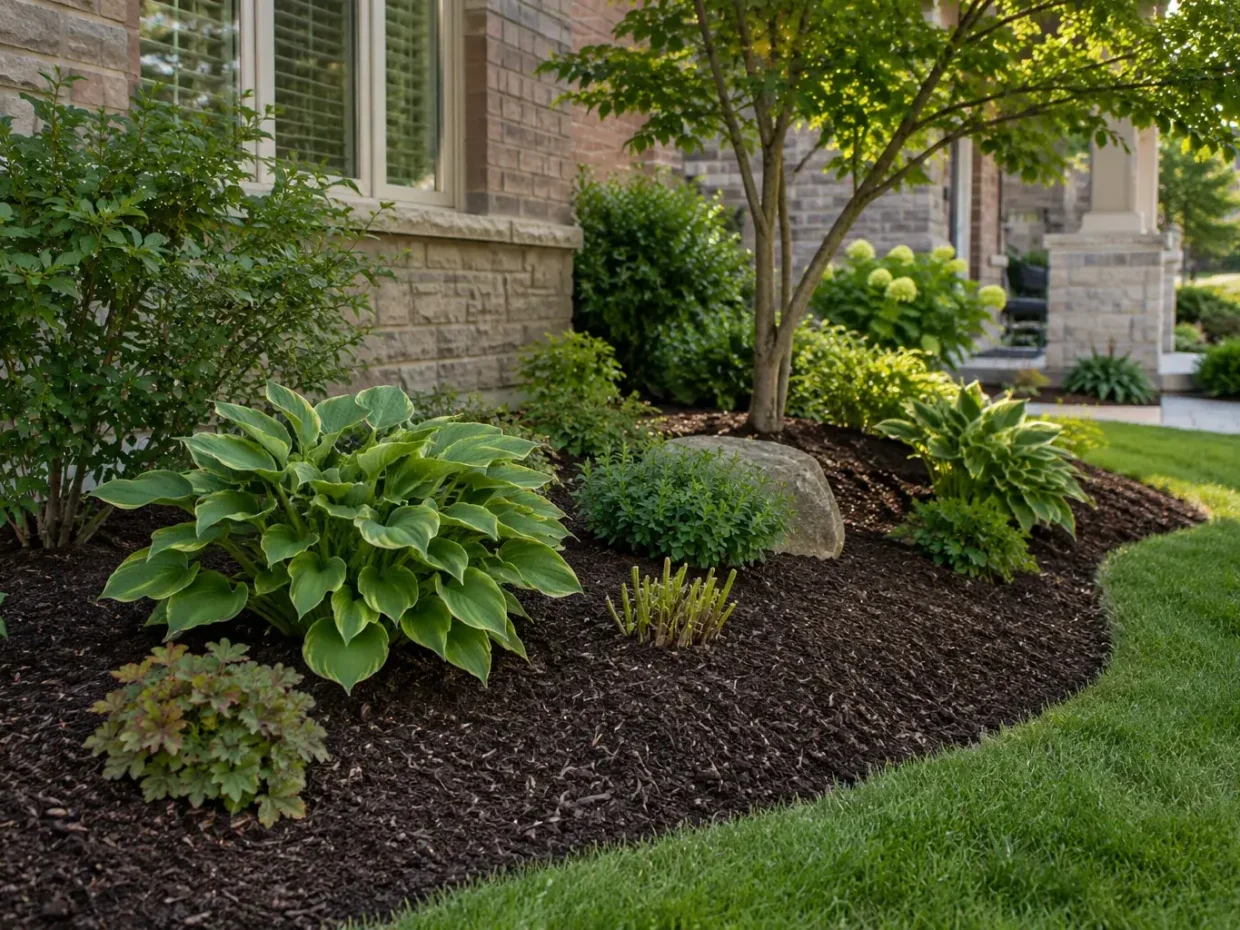
A landscape needs a practical care routine after installation. Grass, beds, hardscape edges and seasonal debris change at different rates. Maintenance planning should match the property and the level of upkeep its owner actually wants.
What to examine for residential property maintenance
Set priorities by zone
Separate front entrance presentation, high-use backyard, side yards and less visible planting.
This helps focus attention where appearance and use matter most.
Care for turf
Mowing height, edging, trimming and observation of thin or wet patches belong in a lawn plan.
Regular cutting will not by itself correct poor grade or damaged soil.
Tend beds
Weed pressure, mulch condition, plant health and soil moisture change through the season.
A defined edge keeps lawn and planting from competing in an untidy strip.
Prune with purpose
Different plants respond to pruning at different times and for different reasons.
The aim is health, size control and clear routes, not a uniform haircut for every shrub.
Watch hardscape
Look for settled pavers, obstructed drains, washed joints and encroaching plants.
Early observation can keep a modest repair from affecting a larger route.
Coordinate watering
New planting, established beds and lawns may need different attention.
Overwatering can worsen a wet area and obscure a drainage problem.
Prepare for seasons
Spring cleanup, summer growth and fall leaf removal each bring distinct tasks.
A seasonal schedule should respond to the actual plants and use of the property.
Clarify service scope
For any recurring arrangement, specify areas, frequency, access and included tasks.
That avoids assuming a lawn visit also includes detailed garden renovation or drainage work.
A newly installed landscape will change during its first seasons: sod establishes, beds settle and shrubs expand. Build a simple inspection habit around those changes. If a low patch remains wet, repeated mowing will not fix it; if a hedge begins to block a gate, trimming should address clearance before the opening becomes unusable.
Make a map of maintenance zones
Divide the property by use rather than applying the same routine everywhere. The front entrance may need frequent presentation care, the backyard lawn may receive heavy traffic, and a shaded side bed may need more selective attention. Mark lawn edges, beds, hedges, paved routes, drainage points and gates. A map turns “look after the yard” into a scope that can be discussed and checked.
Keep lawn care distinct from lawn repair
Regular mowing, trimming and edging can maintain healthy turf and a tidy boundary. They cannot correct a low spot, compacted soil, deep shade or concentrated runoff by themselves. Note bare areas and their patterns instead of repeatedly cutting around them. A separate decision may involve aeration, overseeding, sod, a path or a drainage assessment. This distinction helps set practical expectations for a recurring care visit.
Care for beds according to plants
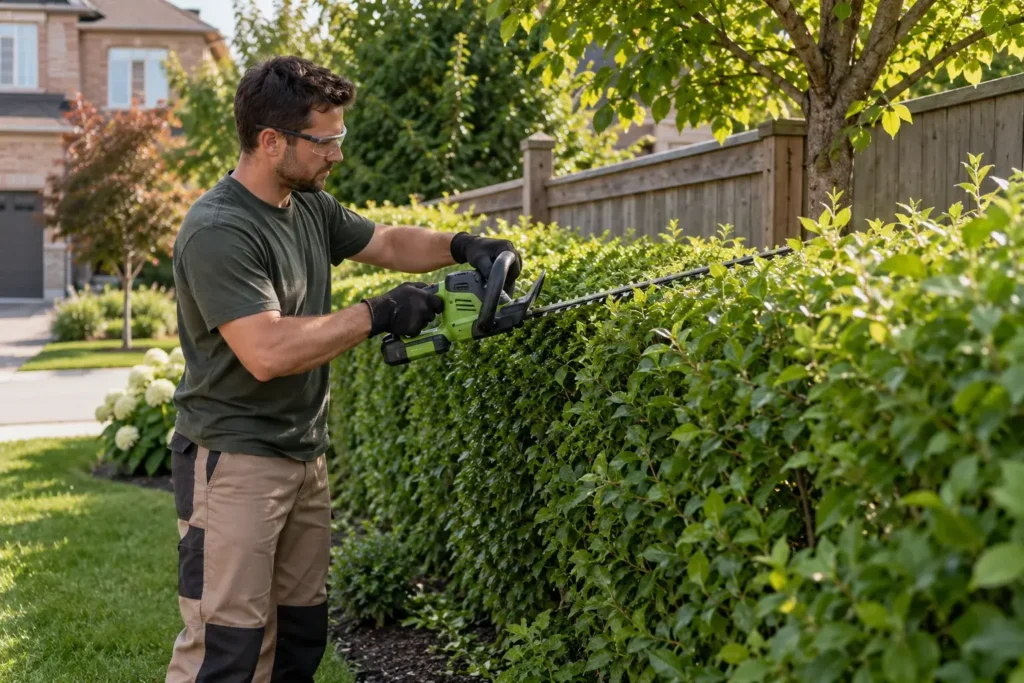
Weeding, mulching and pruning differ by bed and season. A young hedge may need training and watering, while an established shrub may need targeted pruning to keep a gate open. Avoid a uniform cutback simply because plants share one garden edge. Check soil moisture and the condition of mulch before adding more. Mulch piled against trunks or over a blocked outlet can create rather than solve problems.
Watch the built landscape
Interlock joints, steps, retaining edges and drains should be observed during routine care. A paver that moves, an edge that spreads or water that begins collecting behind a bed may warrant repair. Record location and timing so a separate construction scope can investigate the cause. A cleaning visit may improve appearance, but it cannot rebuild a failed base beneath settled paving.
Let seasons set the tasks
Spring can reveal winter damage, wet areas and debris. Summer brings mowing, growth and watering questions. Fall involves leaves, paths, beds and drainage outlets before freeze-up. Some perennials benefit from a different approach from others, so the care plan should reflect the planting. Snow placement and salt exposure near a driveway can influence what needs attention the following spring.
Define recurring scope clearly
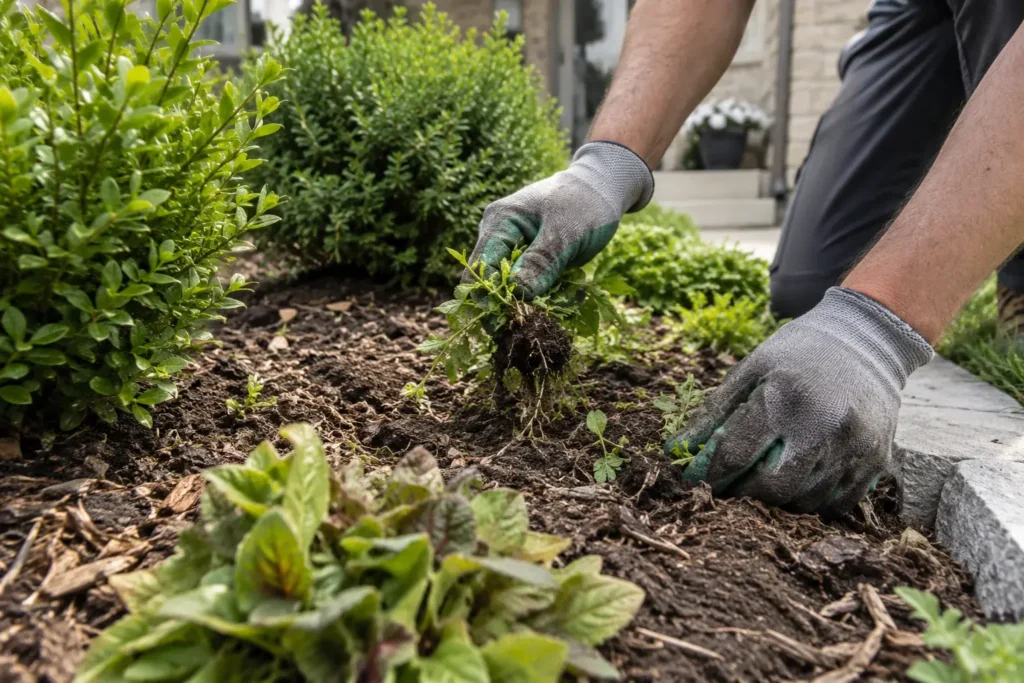
For an ongoing arrangement, identify included areas, frequency, mowing and trimming boundaries, bed work, pruning, debris handling and seasonal tasks. Distinguish optional renovation, drainage correction and major repair. Access requirements and how unexpected conditions will be reported also matter. A clear scope avoids assuming every visit includes a complete garden redesign simply because the term property maintenance is broad.
Plan watering without overdoing it
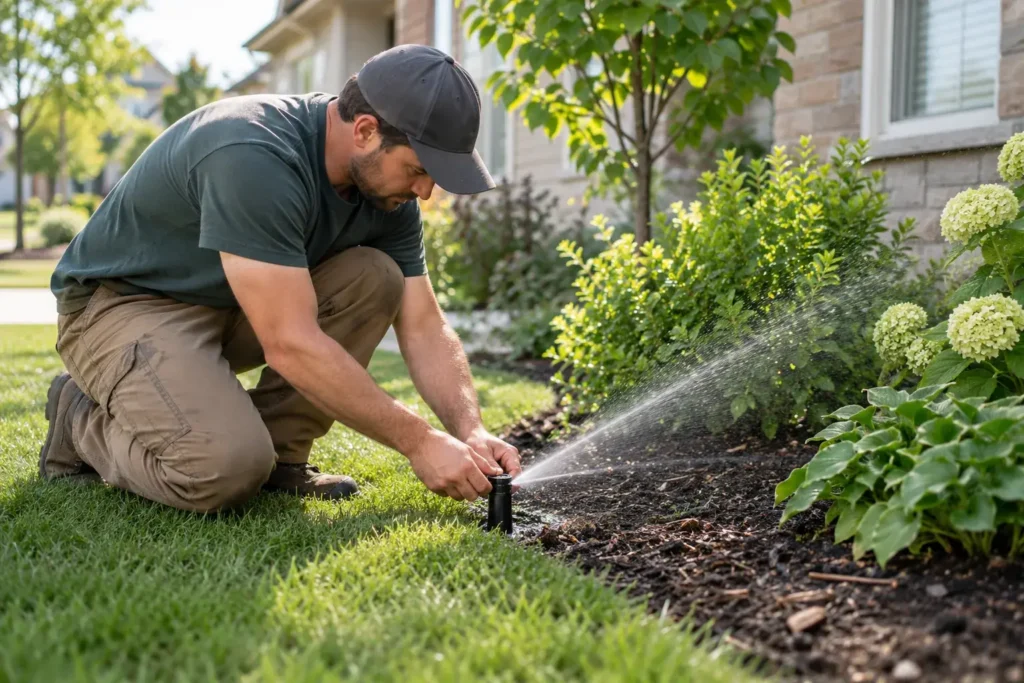
New sod, new shrubs and established plants can need different water attention. Irrigation settings should be checked when weather changes, especially where a lawn stays wet. A sprinkler that covers a sidewalk or saturates a foundation-edge bed may need adjustment. Watering is part of plant care; it should not be used to hide poor soil or drainage planning.
Prepare the owner’s priorities
List the spaces that matter most, any plant health concern, places that remain wet and the level of routine care the household wants. Photographs of changes over a season help distinguish a one-time disturbance from a repeat pattern. A care plan should support daily use and catch problems early, while leaving specialized construction decisions to a separate assessment.

When does a maintenance concern become a project?
A little bed weeding fits routine care. A repeatedly eroded bed beside a downspout may need a water and grade solution. A thin lawn may need renovation, while a path worn into soil may call for a permanent walkway. Write down the repeat pattern and discuss a separate improvement scope when the care routine cannot correct it. This keeps recurring service honest and directs spending at the cause.
Compare a simple routine with a complex one
A mostly lawn property may centre on mowing, edging and seasonal cleanup. A yard with extensive hedges, specialty planting, water features and paving can require more varied visits. The appropriate frequency and tasks should follow the property, not a generic package. Consider how much of the work the owner wants to perform and whether new planting will change the routine as it matures.
Share a map or photos of lawn and beds and a short list of recurring concerns. Note whether the request includes spring and fall cleanup or if those should be discussed separately. A defined service boundary makes future repairs easier to identify.
What does a first season reveal?
After a renovation, watch how new beds settle, whether sod establishes evenly and whether runoff follows the intended route. A few adjustments may be part of adapting a living landscape; repeated failure in the same location deserves investigation. Document the change with dates and photographs. That record is more informative than waiting until an entire bed or path deteriorates.
Care with lower effort
A household seeking less routine work may reduce lawn in awkward strips, simplify beds and choose plants suited to mature size and light. Hardscape and decorative stone still require cleaning, edge care and weed attention. The goal is a manageable routine, not an impossible promise of no maintenance. The maintenance conversation can therefore influence a future design decision as much as the current service visit.
Keep a simple note of preferred visit focus and seasonal tasks so changing conditions do not get lost between appointments.
Plan access to the least visible parts of the property as well. A side-yard drain may need clearing; a hedge behind a shed may grow across a gate; leaves may gather on steps used in winter. Routine attention to these interfaces can matter more than frequent cosmetic work in an already healthy bed.
Discuss residential property maintenance for your Milton property
Mark lawn, beds, hedges and seasonal trouble spots in photographs. Discuss property care with routine visits and one-time improvements clearly separated.