Sod, overseeding and artificial turf are answers to different questions. Is the lawn thin but fundamentally healthy? Is the existing grade and soil ready for a new surface? Is a small, intensely used area unsuitable for natural turf? Name the problem first; choosing a product before the diagnosis can leave the original issue intact.
The right choice also depends on how the yard will be watered, used and maintained. None of the three is a universal fix for standing water. This guide compares their roles and the site preparation each needs.
Start with the reason grass is failing
Look for shade, compaction, pet wear, drought, concentrated foot traffic, poor soil and long-lasting wetness. Several can occur together. Photograph the lawn at different times and note whether a failed patch follows a downspout, a shaded fence line or the regular route to a gate. The pattern tells you more than a single close-up of brown blades.
If water pools after rain, trace the grade and roof discharge. The response may involve wet-yard drainage planning rather than a new lawn product. If the lawn is thin but soil and drainage are workable, renovation may be more appropriate than full removal.
When is sod useful?
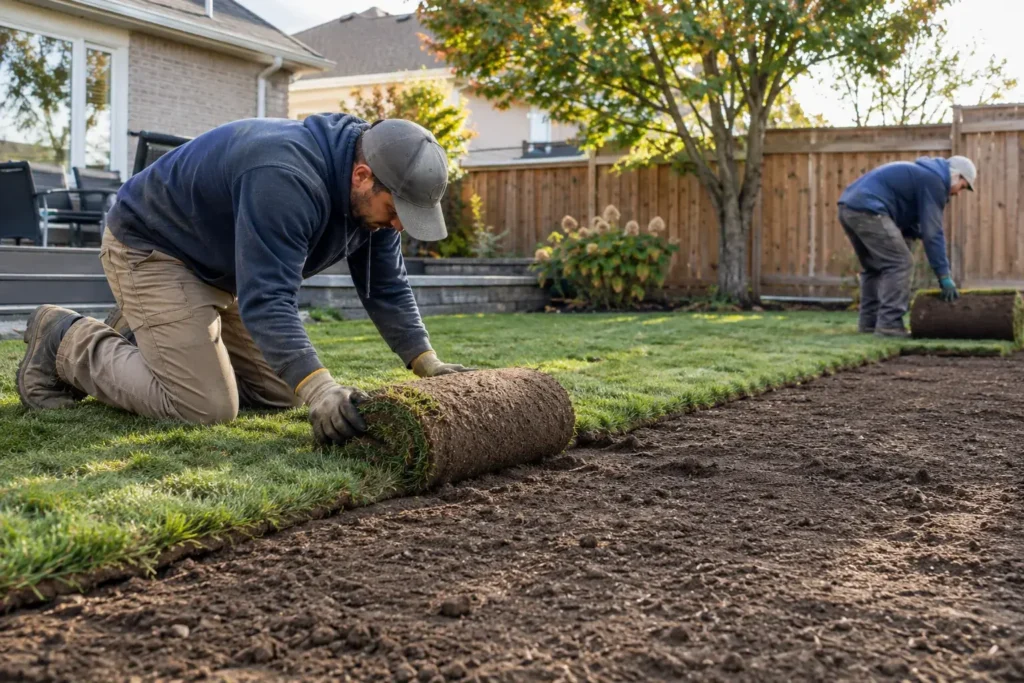
Sod gives a new grass surface after suitable preparation. A broad failed lawn, a construction-damaged yard or a regraded area may suit this approach. Existing turf and debris may need removal; topsoil condition and final elevation need to be established. The pieces must be laid and cared for according to the site and season. Establishment watering is a real part of the project.
Sod cannot be used as a blanket over a water problem. If an existing low area remains saturated, the new roots inherit it. Likewise, a lawn installed over poor preparation may look lush initially but perform poorly. Read about sod installation as a sequence of site work, not merely delivery of rolls.
When does aeration and overseeding fit?
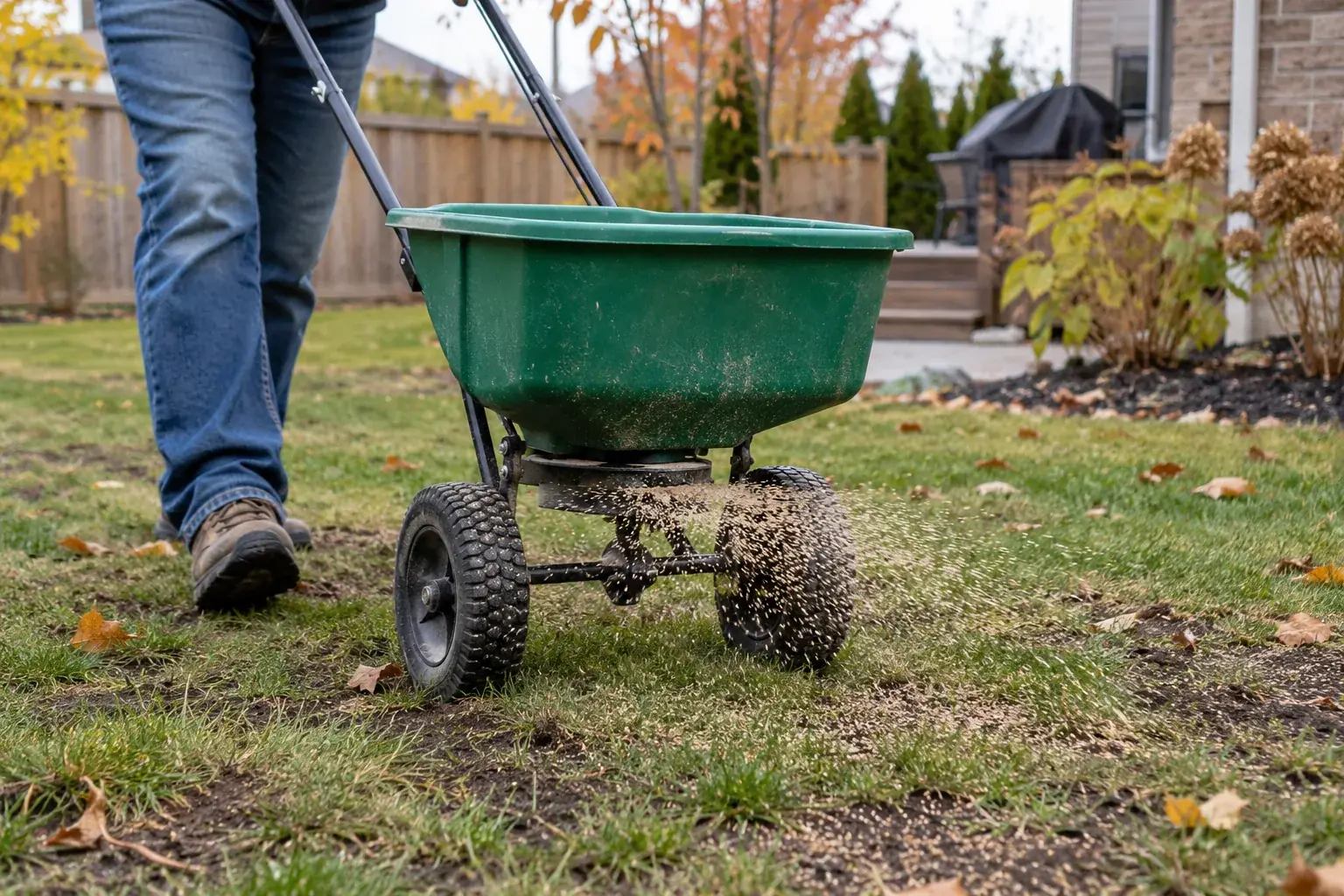
An existing lawn with recoverable turf and some thin areas may benefit from core aeration and carefully timed overseeding. Seed needs appropriate soil contact, watering and conditions. Aeration can address some surface compaction and create openings for seed; it does not change the overall grade or stop roof runoff. Germination depends on more than a promised percentage.
Choose seed suited to the light and use conditions. Heavy shade or constant traffic may continue to limit establishment. Protecting a renovated area from repeated wear while it develops can matter as much as the seed itself. The aeration and overseeding page covers the preparation and expectations.
Where might artificial turf make sense?
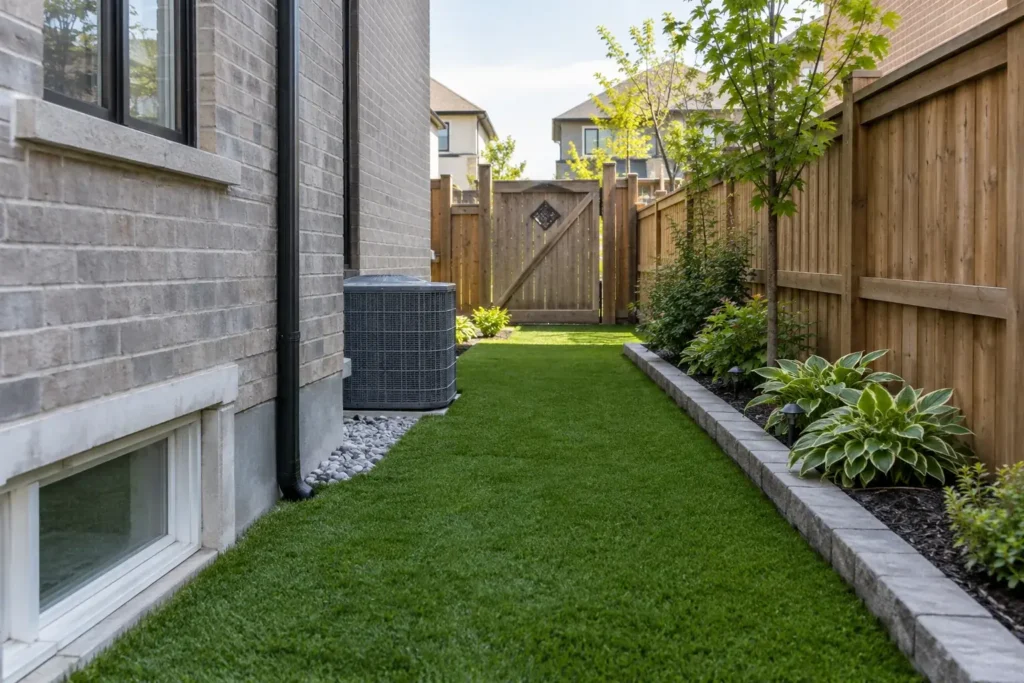
A compact side yard, small play area or high-use pet zone may prompt consideration of artificial turf. It still needs an appropriate base, drainage, seams and secure edges. Heat on a sunny surface, cleaning, pet care and eventual replacement are part of ownership. It is not a zero-maintenance product and does not automatically solve a wet substrate.
Look at the whole yard. An artificial patch can be useful when edged cleanly beside paving and planting, but it may look awkward if the remaining natural lawn is an unmaintainable sliver. Discuss where water will go and whether existing grade needs attention before comparing fibre appearance.
Compare the three on soil and water
Sod and seed rely on healthy soil contact and irrigation during establishment. Artificial turf relies on constructed support and a drainage approach. A high water table, concentrated runoff or blocked surface route should be understood whichever finish is chosen. Adding topsoil to level a yard may also raise Milton site alteration questions depending on quantity, location and drainage effects. Review the actual work under current Town guidance.
A lawn is an interface with patios, trees and fences. Shade from a new pergola may change future grass performance; paver runoff may saturate one edge. Resolve those connections as part of the choice.
What does each require after installation?
Natural grass needs mowing and seasonal care. Sod needs establishment attention first; a seed renovation needs protection and patience while coverage develops. Artificial turf needs debris removal, cleaning and inspection of seams and edges, especially in pet areas. All surfaces benefit from watching for pooling or settlement after heavy rain.
Match the care routine to the owner. A design sold as “maintenance-free” usually hides real tasks. A lower-maintenance yard may combine a smaller, well-located lawn with beds, hardscape and durable planting rather than forcing one surface across every condition.
How do you choose for a specific yard?
If broad lawn has failed after construction and the grade is sound, a prepared sod installation may give a clear reset. If much of the turf is healthy and thin areas are limited, aeration and overseeding may preserve what is already working. If a confined high-traffic strip will not support grass and the base can be built correctly, artificial turf may be considered. These are decision paths, not automatic recommendations.
Before committing, ask: What caused the failure? How does water leave? How much light reaches the area? How will it be used? What routine care is acceptable? Is the adjacent hardscape finished or still planned? Answers may change both the product and the amount of preparation.
Questions homeowners ask
Will new sod fix drainage?
No. Sod is a living finish. Diagnose and address the water route before preparing the soil and establishing turf.
Does overseeding always establish evenly?
No. Seed contact, weather, watering, shade and traffic all influence establishment. Set practical expectations and address limiting conditions first.
Is artificial turf maintenance-free?
No. It needs cleaning, debris management and periodic inspection, and surface heat and drainage should be considered in the site design.
Share broad photos, a description of use and any wet or shaded areas when you ask about a Milton lawn project. A site-based recommendation begins with the problem rather than a product label.
Consider shade before buying material
A north-facing side yard or space beneath mature trees may not grow turf like an open lawn. Observe direct sun through the day and note root competition. A new roll of sod may cover the area instantly without changing those conditions. Overseeding also needs an appropriate seed choice and enough light to establish. Artificial turf can avoid the biological light need, but may bring its own drainage and cleaning considerations.
Separate surface wear from a site defect
A direct path between door and gate often wears a lawn into bare soil. Repeated sod or seed may fail again if traffic remains concentrated. A proper walkway, stepping route or reshaped lawn can solve that use problem. A puddle in the same strip calls for water diagnosis. These are different projects despite producing a similar brown patch in a photograph.
How will pets use the space?
Frequent pet traffic can compact natural soil and wear turf. A smaller designated high-use area may be easier to clean and maintain than replacing every lawn surface. Artificial turf must have an appropriate base, drainage and cleaning routine for that use. Natural turf may be viable elsewhere if routes and watering are adjusted. Choose the layout around actual habits rather than the label “pet-friendly.”
Think about establishment, not installation day
Sod, seed and newly planted bed edges all need a period of care. Make a watering plan that does not flood a low area, know when traffic can resume and observe early signs of failure. Artificial turf has no root establishment period but still needs correct installation and ongoing cleaning. A project is not complete in functional terms simply because its surface looks finished on day one.
Can a mixed yard work?
Yes. A modest natural lawn can serve open play, while a path handles repeated traffic and a planted bed occupies shade. A small artificial zone may be considered where its properties suit the use. The transitions matter: plan edging, grading and water movement between materials. This can produce lower upkeep and better use than forcing one product onto every part of the property.
Ask for the soil, base, drainage, edging and establishment scope in any proposal. The visible finish is only one layer of a lawn project, and the best value is the one that continues to serve the intended use after weather and wear.
What if the lawn lies beside a new patio?
The patio elevation, edge restraint and runoff should be settled before the lawn finish. A raised paving edge can collect water on the turf side; a low paving edge can receive soil and mulch washed from beds. Sod needs enough soil depth and an even transition for mowing. Seed needs protection from construction traffic. An artificial surface needs a secure boundary and considered drainage. Installing any of these first, then returning for patio work, can damage the newly finished area.
Draw the cross-section from the door across paving and lawn to the garden or property edge. A connected plan can make the lawn both attractive and maintainable, even if only part of the yard is being renovated now.
Timing is another difference. Grass establishment depends on weather, water and use restrictions; a seed renovation will change gradually rather than presenting an immediate full surface. Artificial turf installation has different construction steps and can often be used differently after completion, but the base still needs to be correct. Discuss the household’s schedule and expected traffic. A lawn selected for a deadline without enough establishment time may be the wrong solution even if it fits the budget.
Have a question about your property?
Describe the existing site and the change you are considering.