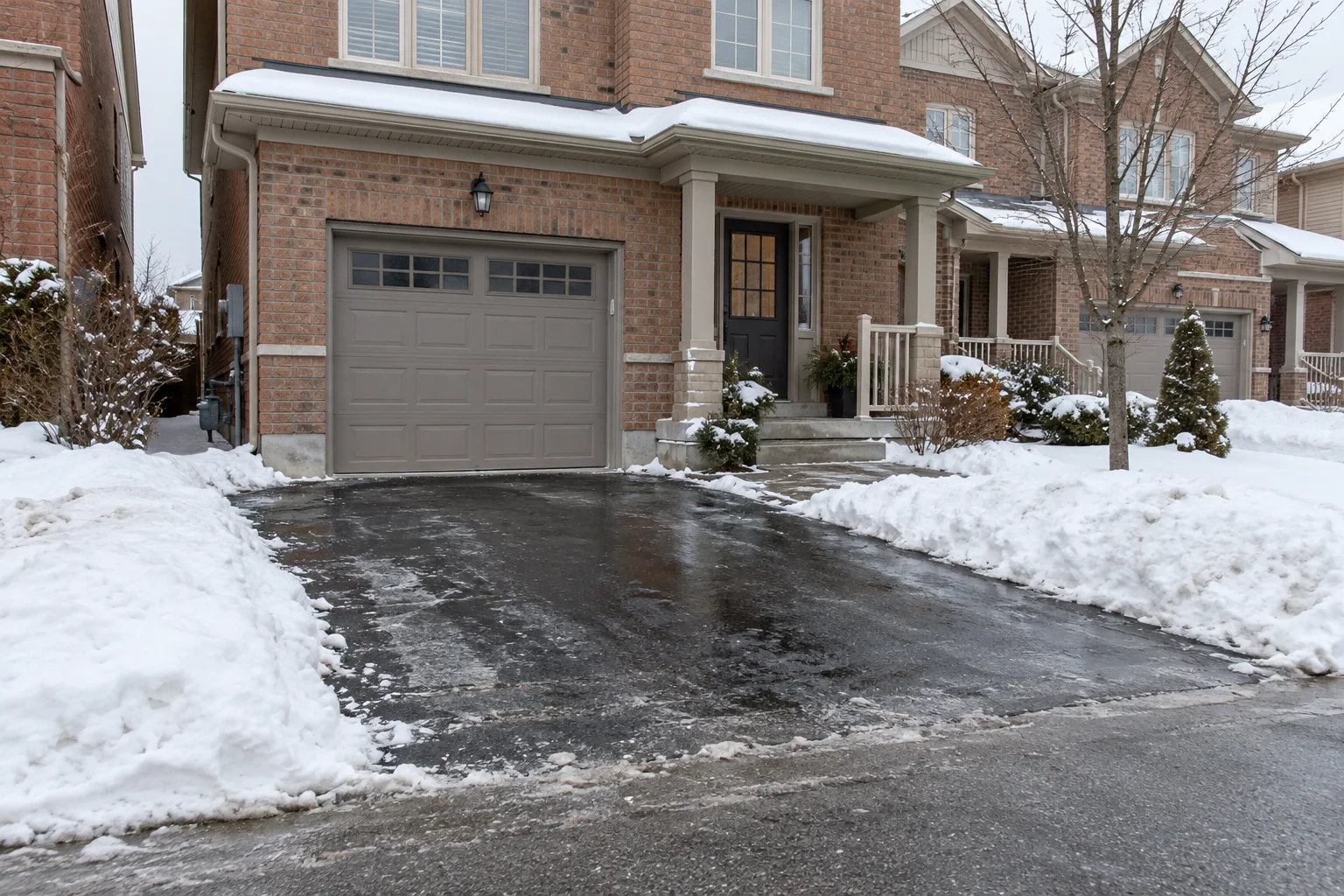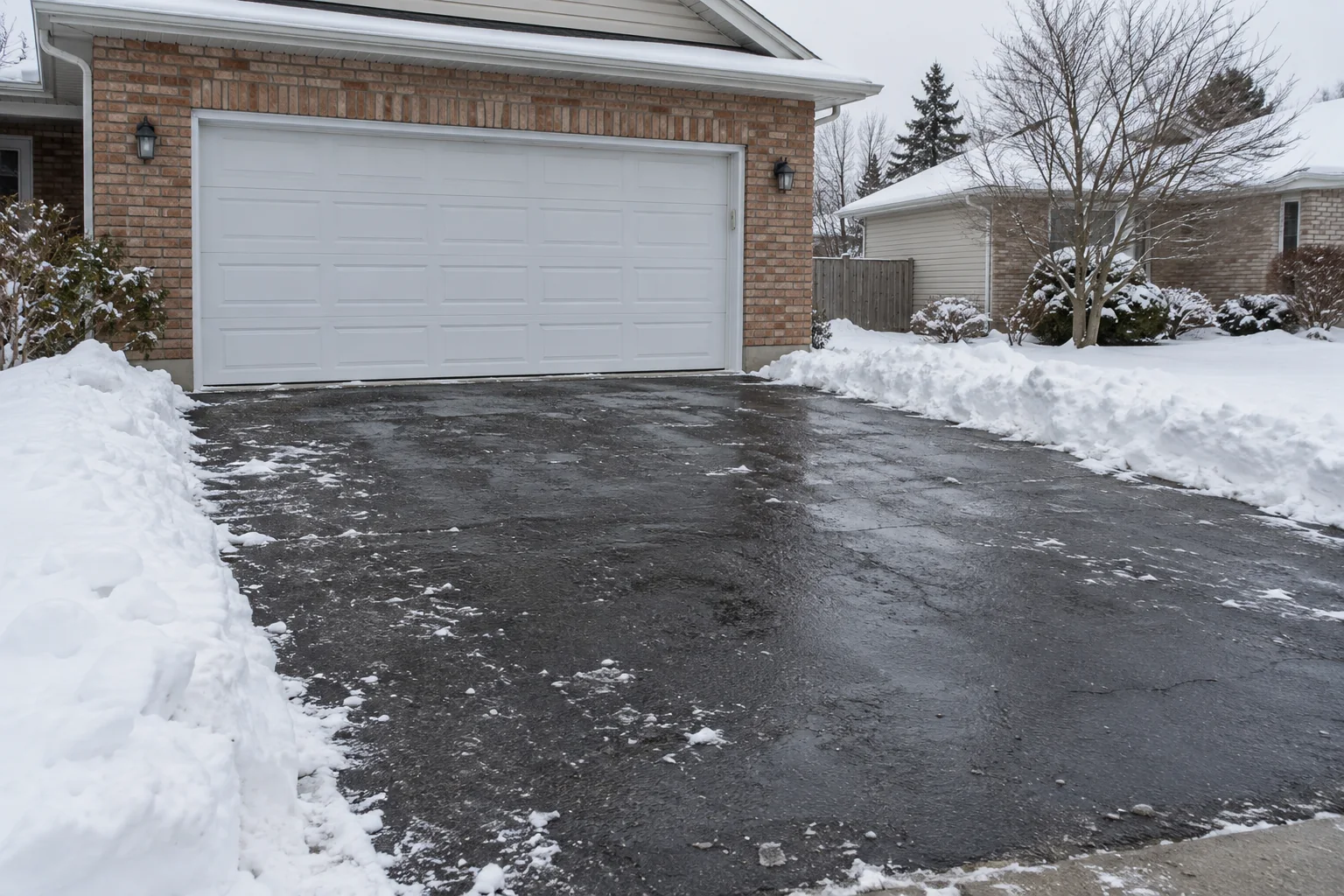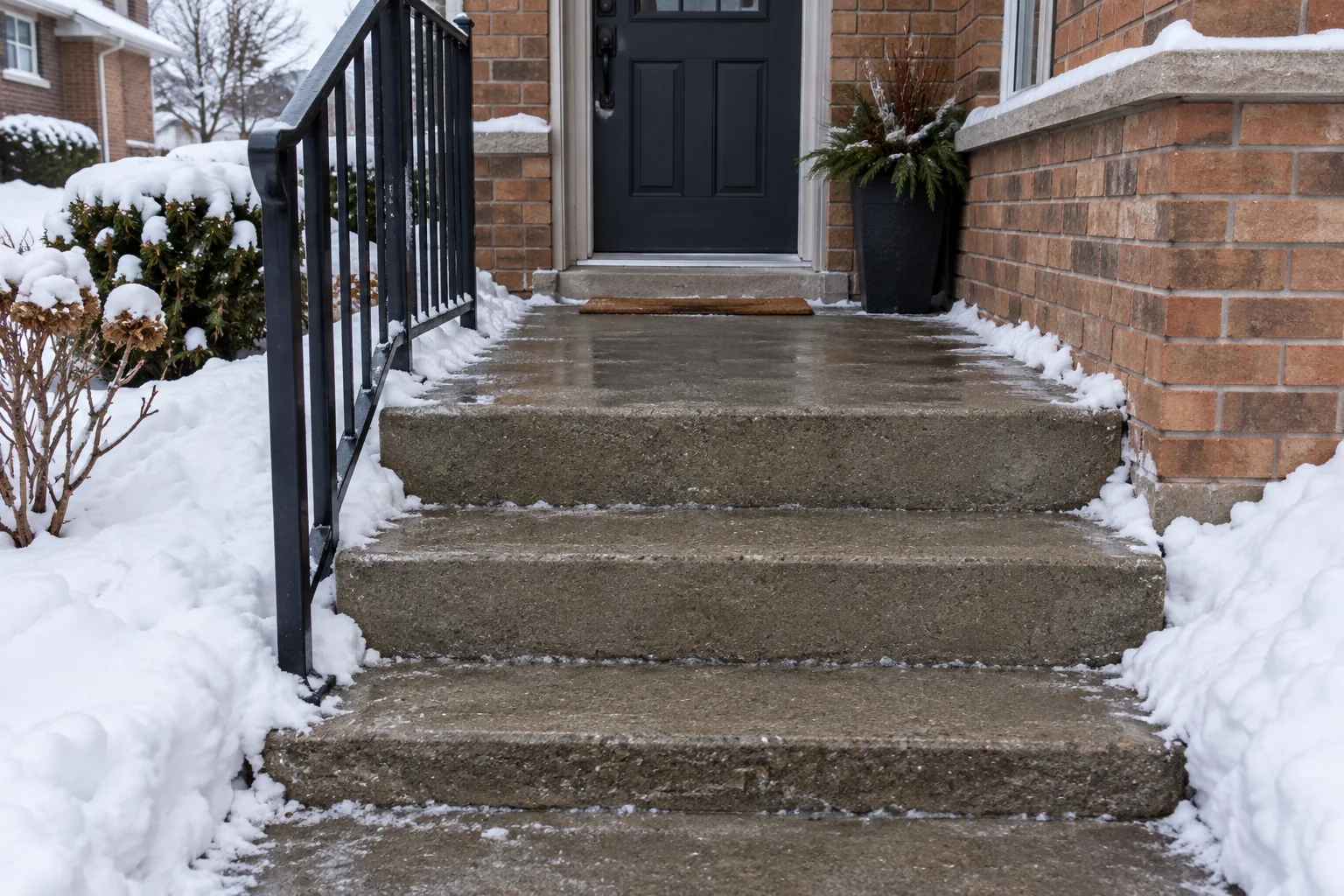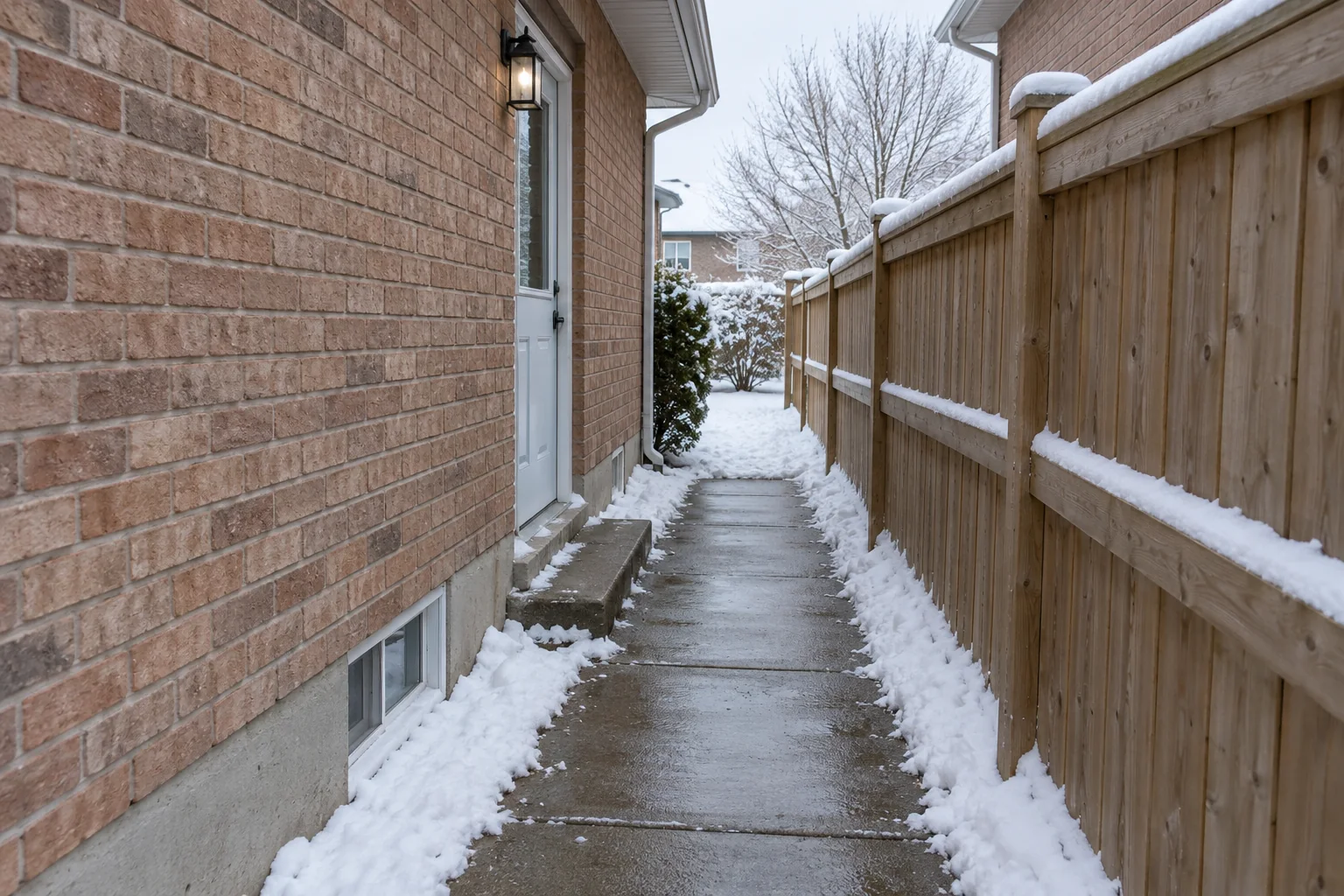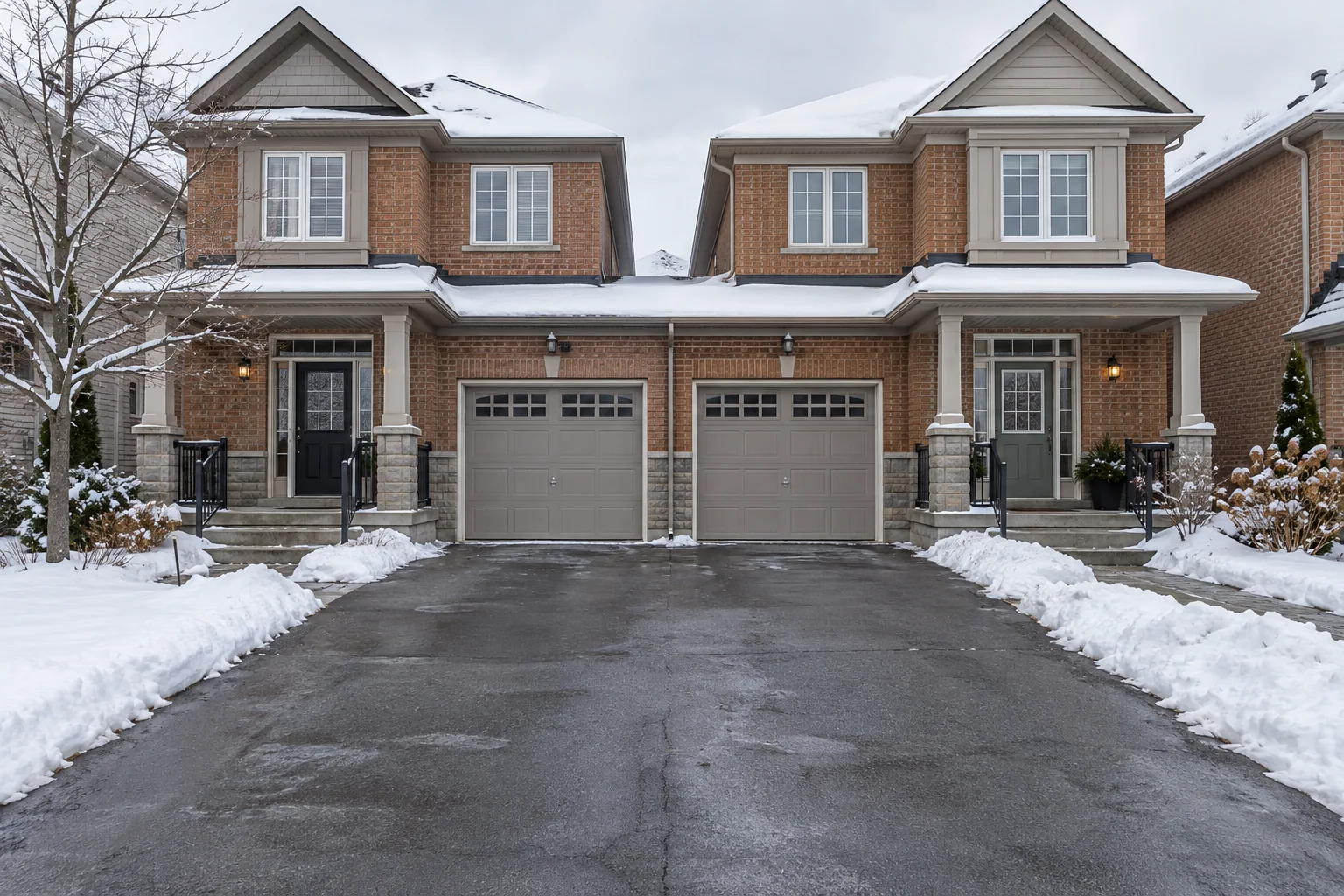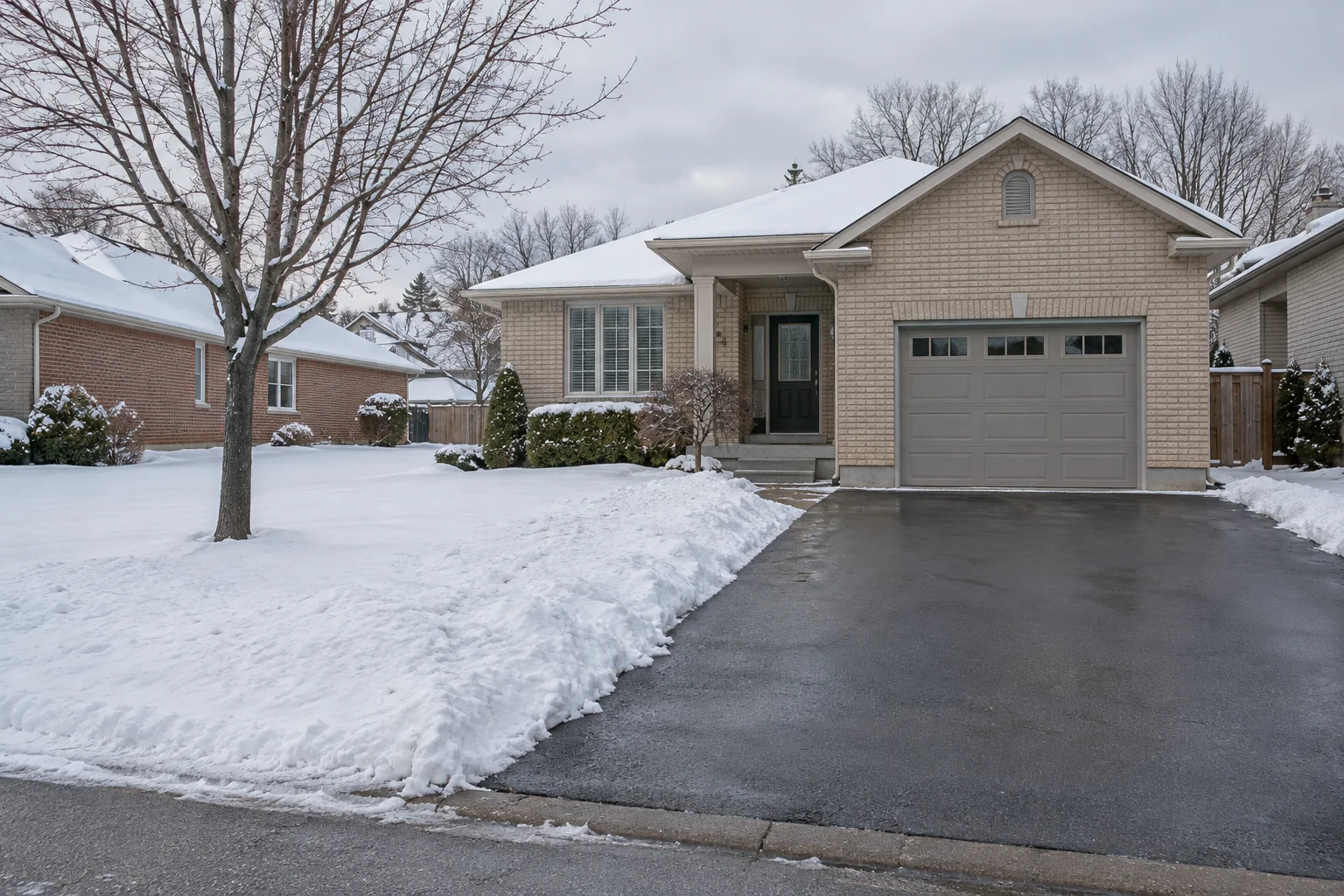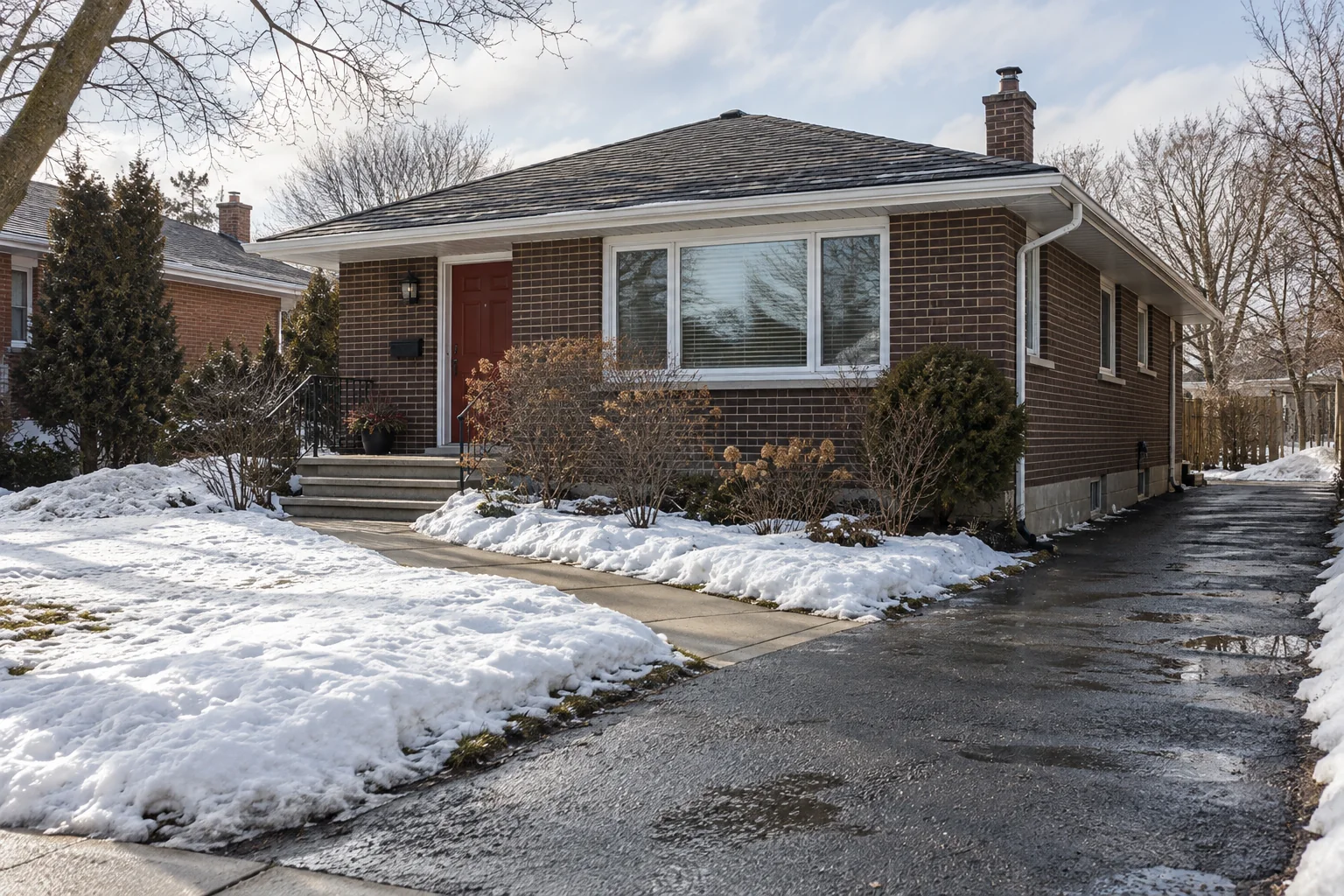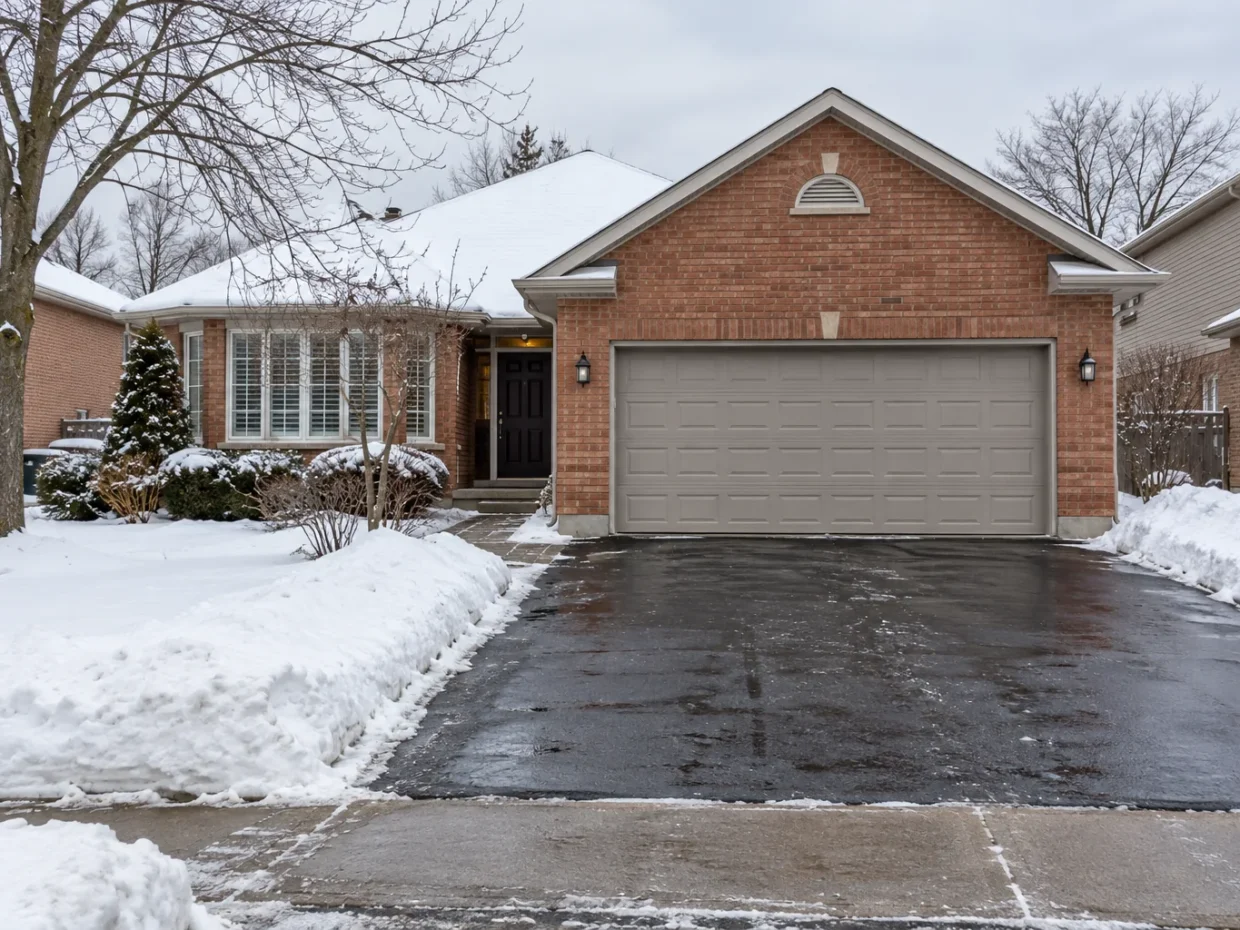
Residential snow removal starts with the route you need to use every day: out of the garage, across the driveway, along the walk and safely through the door. For a Milton home, the plan may also need to account for sidewalk frontage, a road-plow windrow and snow that drifts back into a cleared area. Define these surfaces and the service terms before winter, so the accepted scope reflects how your household actually uses the property.
Plan the route from street to door
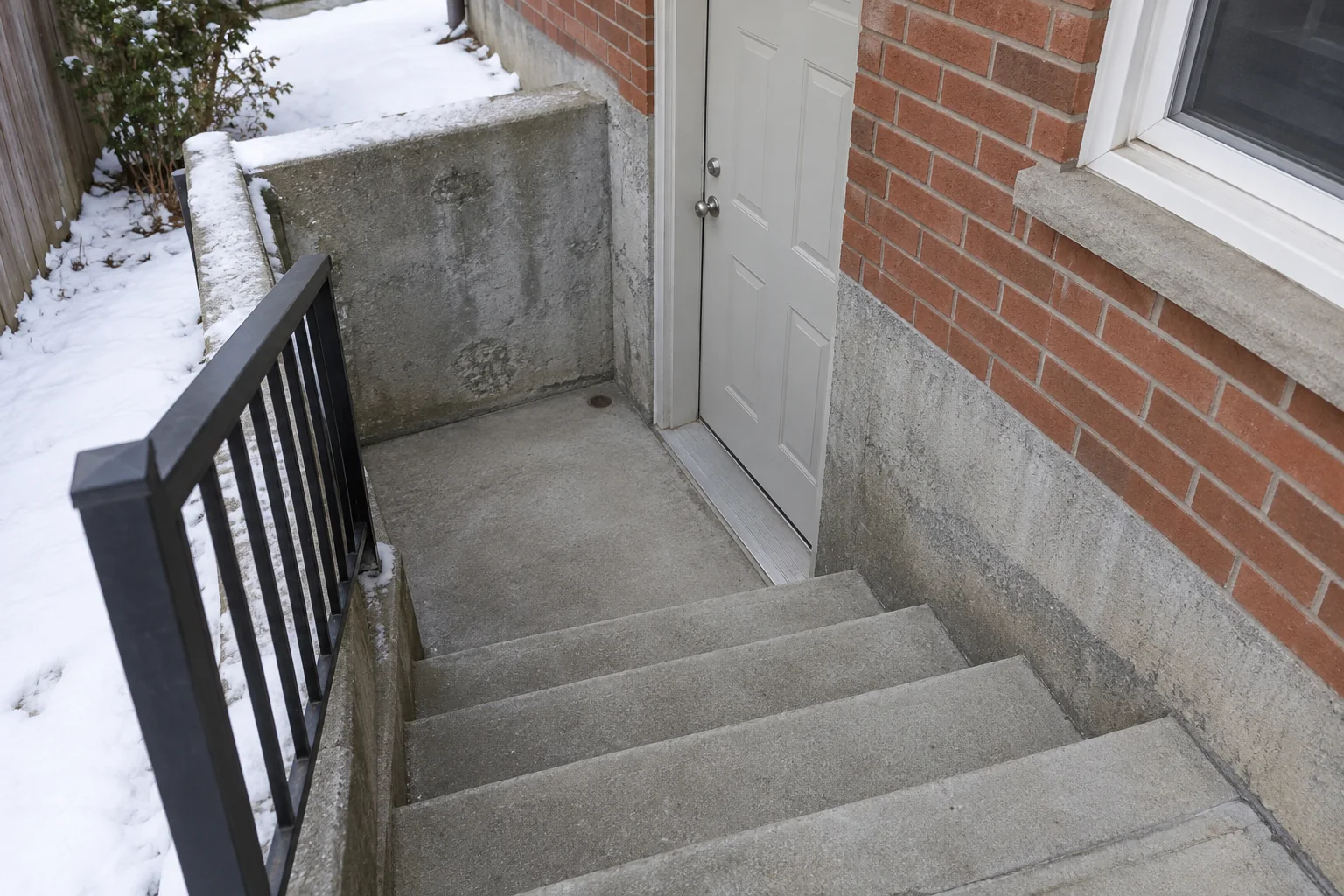
Start at the driveway entrance and follow each regular trip. Where do vehicles leave? Where do people walk with groceries, a stroller or a mobility aid? Include the garage apron, front door and any side or basement entrance used in winter. A short front walk can still have a difficult turn, a narrow gate or steps that need separate attention.
Draw the route on a property photo. Identify municipal sidewalk frontage separately from private paths, then mark secondary access that matters to your family. A corner lot may have much more sidewalk than a mid-block home. Shared driveways need clear boundaries and an agreed approach with the neighbouring household.
Choose the areas that belong in the scope
The accepted agreement determines what is included. Possible residential areas are the driveway, garage apron, front walk, steps, porch access, side walkway, side door, basement entrance and agreed secondary routes. Adjacent municipal sidewalk clearing and driveway windrow handling should be identified explicitly.
Snow clearing and ice treatment are different tasks. Ask whether any ice treatment is available for the home and which surfaces it covers. A driveway service should never be assumed to include every walk, stair, sidewalk or refreeze visit simply because those areas sit on the same property.
Driveways, garages and parked vehicles
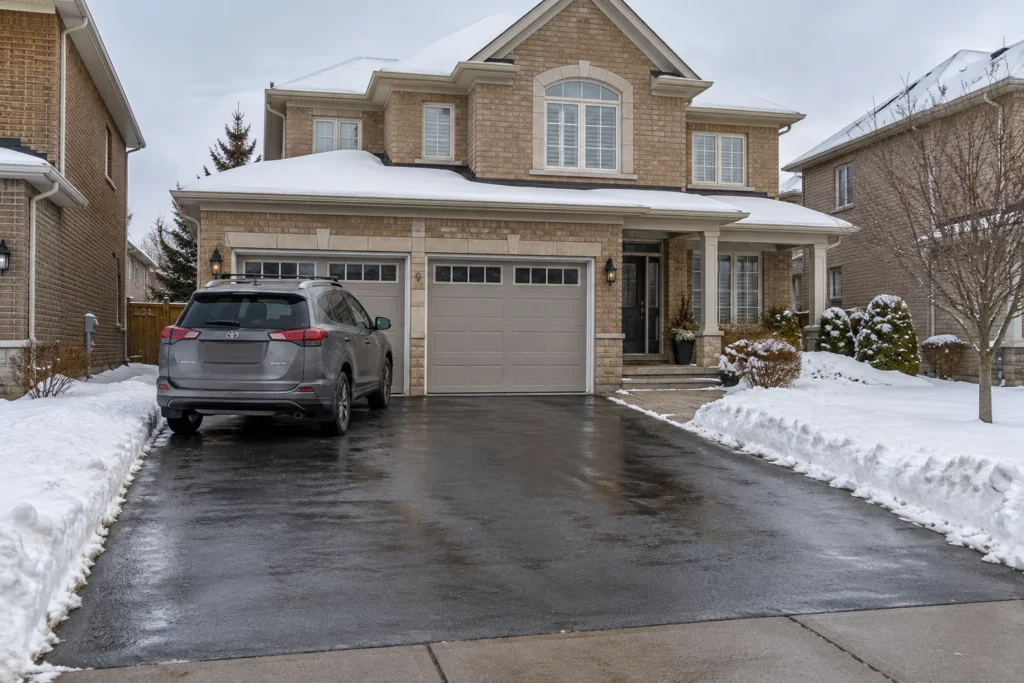
Single-car, double and townhouse driveways have different turning space and storage limits. Record the width, slope, surface and garage-door clearance. Narrow lots can leave little room for a pile, while a sloped driveway may send thaw water toward the garage or a walking route. Note raised paver edges, decorative borders and low features before snow hides them.
Explain where vehicles normally sit and whether they can move before service. A parked car can block the garage approach or divide the driveway into inaccessible pockets. Agree how blocked areas are handled and whether another visit is included. Keep shared access and neighbouring property boundaries visible in the plan; repeated storms can make a workable first pile too large for the remaining space.
Walkways, steps and Milton sidewalk frontage
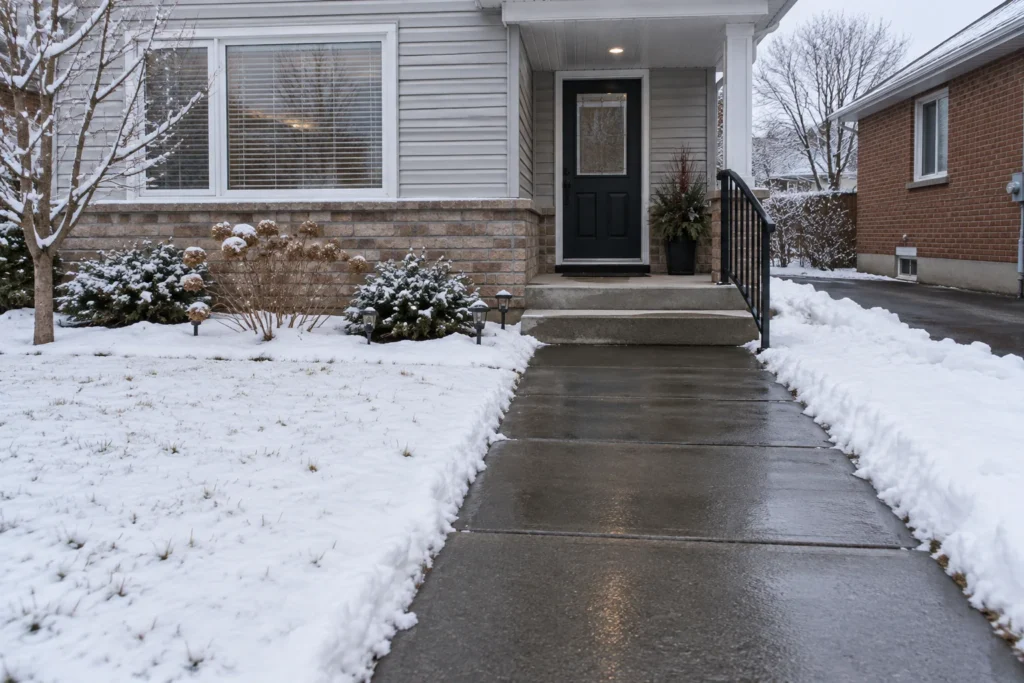
A usable driveway does not solve an uncleared walk. Front steps, porch landings and narrow side passages may require a distinct scope. Identify each route, its width, the number of steps and where handrails or gates restrict access. Compacted snow from foot traffic can persist after loose accumulation is removed, and shaded paving may refreeze overnight.
Milton’s winter maintenance guidance requires residents to clear adjoining sidewalks within 24 hours after a snow or ice storm ends. The Town’s snow removal guidance identifies priority sidewalks and pathways associated with schools, transit and major pedestrian travel, with work beginning at accumulation of at least 5 cm. This does not mean all residential frontage is Town-cleared.
If private service is to include your frontage, specify the full length, corner-lot sections and crossings. Confirm the arrangement before winter and consider how the municipal deadline will be met under the actual service terms.
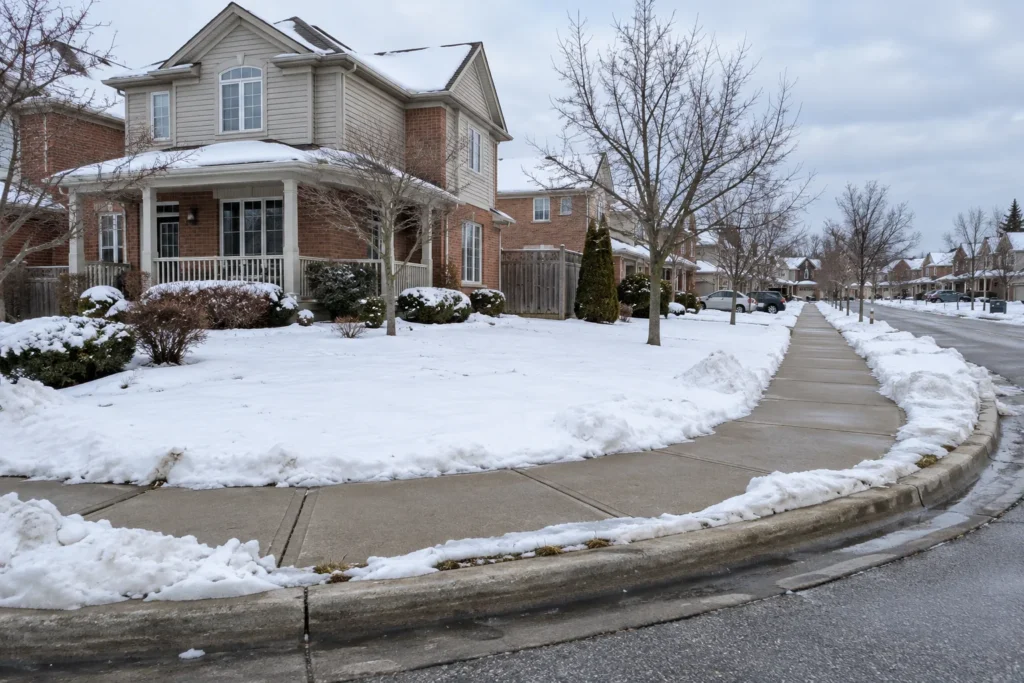
Municipal plow windrows at the driveway entrance
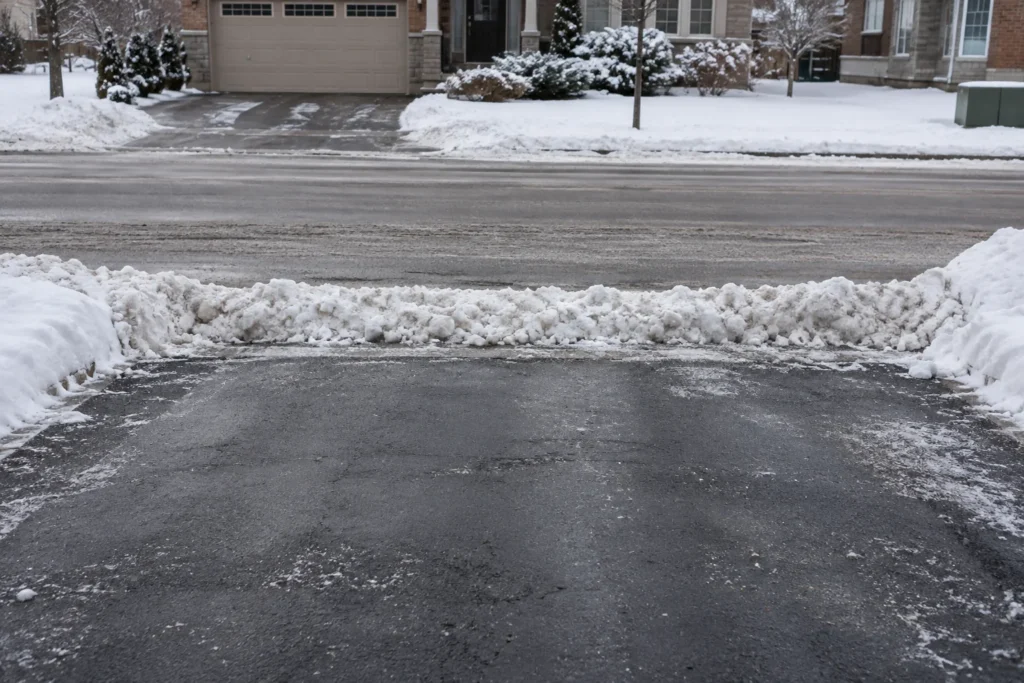
A windrow is the ridge of snow left at the end of a driveway by road plowing. It can arrive after the rest of the driveway has been cleared and may be heavier or more compact than fresh snowfall. Under the Town’s snow removal guidance, most Milton homeowners are responsible for clearing their own driveway windrows.
Ask whether private residential service includes that ridge, how road-plow timing affects the scope and whether a follow-up visit is included. A full-driveway visit and a later windrow visit are separate questions. Do not assume the road-plow pass and a private route will happen together.
The Town’s limited Windrow Removal Program
Municipal information reviewed October 11, 2026: Milton’s 2026/27 Windrow Removal Program covers eligible residents aged 65+ or persons with disabilities, with no able-bodied household resident. It runs December 1, 2026, through March 31, 2027. Service follows snowfall exceeding 10 cm and completion of all Town road plowing. It clears the driveway-bottom road-plow ridge, excluding private-driveway clearing and sidewalk-plow windrows. Completion takes at least 36 hours after all roads are plowed, depending on registration numbers. Check the linked Town page for current registration, eligibility details and fees. Review household eligibility with the Town before applying for registration.
That limited municipal service is different from a private plan covering the driveway, walks, steps and additional home access. Compare the actual included areas before deciding which arrangement meets your needs.
Give snow a place to go
Identify storage areas before the lawn and beds disappear. Piles should preserve doorway access, driver sightlines, neighbouring boundaries and pedestrian routes. Keep hydrants, catch basins and drainage paths clear. Avoid loading vulnerable shrubs, covering vents or placing piles where meltwater will run over steps or into a basement entrance.
Available space shrinks during repeated storms. Discuss what happens when the initial storage area fills; moving or removing accumulated snow is not automatically included. Snow must not be pushed onto the roadway or public sidewalk. Place garbage and recycling where collection can occur without blocking the clearing route, and keep bins out of the road-plow path.
Meltwater, drifting and overnight refreeze
Winter conditions continue after snowfall ends. Wind can refill a narrow passage, vehicles can compact snow and a pile can release water across a cleared driveway. Downspouts, low spots, shaded walks and garage transitions often reveal recurring ice. Paver surfaces and joints also need attention when water collects or drainage is restricted.
Identify these locations in the estimate request. Ice treatment, where available, needs its own surfaces and terms, and no clearing arrangement can guarantee continuously bare or dry pavement. If water repeatedly crosses the same route, a later grading and drainage review may address the cause beyond the winter season.
Compare residential service arrangements
Recurring seasonal service or per-event service may be available depending on the address and route. Ask about the agreed accumulation trigger, timing expectations, visit frequency and what happens during prolonged snowfall. Continued snow, drifting and a later windrow may require different decisions from the initial visit.
Confirm whether walks, steps, sidewalk frontage, windrow follow-up and optional ice treatment are included. Return visits and changes in access should be covered by the agreement. A seasonal description alone does not establish unlimited visits, continuous attendance or a fixed arrival time.
Define the service before winter
- Mark the included surfaces, entrances, sidewalk frontage and property boundaries.
- Confirm accumulation triggers, timing expectations, prolonged-storm handling and return visits.
- Agree on vehicle access, blocked areas, snow-storage locations and windrow handling.
- Identify ice-control scope, exclusions and who can authorize a change.
- Choose a communication method for access problems or changing conditions.
Winter street parking also affects access. When Milton suspends parking exemptions for a winter event, vehicles must be off the roads. A forecast of 10 cm is a guideline for these suspensions, and smaller events can also prompt one. Check current winter parking rules and notices, and give road-clearing crews room to work.
What affects a residential estimate?
Send the Milton address, property type and recent photographs. Useful details include driveway dimensions, slope, garage access, walkway length, sidewalk frontage, steps, entrances and narrow side access. Highlight corner-lot frontage, shared boundaries, parked vehicles, snow-storage limitations and recurring water or ice.
The requested arrangement also matters: seasonal or per-event service, trigger, return visits, windrow scope and any ice treatment. Photos of a previous winter problem are helpful if available. Estimates should follow the specific property and proposed agreement, rather than a generic package or assumed visit count.
A winter-specific planning process
- Share the address: provide the Milton property and your preferred contact method.
- Identify the routes: show the driveway, walks, steps and entrances requiring clearing.
- Review access: explain vehicles, gates, boundaries and snow-storage limits.
- Confirm frontage and windrows: distinguish sidewalk requirements from the driveway-bottom ridge.
- Agree on the scope: confirm available service terms, ice treatment and exclusions.
- Complete agreed winter service: work follows the accepted property arrangement.
- Communicate changes: report new obstacles or conditions where applicable.
Residential snow removal questions
What areas of my property can be cleared?
Possible areas include driveways, walks, steps and entrances. Sidewalks, windrows and secondary access must be included explicitly in the accepted scope.
Can driveway and walkway clearing be included together?
They may be combined where available. Identify both routes so walkway work is included in the estimate and agreement.
Am I responsible for clearing the sidewalk in Milton?
Yes. Residents must clear adjoining sidewalks within 24 hours after a snow or ice storm ends. Check current Town guidance.
Does Milton clear driveway windrows?
Most homeowners clear their own. Milton’s limited program serves eligible residents under its published terms.
Who qualifies for the Town’s Windrow Removal Program?
Eligible residents are 65+ or persons with disabilities, with no able-bodied person living at the address.
Does that program clear the whole driveway?
No. It excludes private-driveway clearing and sidewalk-plow windrows.
Can private service include the windrow?
Ask when requesting an estimate. Confirm whether windrow handling and any later visit are available and included.
Can sidewalk clearing be included?
Where available, identify the complete frontage and corner-lot sections. Confirm its inclusion and timing before accepting service.
Are front steps included?
Only if the agreement includes them. Provide the number of steps, handrails, landing and entrance access.
Is salting included?
Do not assume it is. Ask about residential ice treatment and included surfaces; commercial salting is a separate service scope.
Can service be seasonal?
Seasonal arrangements may be available depending on address and route. Confirm triggers, repeat visits and exclusions.
Can service be arranged per visit?
Per-event or per-visit availability must be confirmed. Ask how requests, access and the included area are handled.
What happens when cars are parked in the driveway?
They may prevent access to part of it. Agree on vehicle movement, blocked areas and any follow-up terms.
Where will snow be placed?
Use agreed storage areas that preserve access, sightlines, neighbouring boundaries, hydrants and drainage. Roads and public sidewalks are not storage areas.
What happens during prolonged snowfall?
The agreement should explain continued accumulation and return visits. An initial visit does not necessarily include additional attendance.
What happens if cleared surfaces refreeze?
Refreeze can occur after clearing. Discuss any available ice treatment and report recurring runoff or drainage concerns.
When should I arrange residential snow service?
Discuss the property before winter where possible. Confirm route availability and terms before relying on a service arrangement.
Plan home access across the seasons
Residential property maintenance, fall cleanup and lawn maintenance can help keep routes visible and the surrounding landscape manageable. For a business, see commercial snow removal; coordinated managed sites belong with property manager snow service. The salting and ice management page describes the dedicated commercial scope.
Compare all winter service paths in the Snow Removal hub, or request an estimate with your home address, clearing routes and winter access concerns.