
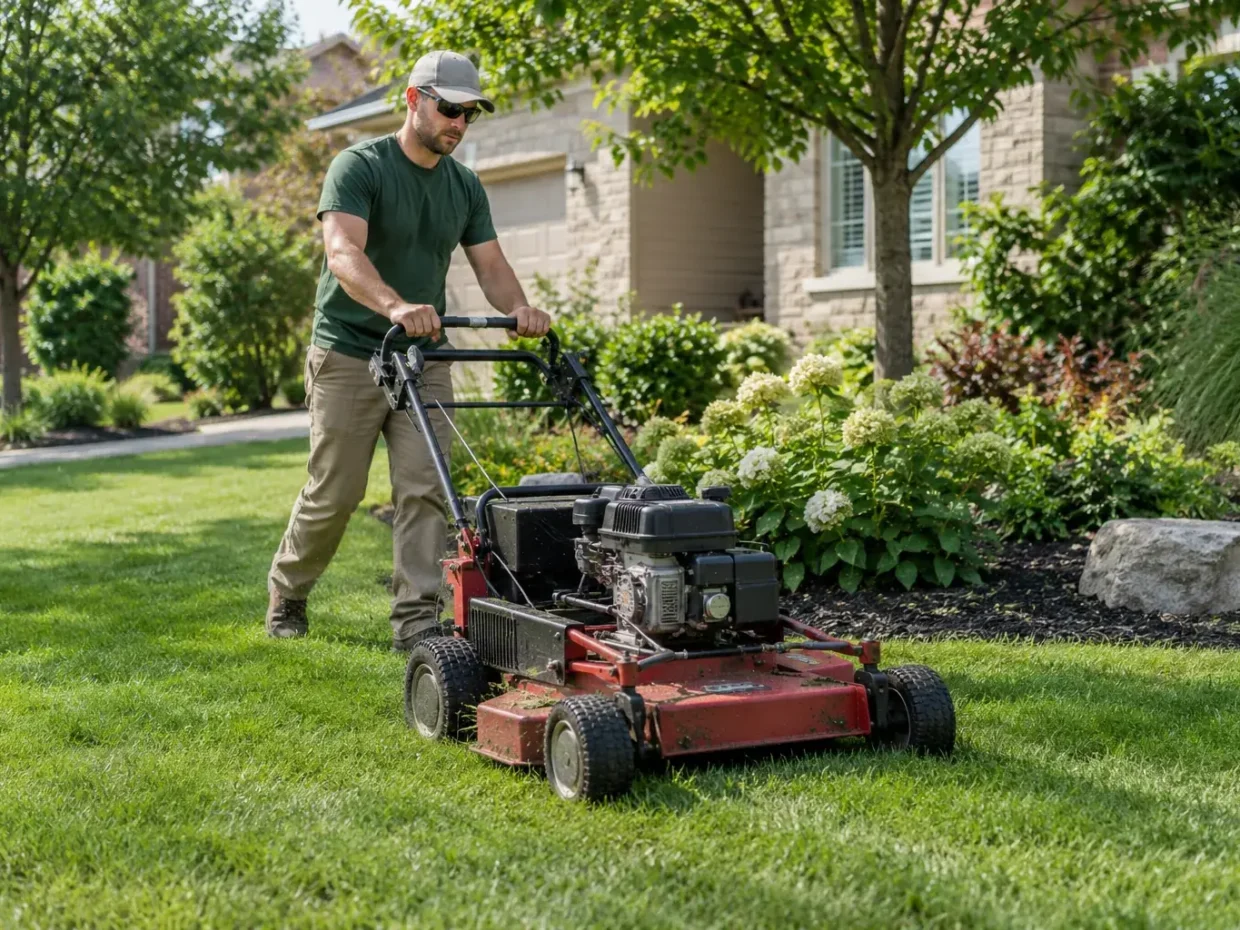
A well-kept lawn depends on recurring work that fits the property, not a one-time construction step. Lawn maintenance can include mowing, edging and trimming around beds, paths and obstacles, with service frequency considered against growth and seasonal weather. For Milton homeowners and managed properties, the important questions are what areas are included, how access works, and how the lawn should look through the growing season. Construction or sod installation is a separate scope; an established lawn requires ongoing observation and care. A sensible plan protects planting and hardscape edges while keeping the turf usable and the property orderly.
Map the mowing conditions
Start with the lawn's size, shape and current condition. Identify steep slopes, narrow side strips, trees, irrigation heads, garden borders, play equipment and utility fixtures that affect equipment access. Note areas that remain wet long after rain, heavily shaded corners and patches worn by repeated traffic. A property may need simple mowing and trimming, while another may need an assessment of thin turf, compaction or drainage before regular cuts can improve its appearance. A gate width or schedule for tenants and visitors can shape how recurring work is organized. For a front yard, snow storage and salt may leave damage visible when the season begins.
Define recurring lawn care
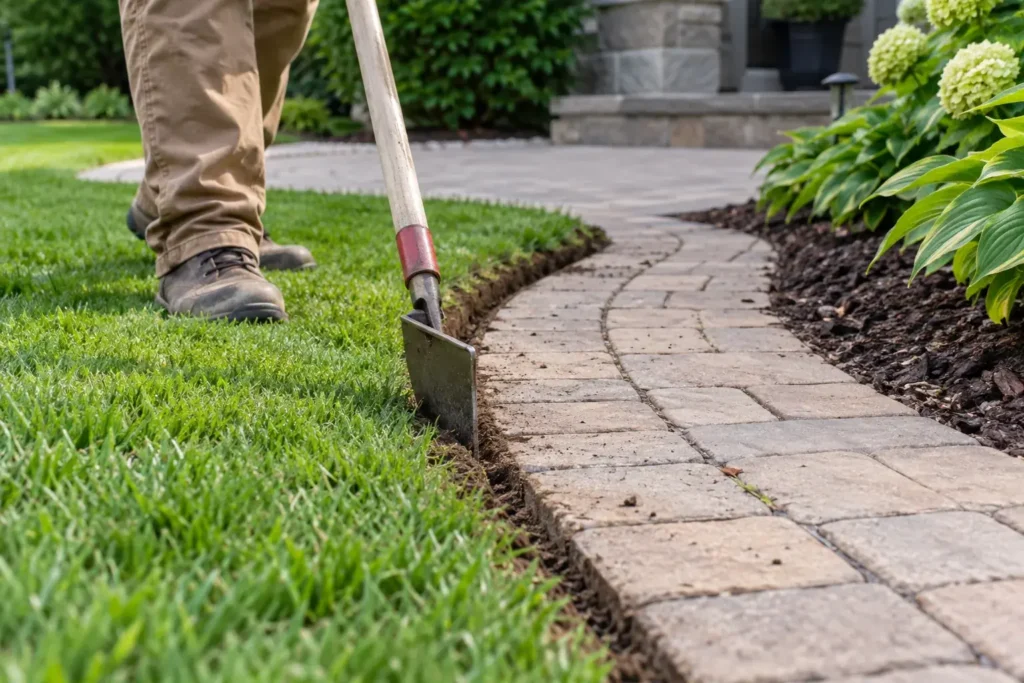
Define the routine clearly. Mowing frequency can change with growth and weather; the objective is a consistent, appropriate cut rather than an inflexible claim about every week. Edging can keep turf from creeping over a walkway, driveway or bed line. Trimming should reach fence lines and features without striking tree bark, young shrubs, lighting or sprinkler heads. Remove or manage clippings according to the agreed scope and site conditions. A simple, connected lawn is easier to care for than thin strips surrounded by hardscape. If frequent service is desired, describe the actual tasks and access arrangements, including gates, pets and areas that must remain clear.
Spot problems beyond mowing
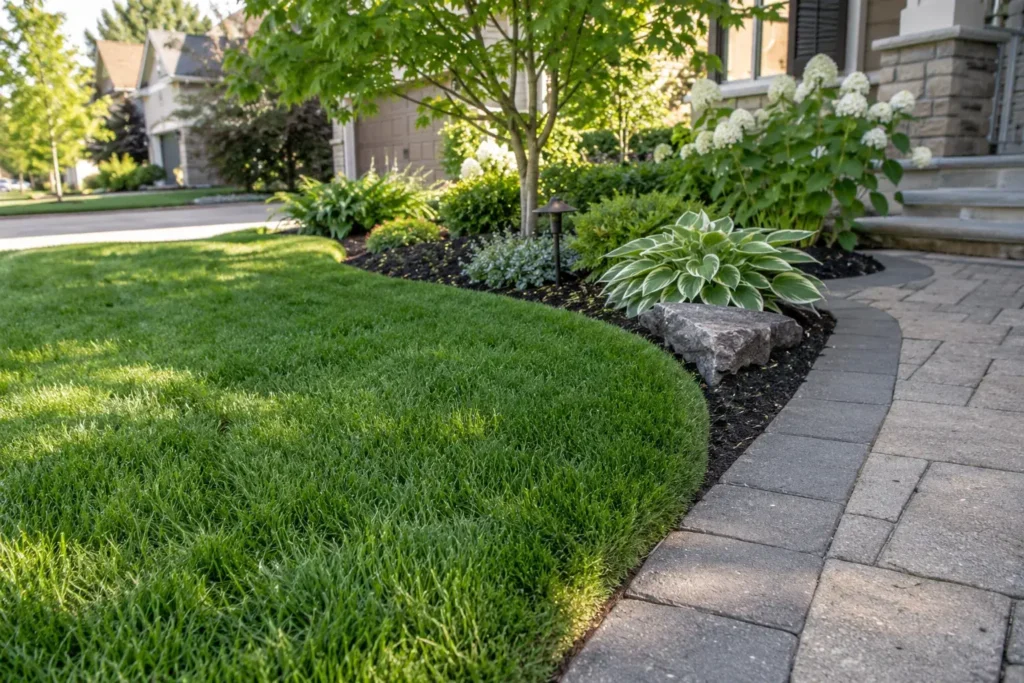
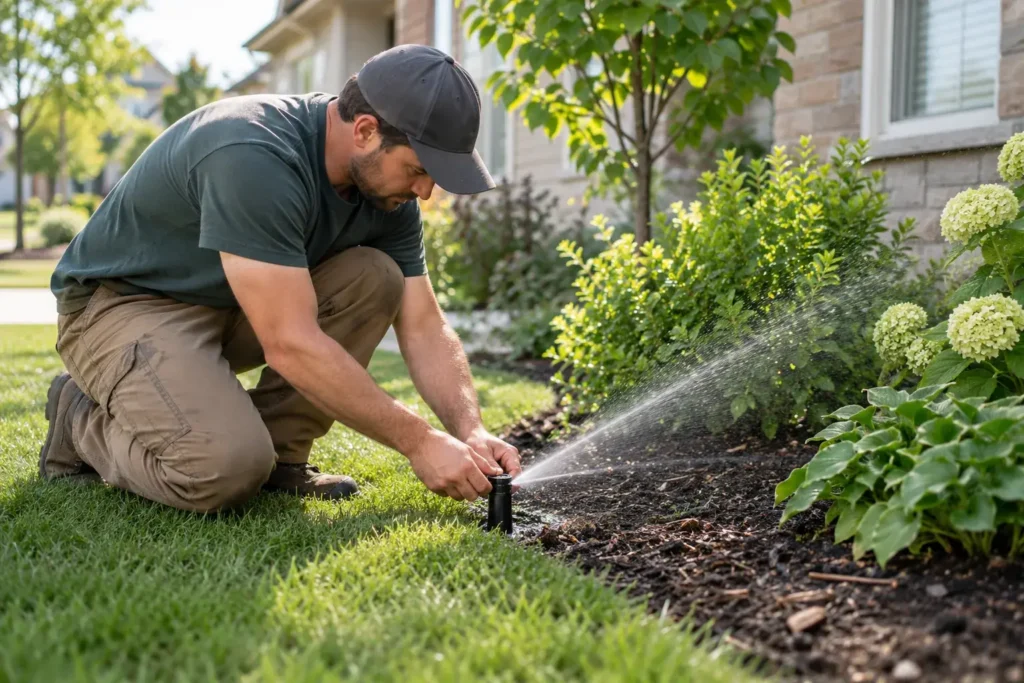
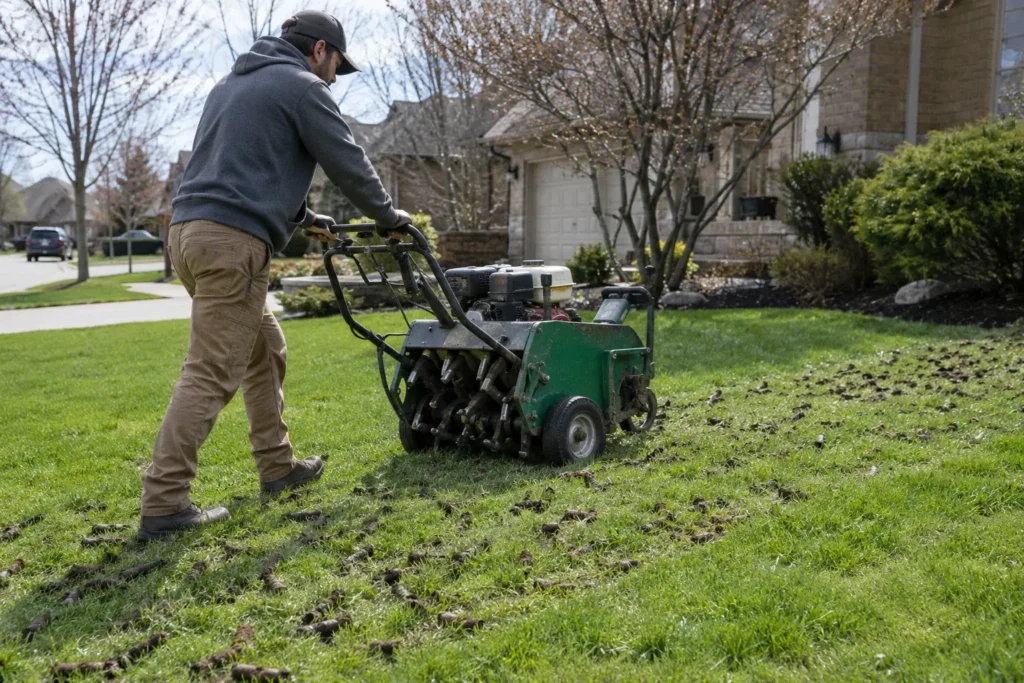
Maintenance also reveals problems. Water pooling after routine rain, a broad area thinning beneath a tree, or repeated mower ruts in soft ground should prompt a site conversation. Mowing cannot correct grade, soil compaction or inadequate sunlight. Aeration and overseeding may help certain established lawns, while persistent wetness may require drainage work. New sod should be allowed to establish before it is treated like mature turf. Irrigation systems need coverage checks so one edge is not saturated while another dries. A landscape plan should keep service routes clear and give turf enough space to be maintained without damaging beds and pavers.
Fit service to property use
Daily use matters. An entry lawn should not have clippings blown across a walkway; a backyard play area needs attention to muddy traffic; a commercial frontage calls for dependable presentation and predictable access. Shrub and garden care may be coordinated with turf maintenance but should be identified separately so expectations remain clear. A property with a large patio and small lawn may need less mowing time but more attention to edging and debris. During wet periods, equipment and scheduling may need adjustment to avoid rutting the turf. The most useful scope describes the standard of care and the conditions that affect it.
Review turf through the season
Through the season, monitor density, weeds, bare areas and how water behaves. A recurring plan can identify when to discuss repair rather than simply cutting increasingly poor turf. Autumn leaves and spring debris may require separate cleanup work; they should not be silently assumed in a mowing-only scope. If a landscape renovation is planned, protect access for future maintenance and avoid tiny areas that equipment cannot reach. The goal is an attractive, usable lawn with a practical cadence and clear responsibility for work beyond routine mowing, edging and trimming.
Decisions that shape lawn maintenance
Mowing area
Map all turf zones and confirm whether slopes, narrow side yards or gated backyards are included.
Growth and schedule
Set expectations for a regular service rhythm while allowing weather and active growth to affect timing.
Edges and obstacles
Detail trimming around trees, beds, walls, lighting and irrigation without damage, and keep paved edges visibly defined.
Clippings and debris
Clarify handling of grass clippings, leaves and unusual storm debris as distinct tasks.
Wet or thin lawn
Flag conditions that need grading, drainage, soil or renovation work rather than treating repeated mowing as a remedy.
Access arrangements
Discuss pets, locked gates, tenant access, parked vehicles and the most practical route for equipment.
Compare lawn maintenance proposals
A recurring quote should list mowable areas and the routine tasks separately: mowing, trimming around obstacles, edging along hardscape and handling clippings. Define whether garden beds, hedges, leaf collection and litter pickup are included or additional. These details prevent a tidy-looking front yard from masking a neglected side passage. Photographs of all lawn zones, not just the street-facing area, help establish a practical scope.
Weather affects what responsible service looks like. Cutting waterlogged ground can leave ruts; mowing during very dry or slow growth may provide little benefit. A practical maintenance arrangement allows judgment within an agreed cadence and communicates unusual conditions. Property access matters just as much: a locked gate, pets, tenant schedules or a steep slope can change the method.
A lawn-care visit can identify changes that need another decision. Repeated puddles indicate a possible drainage issue, and widening bare strips along a path may suggest too much foot traffic for turf. The right response may be aeration, overseeding, sod renovation, a walkway or a simpler bed. The recurring crew's observation is valuable when it prompts a specific property improvement rather than an automatic extra treatment.
Property managers can use a consistent service map to identify frontages, shared lawns and restricted access zones. The map also helps distinguish routine cuts from storm cleanup or landscape improvements. Homeowners benefit from the same clarity on a smaller scale, particularly when a back gate, steep slope or separate boulevard area might otherwise be missed.
For front and rear turf, note any different ground conditions in the service scope. A shaded backyard may grow more slowly while a sunny frontage grows quickly, and a low area can be too wet for equipment after rain. These observations guide timing and help prevent damage from routine work.
Questions about lawn maintenance
Does lawn maintenance include new sod?
Sod replacement is a construction and establishment scope. Routine maintenance covers the established lawn and should be described separately.
Will frequent mowing repair thin grass?
No. Light, soil, water, wear and compaction may be involved. A condition review can determine whether overseeding or another intervention is appropriate.
How often should a lawn be cut?
Growth changes with season and weather. A service plan should set a practical cadence and adjust to conditions rather than promise one interval for every property.
Are garden beds included?
Bed weeding, pruning and mulch are separate tasks unless expressly included in the property-care scope. Define them clearly before recurring work begins.
Related property work
Sod Installation, Aeration & Overseeding, Garden & Hedge Maintenance, Wet Yard Drainage, Residential Property Maintenance.
Discuss your lawn maintenance project
Provide photographs of all lawn zones, including gated or sloped areas, and describe the desired mowing, edging and trimming routine. Mention pets, access arrangements and any garden or seasonal work you want assessed separately. This makes recurring expectations clear.