

Commercial snow removal is a site access plan for winter conditions. Before a storm, a Milton property needs clear priorities for entrances, parking, pedestrian routes, loading and the places snow can be stored without blocking visibility or drainage. The actual service agreement sets triggers, included areas and communication; a general service page should not imply a universal response guarantee. Plowing, hand clearing and ice treatment are related but distinct tasks. A useful winter scope starts with a marked property map and the way the business operates through a storm.
Assess the existing property
Snow service for a commercial site begins with the site map. Parking circulation, pedestrian entrances, loading, accessible routes and snow storage compete for space in winter. Scope and priorities should be documented before a storm rather than improvised in a crowded lot.
Map priority routes
Identify public entrances, accessible paths, emergency access, loading and employee parking. The order of work should reflect property use and actual contract terms.
Set snow storage areas
Choose locations that do not obstruct sightlines, drains, hydrants, doors or valuable planting. Storage space shrinks as winter progresses and must be considered in the original plan.
Record obstacles
Mark curbs, islands, drains, signs, equipment and raised landscape beds before they disappear under snow. A clear site record can reduce damage and confusion.
Plan vehicle movement
Consider parked cars, deliveries, lot geometry and equipment access. A large open area and a tight plaza entrance require different operational approaches.
Decisions that shape the scope
Coordinate pedestrians
Walkways, steps and entrance aprons need their own priority and treatment plan. Plowing a lot does not automatically address every walking route.
Separate plowing and treatment
Describe when salting or ice management is part of the scope and how site conditions are reviewed. No treatment guarantees a slip-free surface through changing weather.
Set communication expectations
Agree on contacts, site changes, reporting and any multiple-property coordination. Do not assume a particular response promise or trigger without a defined contract.
Plan thaw and refreeze
Drains, downspouts and piles can create meltwater that freezes across routes. Winter planning benefits from knowledge of the summer landscape and grade.
Protect spring recovery
Note salt-exposed beds, curb damage and lawn edges for later repair. The winter and landscape scopes are connected even when contracted separately.
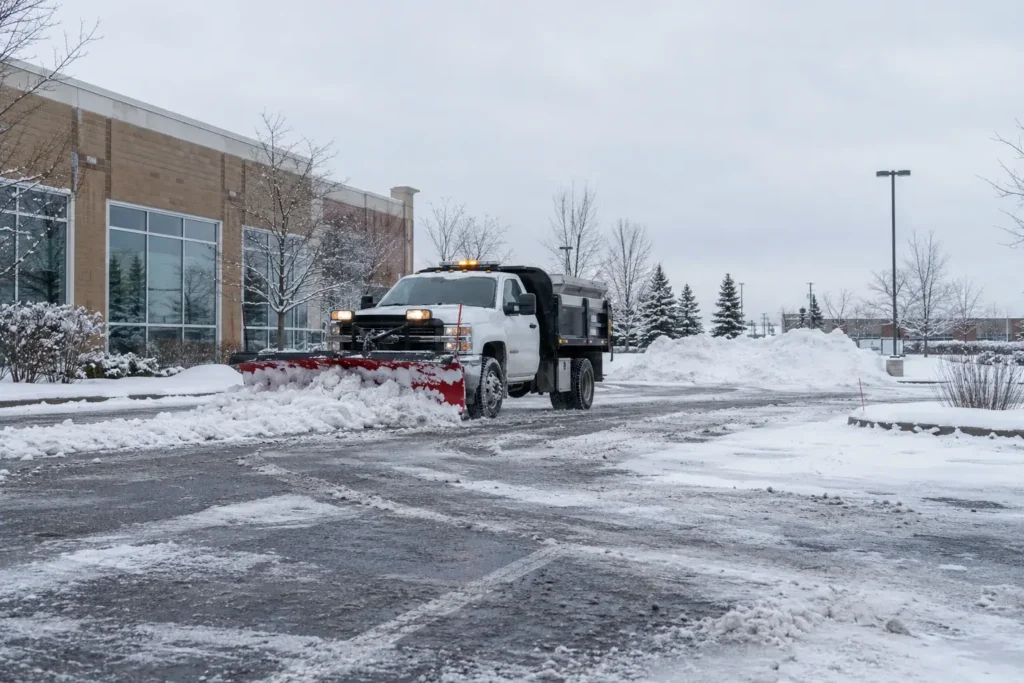
Map the site before snow hides it
Record curbs, islands, drains, signs, speed bumps, fire routes, accessible parking, loading docks and raised beds while pavement is visible. Mark fixed obstacles and areas where parked vehicles will obstruct access. A current map is more reliable than memory during a large event, especially on multi-site portfolios. It should distinguish public entrances, staff doors and service gates. Confirm where equipment can turn without damaging a wall or planting edge. If construction changes the site during winter, revise the map rather than relying on a preseason version that no longer reflects the property.
Prioritize people and critical access
A cleared parking lane is not sufficient if customers cannot safely reach the entrance. Identify the routes that connect parking and sidewalks to doors, steps, ramps and accessible paths. Some sites have early tenant openings; others depend on deliveries or loading before customer traffic. The service plan should name those priorities and any access windows in the contract. Pedestrian areas may need different equipment or hand work from broad vehicle surfaces. An ice treatment decision also needs to account for shaded entries and meltwater crossings that can refreeze after plowing.
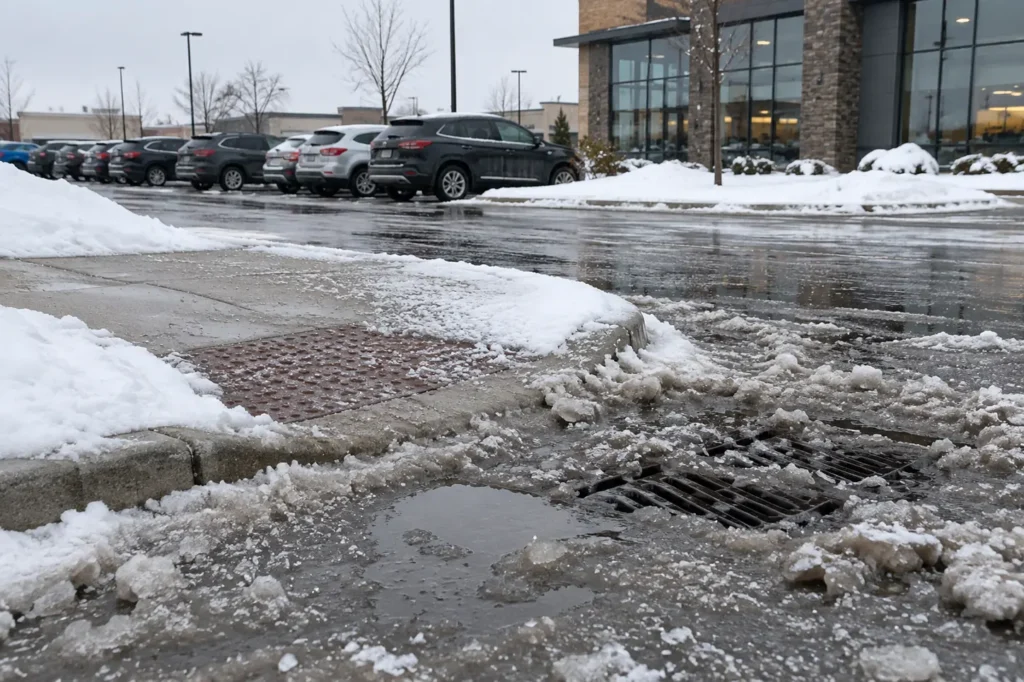
Choose snow storage by its later effects
Piles need room to grow across multiple storms. A location that looks open in November may block a sign, sightline, accessible space, hydrant, catch basin or storefront by February. Melting piles can drain across a cleared route and create ice. Salt-laden snow can damage turf and shrubs when spring arrives. Map preferred and restricted zones, and define how accumulation that exceeds on-site storage will be handled under the actual agreement. Snow should not be moved onto public roads or sidewalks as a convenient outlet. Storage is a design decision as well as an operational one.
Distinguish plowing and ice management
Mechanical clearing removes accumulation but can leave packed areas, windrows and surfaces vulnerable to freeze-thaw. Salting or other treatment has its own locations, materials and decision terms. A treatment reduces risk but cannot promise that every surface will remain slip-free during changing weather. The scope should say whether walks, steps, entry aprons, parking bays and loading areas are included, and how blocked spaces are communicated. Standing water from roof runoff or poor grade can create repeat ice even after treatment; a landscape drainage improvement may be the longer-term answer.
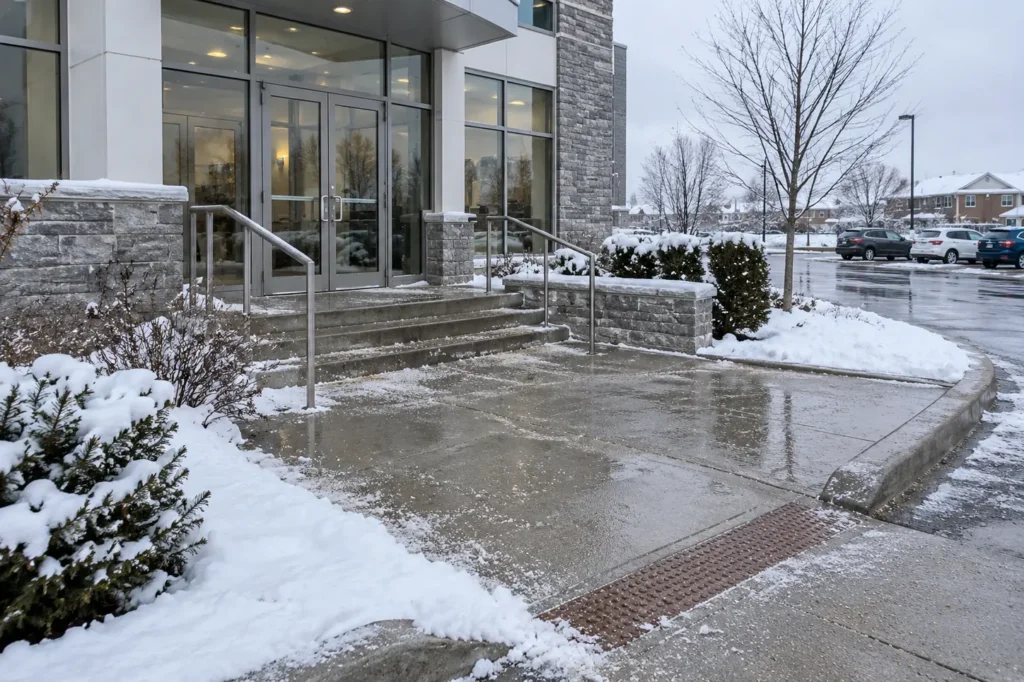
Coordinate vehicles, tenants and deliveries
A plow route depends on the space available at the time of service. Overnight parked cars, delivery trailers, temporary bins and construction fencing can interrupt the planned path. Establish a contact for access problems and a method for noting areas that could not be completed. Multi-tenant sites may need notices about where cars should be parked, but any such arrangement belongs in the property’s own operating plan. A clear service boundary helps avoid assuming that every inaccessible stall will be hand cleared. Record changes to entrances or traffic patterns promptly.
Use records to refine the season
Where documentation is part of the agreement, site observations can identify recurring ice, buried obstacles and places where snow storage is failing. A manager can then decide whether to revise priorities, move a pile or authorize a separate repair. Event notes should not be confused with an unsupported promise of continuous monitoring. The plan may be updated after the first significant storm when real traffic and meltwater patterns become visible. At season end, inspect curbs, beds and lawn edges so spring restoration addresses damage and salt exposure rather than simply hiding it under new mulch.
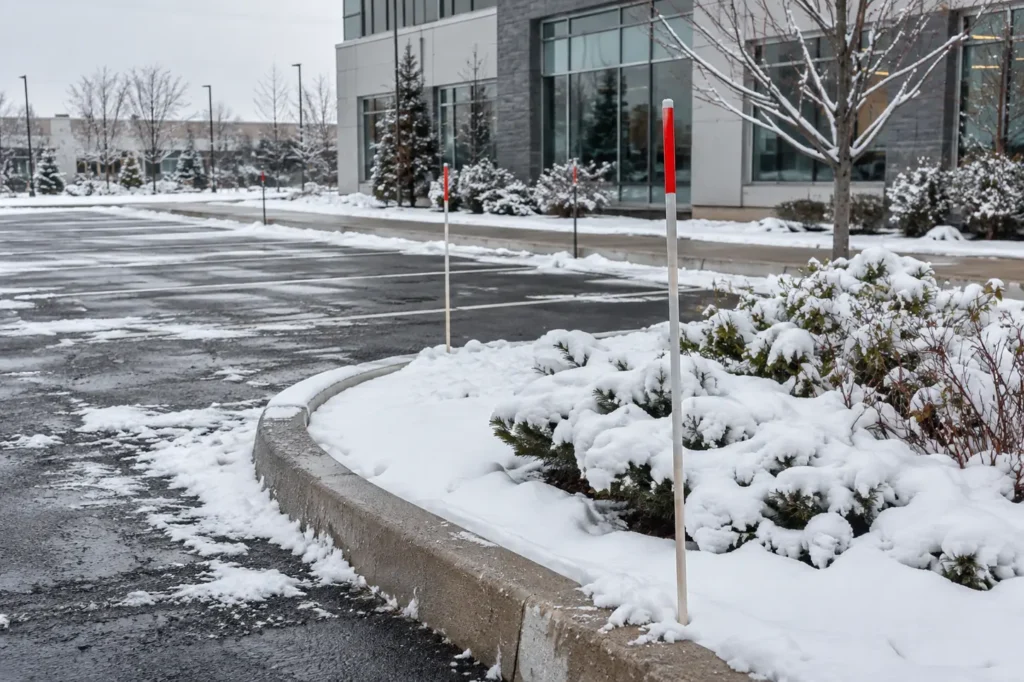
Connect winter operations to the landscape
A landscape designed only for summer can leave no snow storage, hide drains under planting or expose delicate shrubs along a plow edge. Note these constraints when renovating a plaza or office property. Low, durable beds and protected tree locations may be useful in high-traffic areas, while some planting should be moved away from repeated salt exposure. Grading and drainage determine where thaw water crosses pavement. A spring improvement plan can correct recurring surface trouble so the next winter scope is easier to deliver. This is a practical link between commercial landscaping and winter service.
Set property-specific terms
Triggers, site attendance, treatment decisions, response windows, monitoring and reporting are contract details that must be discussed for each property. A small office lot and a large plaza differ in use, access and storage. Identify the decision maker, emergency contacts and authorized changes before the season. Milton’s winter maintenance information also addresses responsibilities around adjoining sidewalks and where snow may be placed; check current Town guidance for the property. Do not rely on a generic page as a substitute for a written site scope.

Review the handoff between shifts and sites
A property manager may have several addresses with different opening hours, tenant contacts and restricted areas. Keep each site’s map and priorities distinct, then agree how a change is communicated when the regular contact is unavailable. A temporary delivery, parked vehicle or fallen branch can change the route mid-event. The record should identify the location, obstacle and next decision rather than assuming another property received the same treatment. This is especially useful when a manager compares several sites after a storm; it keeps attention on conditions at each address instead of a vague portfolio-wide claim.
Common questions
Is salting included with snow removal?
It should be stated in the actual property agreement. Plowing, walkway clearing and ice treatment are separate activities with different priorities and conditions. Ask which surfaces and decisions are included.
Can snow be piled beside an entrance?
A pile should not block access, sightlines, drains, hydrants or accessible routes. Meltwater and spring plant damage also matter. Storage areas should be mapped before repeated storms consume the available space.
Do you promise a fixed arrival time?
Timing depends on the agreed service terms and site. A website description cannot substitute for a property-specific trigger, priority and communication plan.
What information is needed for a winter quote?
Send the address, marked site map, parking and pedestrian priorities, operating hours, storage restrictions, known ice locations and the contact who can authorize changes.

Discuss the property
For a Milton commercial winter plan, provide a site map showing entrances, parking, loading, accessible routes, drains and possible snow storage. Include operating hours and any repeat icing concern. Request property service and compare the related salting and multi-site property management scopes.
Related planning: Salting and ice management · Property management landscaping · Commercial landscaping.
Looking for snow clearing for a home? Residential Snow Removal covers driveway, walkway and entrance scope for homeowners.