
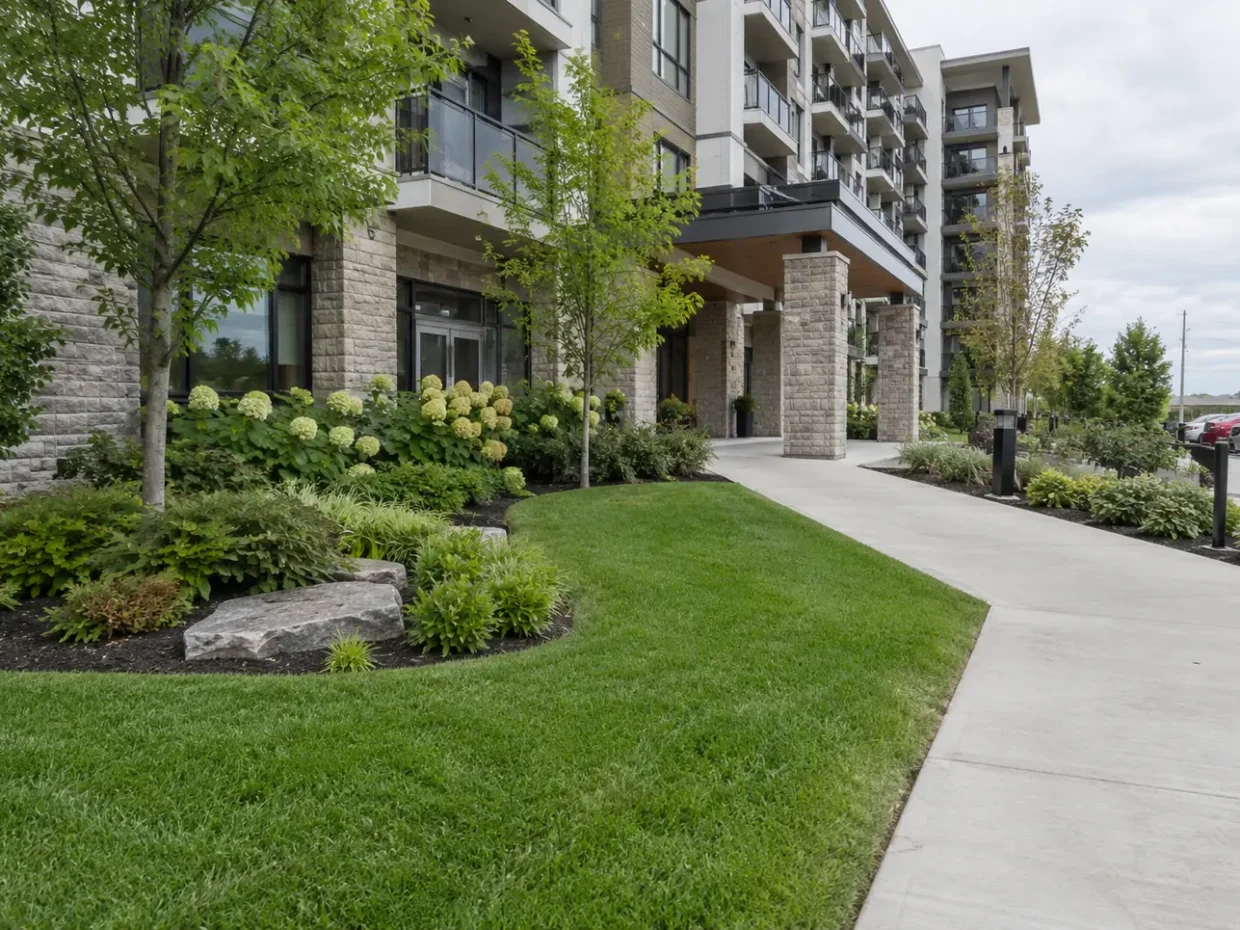
A property manager needs clear scopes across sites that may have different layouts and occupants. Good planning records what is included at each address, how issues are reported and which work needs a separate decision.
What to examine for property management landscaping
Map each address
Record lawn, beds, hardscape, drainage points, gates and access at each property.
A single blanket description may miss very different maintenance needs.
Define use and occupants
A rental house, condominium common area and commercial entrance have distinct circulation and presentation needs.
Landscape decisions should consider residents, visitors and service access.
Set recurring scope
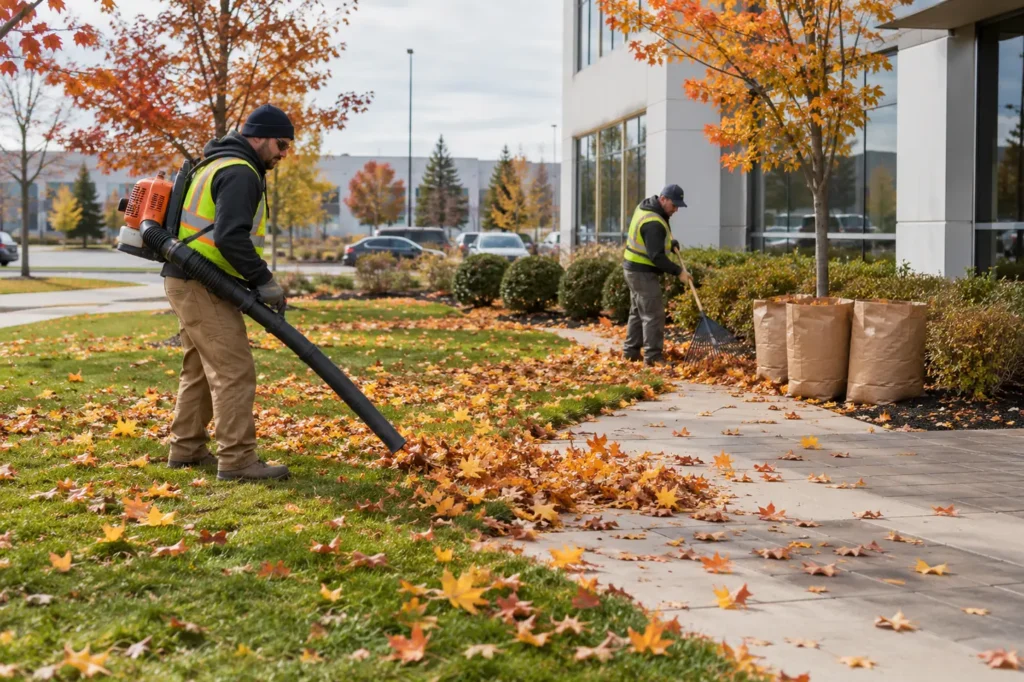
Specify mowing, beds, pruning, debris and seasonal cleanup where needed.
Intervals and included tasks should be explicit for each location.
Create an improvement list
Separate settled paving, drainage work, replanting and grade changes from routine care.
One-time construction can then be budgeted and approved on its own merits.
Plan communication
Agree on a point of contact and a way to describe site conditions with photographs and location.
This helps distinguish urgent access issues from elective upgrades.
Consider transition seasons
Spring assessment, fall preparation and winter snow operations can expose different risks at the same site.
Snow storage and salt exposure influence what gets repaired or planted later.
Stage occupied-property work
Identify entrances, parking, deliveries and resident notices before disruptive work.
An attractive improvement still needs a practical installation sequence.
Review outcomes
Revisit plant growth, lawn performance and repeat trouble spots.
A repeat issue may call for a revised design or drainage scope rather than another identical maintenance visit.
A multi-site portfolio may contain a manicured main entrance and a rear drainage strip with a recurring problem. Keep separate notes for each address and photograph the same viewpoints through the season. That record helps identify whether a requested visit is regular upkeep, a one-off repair or a redesign.
Build a separate profile for each property
List entrances, lawn, beds, trees, hardscape, drainage points and service access at each address. A condominium common area, rental house and commercial plaza may all be managed by one office, yet their users and maintenance needs differ. A site profile also records surveys or drawings, known water problems, resident concerns and seasonal restrictions. This prevents a general portfolio instruction from missing a critical route at one property.
Distinguish maintenance from capital improvement
Mowing and garden care can be recurring; interlock repair, sod replacement, drainage correction and entrance redesign are separate decisions. When a recurring visit reveals a failing walkway, document location, severity and likely cause before approving a cosmetic repair. A manager can then allocate budget to the right category and communicate a clear scope to an owner or board.
Organize requests from occupants
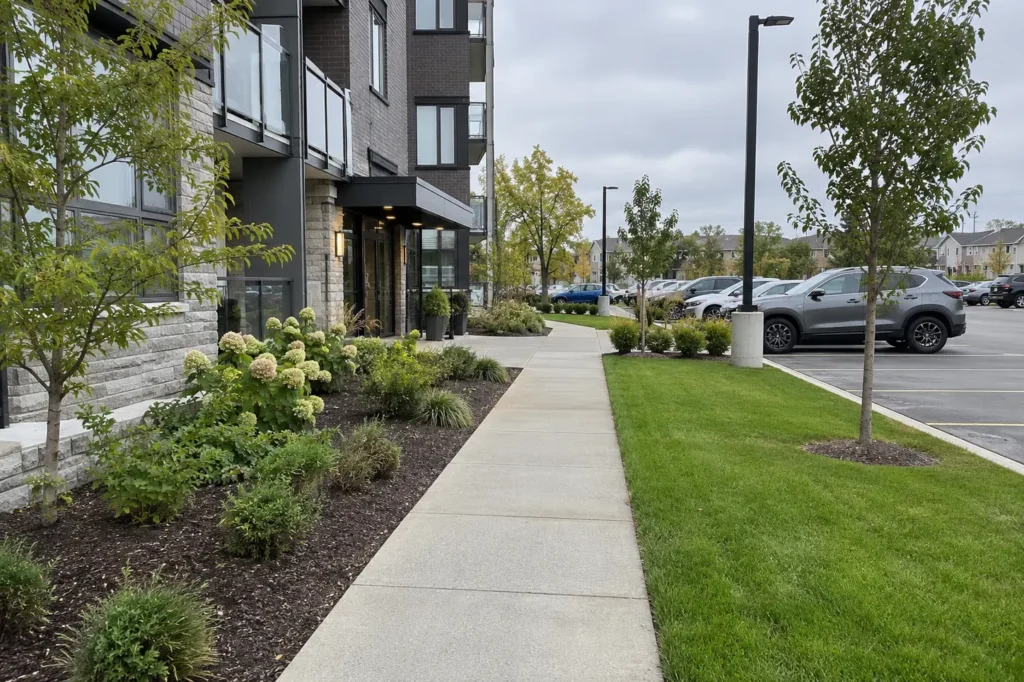
Residents may report a slippery step, overgrown hedge, wet lawn or damaged bed in different language. Ask for address, precise location, photograph and how the issue affects access. Not every request calls for the same urgency. A repeat water report after rain may indicate a design issue rather than a missed maintenance visit. A consistent reporting path makes trends visible across a season.
Plan work on occupied sites
Deliveries, demolition and material storage may affect parking or entrances. Determine who approves access changes and how occupants will be informed. A landscape improvement can be staged to retain a clear walking route while heavy work proceeds. On multi-residential grounds, maintenance equipment and debris handling also need practical access that does not create unnecessary disruption.
Coordinate seasonal services
Spring reveals salt-damaged planting and winter surface movement; summer growth changes sightlines; fall leaves affect drains and paths. Snow pile locations and salting zones influence what can be planted along an entrance. A portfolio plan should link those observations rather than treating winter and summer as unrelated contracts. The scope for snow service still needs its own site-specific terms.
Use consistent records without ignoring differences
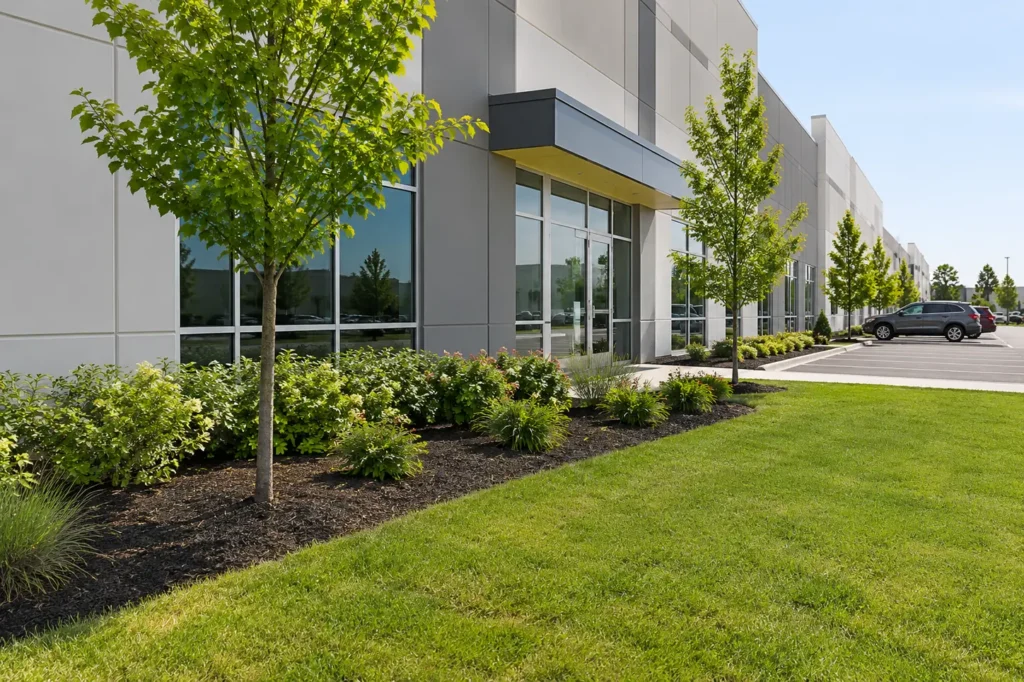
Photograph the same problem location over time and note whether an intervention helped. A bed that repeatedly floods, or a path that settles after repair, deserves a deeper review. Standard reporting fields can make several properties manageable, while the actual design response remains specific to each site. Comparing conditions across addresses is helpful for budgeting but does not justify copying one solution onto every lot.
Clarify approval and communication
Identify the property contact, spending authorization process and who receives photographs or recommendations. Some work can follow a defined maintenance scope; new construction or unexpected subsurface work may require separate approval. Documenting that distinction is especially useful when several stakeholders are involved. Avoid promising that a site will meet a particular appearance or response standard unless it is defined in the actual arrangement.
Ask for a useful site package
For a new managed property, provide addresses, site plans if available, current service maps, problem photos, access hours and intended maintenance outcomes. Identify one-time improvement goals separately. A clear package helps discuss lawn, beds, repairs and snow-related effects as connected property care while retaining an accurate scope at each site.
Make a portfolio improvement plan
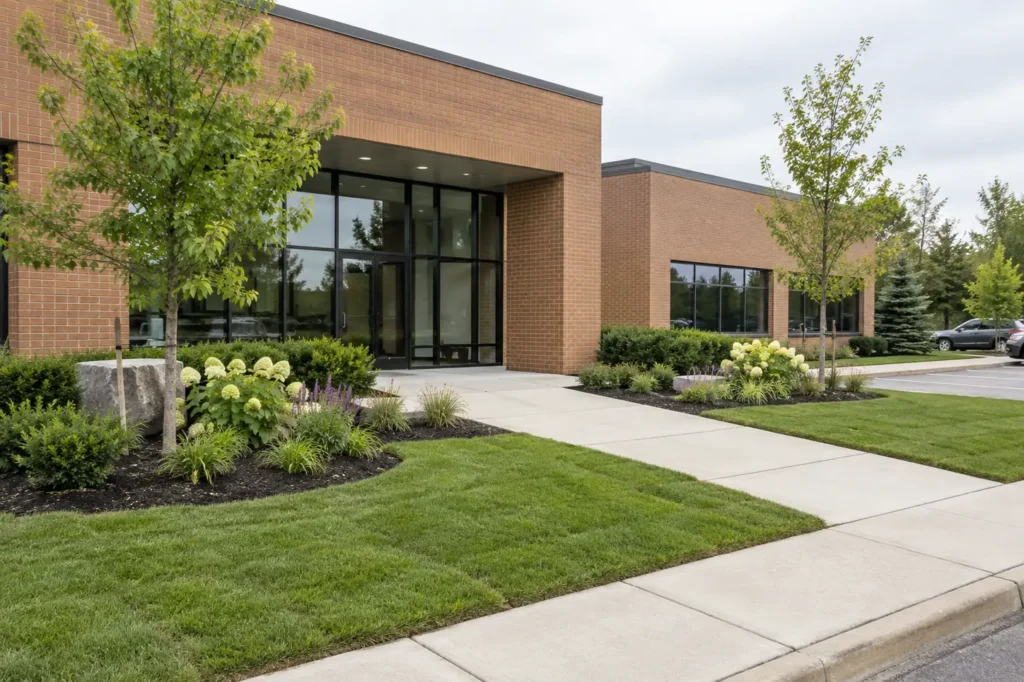
Rank site problems by access, repeat maintenance cost and resident use. A settled primary walk may take priority over a purely decorative bed refresh. Drainage that repeatedly damages lawn can cost more to maintain than to redesign. A manager can group work that uses the same access or excavation route, while still approving each address-specific scope. This approach makes the reason for an improvement clear to stakeholders.
How should photographs be used?
Capture broad context and the detailed defect, ideally from repeat viewpoints over time. A close-up of a wet patch without the downspout or surrounding grade may be misleading. Attach an address and date to reports. Photos help decide whether a return maintenance visit, a technical assessment or a construction estimate is appropriate; they do not replace an on-site review where hidden conditions matter.
A property manager requesting service can provide existing maps, maintenance history, known complaints and budget priorities. Clarify the approval path for unplanned work before it is needed, especially when several owners or tenants receive updates.
Balance consistency and property character
Common standards for reporting, communication and broad care can help a portfolio. Plant selection, drainage work and maintenance frequency still need to respond to each address. A townhouse common area may have tight access and many pedestrian routes; a rental property may have a small front lawn and older trees. Copying one bed plan across them can create avoidable maintenance trouble.
Review work after installation
For a landscape improvement, document the finished edges, planting and intended care, then revisit performance after rainfall and growth. A manager should know whom to contact about an unexpected condition and which work needs approval. If one site was repaired for drainage, compare the same photographic viewpoint later rather than judging only immediate appearance.
Clear records help owners and occupants understand why a project was undertaken and whether its practical aim was met.
Some properties have shared expectations set by a board or lease; others have one owner directing the work. Identify those decision paths before proposing planting changes or construction. A service request for a damaged bed can be handled more efficiently when the person reporting it knows whether it is routine care, a repair or a project requiring approval.
Keep a record of what was planted and when. Mature size and watering needs can be reviewed later if the bed begins to crowd a route or fails in one exposure. A simple plant list can improve continuity when the manager changes.
Discuss property management landscaping for your Milton property
Share addresses, site maps, maintenance history and priority requests. Discuss managed-property landscaping with distinct scopes for each site and a useful reporting process.