
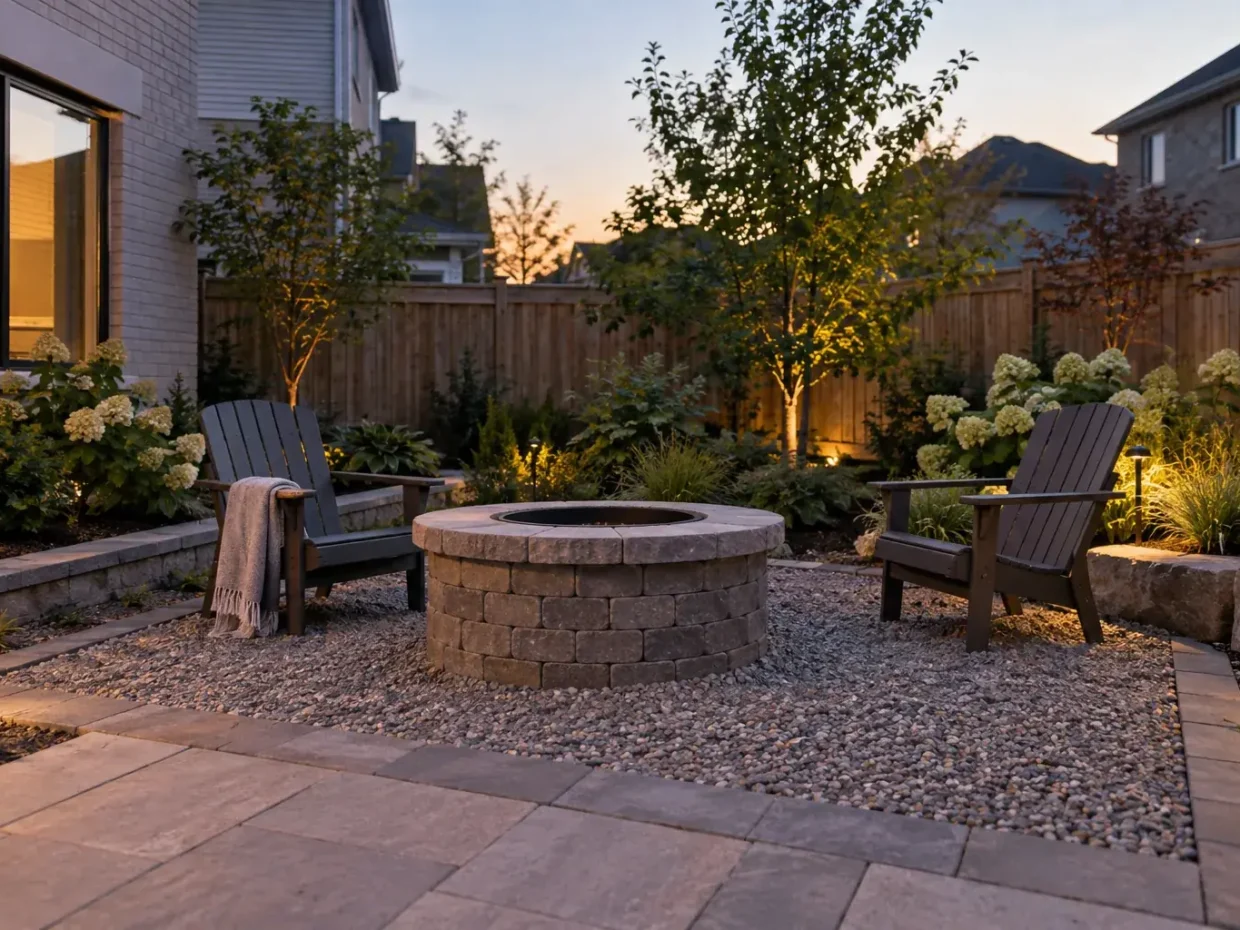
A fire feature should fit the social use of the yard. It works best when seating, circulation and the rest of the patio are planned together, with fuel type, clearances and current local restrictions verified for the chosen installation.
What to examine for fire pits & fire features
Decide how it will be used
A small conversation circle and a large entertaining patio need different seating geometry.
Measure chairs with people seated before choosing a feature size.
Choose a suitable location
Map doors, fences, trees, pergolas, windows and common walking routes.
Comfortable placement must also be reviewed against current safety and municipal requirements for the specific feature.
Compare fuel approaches
Wood, gas and other designs have different operation, service and rule considerations.
Do not assume one option is permitted or appropriate at every Milton property.
Build the surrounding surface
Consider stone, interlock or another suitable patio finish and how furniture sits on it.
A stable area around the feature helps keep chairs and tables usable.
Plan utilities correctly
Where gas or electrical work is involved, coordinate qualified trades and routes before finishing hardscape.
A decorative landscape scope does not substitute for regulated technical work.
Manage views and privacy
Study where the seating faces and how nearby planting matures.
A screen can create an intimate area while still leaving sensible access.
Think about weather
Wind exposure and seasonal storage affect comfort and maintenance.
The feature may be used at different times than a daytime dining patio.
Keep the yard connected
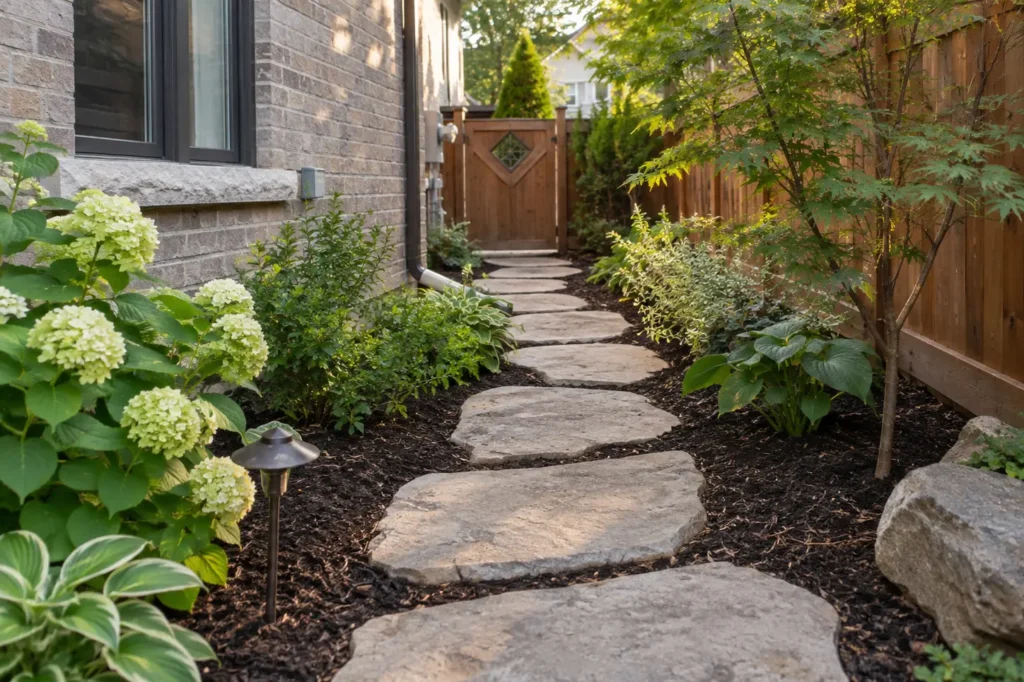
Leave clear paths to the house, gates and lawn.
The gathering zone should add function without turning the rest of the yard into leftover space.
If the main use is conversation, place chairs first and locate the feature within that circle rather than putting it at the mathematical centre of the patio. Then check proximity to structures, trees and access. A wood-burning contained backyard fire and a gas feature have different Town permit considerations, so choose fuel before treating the design as final.
Design the seating circle first
Place chairs on a measured plan and consider how people enter and leave while others remain seated. The fire feature belongs within a comfortable social arrangement, not automatically in the centre of the available paving. A long narrow patio can make a different seating configuration sensible from a broad circular area. Leave a clear route to the house and avoid using the main circulation path as the place where people gather around heat.
Decide on fuel before selecting the finish
A contained wood-burning fire, propane feature and natural-gas feature involve different operation and planning. Milton’s current burn-permit guidance addresses contained backyard wood fires; propane and natural-gas fire pits do not require that burn permit, although other location and safety requirements remain relevant. Check the current Town guidance and selected product for the proposed installation. Do not assume the absence of one permit means any placement is acceptable.
Study the surroundings
Locate fences, overhead trees, pergolas, windows, neighbouring views and intended planting. A private corner may feel inviting but may be too close to surrounding elements for the selected fuel or feature. Check applicable clearances for the specific installation and use appropriate professional input for utilities. A low wall can frame seating but might also interrupt drainage or create a trip edge if added without a wider patio plan.
Build a usable ground plane
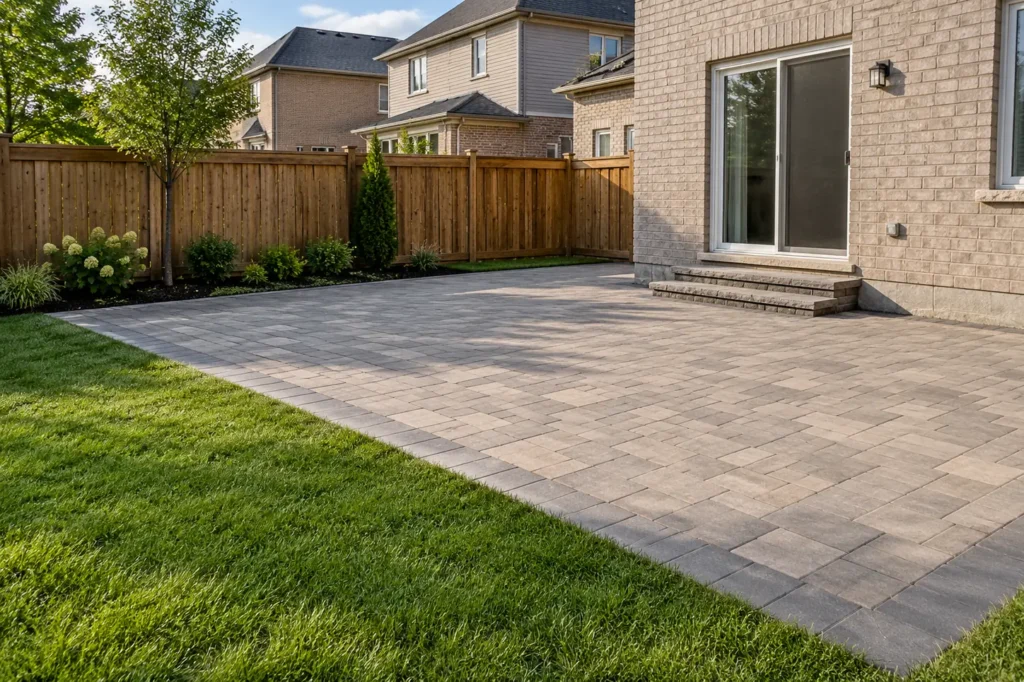
Chairs need a stable surface, whether a patio of interlock, stone or another suitable material. Map the whole occupied seating footprint rather than only the dimensions of the fire bowl. Avoid a tiny pad surrounded by mud at the chair legs. If the surface is raised or bordered, determine where rainfall and snowmelt travel. A decorative centrepiece cannot make a poorly prepared base or awkward step functional.
Consider season and wind
A fire area may be used most in cool evenings, when prevailing breezes and lighting differ from sunny afternoon patio use. Observe the space at the intended times. A screen can improve comfort but also changes clearance and air movement; evaluate it with the chosen feature. Plan how cushions, covers or portable components will be stored. A permanent feature can be attractive year-round when its setting remains useful even without a flame.
Coordinate fuel and lighting routes
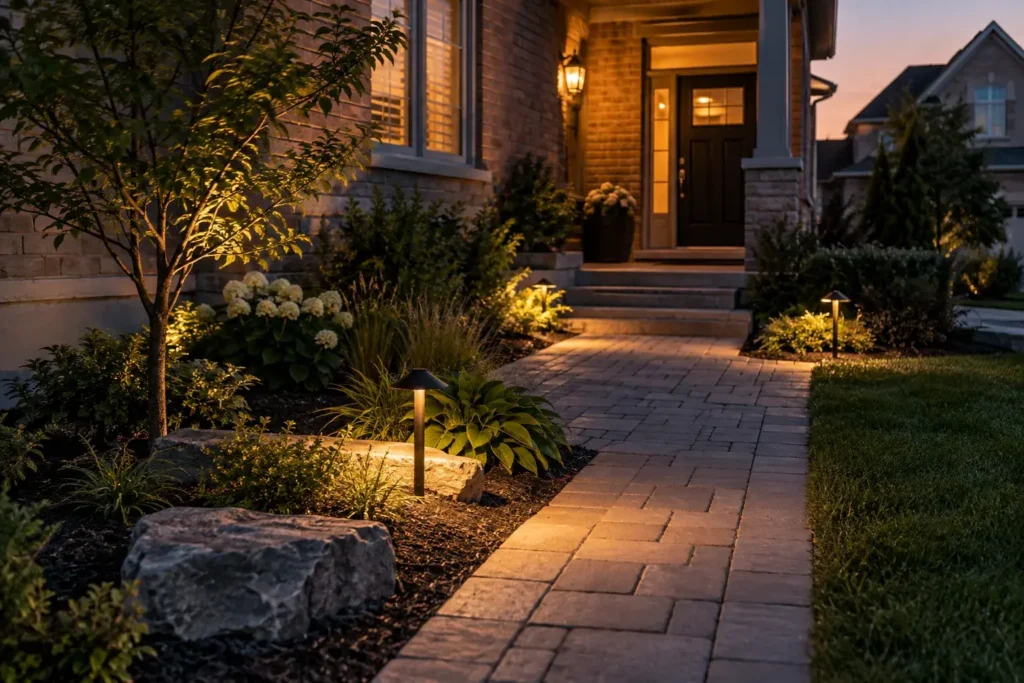
Gas or electrical connections, where part of the design, should be assessed by qualified trades. Plan routes before patios are closed, keep access for inspection and do not conceal connections behind a fixed bed. Low-level lighting can reveal a step and path without competing with the fire. Position fixtures for the occupied seating view so glare does not dominate the gathering area or shine into neighbouring windows.
Keep planting at a sensible distance
Young shrubs will grow into the space selected today. Draw mature size and maintenance access, not just pot dimensions. Leaves and dry material can collect near an outdoor feature, so ongoing care and the selected location matter. Use planting to frame the room while leaving service and circulation clear. If a fence or pergola is also planned, settle their relationship with the fire feature before construction.
Common questions
Can the feature go on an existing patio?
It depends on the selected product, support, surrounding materials and applicable requirements. Review those conditions rather than assuming all patio and fuel combinations are suitable.
Does a gas feature need Milton’s wood-fire burn permit?
The Town’s current burn-permit page distinguishes propane and natural-gas fire pits from contained wood-burning fires for that permit. Verify current rules and any other relevant installation conditions.
What changes the scope and cost?
Fuel choice, seating surface, utilities, retaining edges, lighting and surrounding landscaping are separate components. An existing patio may need evaluation; a new one needs an appropriate base and drainage. A gas feature may require a qualified trade and service route. A wood option brings current Town burn-permit and location considerations. Define the complete gathering area and its safety review, rather than pricing only the centrepiece.
Plan the feature in a lived-in yard
Test the patio with a dining group and a fire group occupied at once. If guests must walk through the seating circle to reach the gate, rethink the zones. A smaller movable arrangement might suit occasional use better than a large permanent structure. Keep nearby plants at their mature dimensions in the drawing. A screen added for comfort should not compromise applicable clearances or block maintenance access.
Send the feature type or fuel preference, a plan with existing structures, broad site photos and intended seating count. A useful discussion may reveal that patio circulation or grade needs to be addressed before selecting the product.
Set an evening-use plan
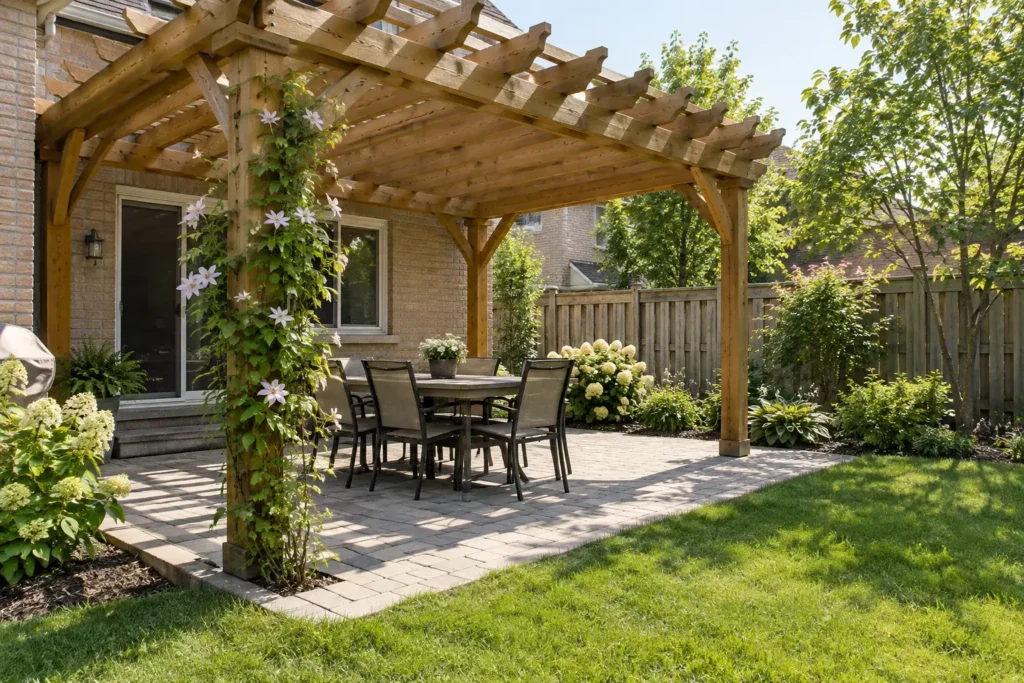
Walk the proposed seating route after dark. A step or narrow passage should be visible without harsh floodlighting. Consider where people will set drinks, where portable furniture is stored and whether the area remains useful when no fire is lit. The feature should support conversation rather than dominate every other use of the yard. Light, planting and surface texture can define the room without requiring an oversized permanent centre.
Review the specific installation instructions and Town rules immediately before purchase and construction. A catalogue photograph cannot show the exact fence, overhead canopy, grade or utility route at a Milton address. Document those conditions in the scope.
A fire feature beside a dining zone may allow shared seating, but check whether chairs and circulation can operate independently when both are used. That may favour a smaller feature and a clearer floor over a large isolated circle. The surrounding patio remains useful throughout the year, even when the feature is inactive.
Discuss fire pits & fire features for your Milton property
Provide the preferred fuel, seating count and photographs showing nearby structures and planting. Discuss a fire feature after its location and current local requirements are screened.
The Town’s current burn-permit information distinguishes contained wood-burning fires from propane and natural-gas fire pits. Fuel choice does not remove the need to review safe placement and the selected product’s requirements.