
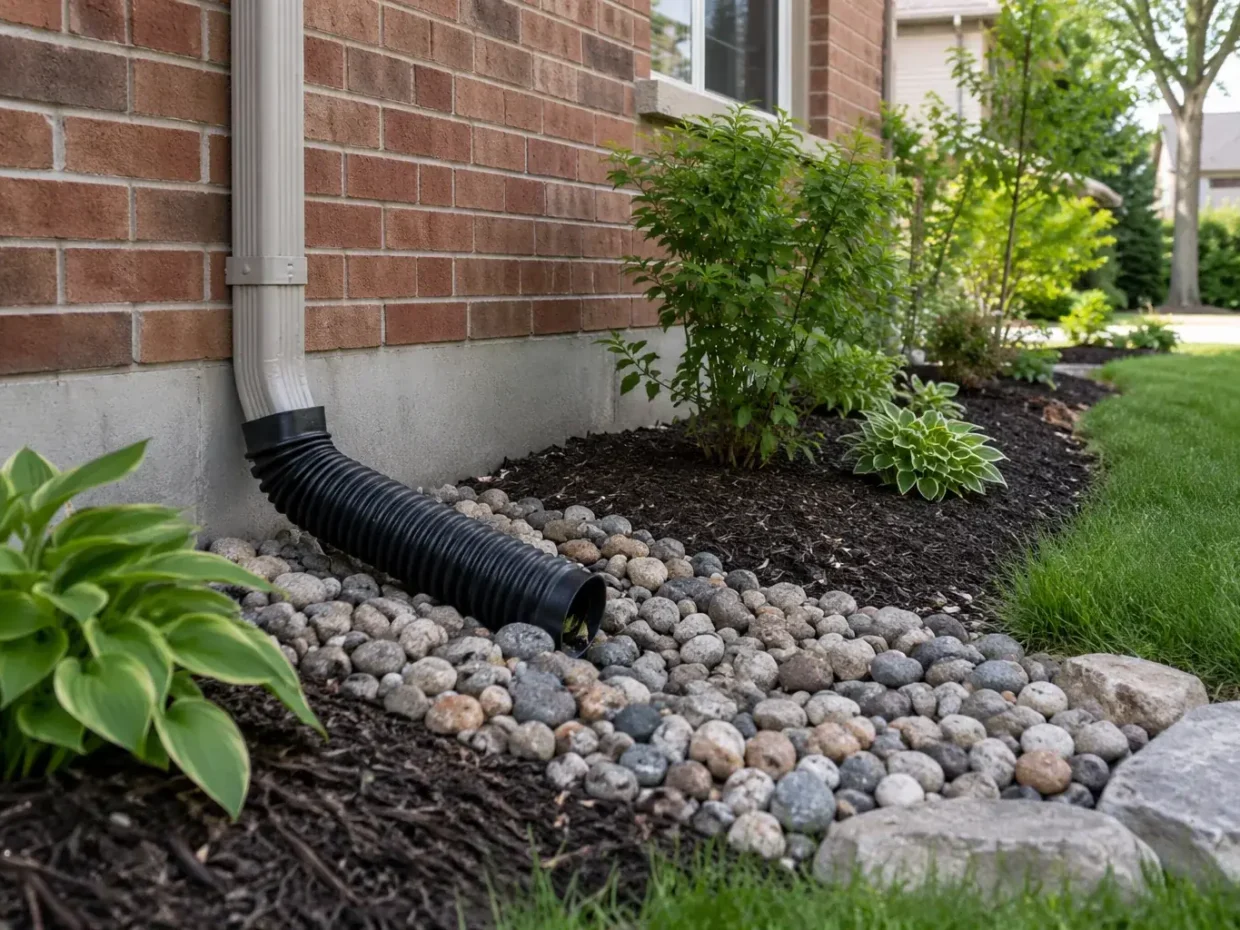
A downspout can move a surprising amount of roof water into a small part of the yard. If the discharge lands beside a foundation, runs across a walkway or saturates a narrow side passage, the visible problem may be far from the gutter outlet. Downspout and surface-drainage landscaping in Milton begins by tracing where the water arrives, where it flows in ordinary rain and where it can leave the property appropriately. Extending a pipe or adding a grate without a sound outlet can simply relocate a wet spot. The work connects roof discharge to grade, hardscape, soil, winter ice and neighbouring property conditions.
Trace roof water from the outlet
Observe the site during or shortly after rainfall. Photograph the outlet, splash area, nearby wall, basement windows, walkway, lawn, planting and any low point down the route. Check whether several downspouts converge, whether a rain barrel or existing underground line is present, and where that line actually terminates. Follow surface flow from patios, drives and adjacent roofs rather than attributing every puddle to one downspout. A small side yard between Milton houses may be constrained by fences, utility meters, air-conditioning units and a shared-looking swale. The property survey or grading plan can help understand intended drainage direction, but the present ground and observed water still need inspection.
Shape ground-level discharge
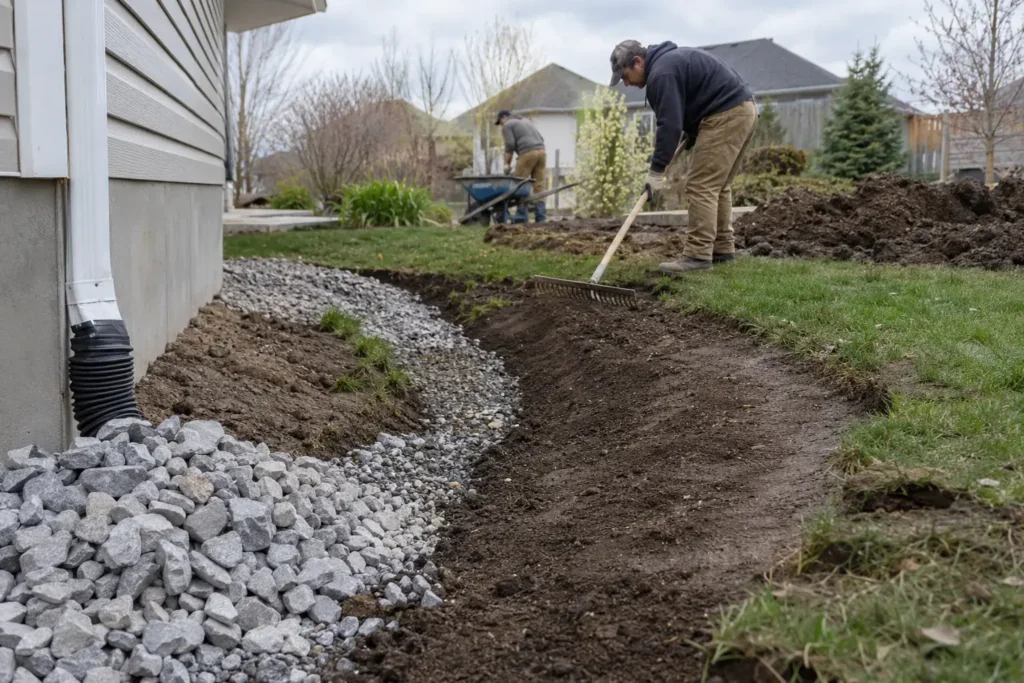
The discharge should be directed to a suitable place without sending concentrated water against the house, over a walking route or onto a neighbour. Surface extensions, splash management, regrading, shallow conveyance or a suitable drain and outlet may be considered depending on the site. A below-ground connection is useful only when its slope, outlet, access and winter behaviour are understood. The route may need to cross a garden bed or paved area, so protect plant roots and plan reinstatement. A downspout that discharges onto a patio can cause staining, slippery growth and ice; changing the patio grade alone may not be enough. The most restrained effective solution is preferable to burying long lines with no clear maintenance access.
Protect the walk and foundation
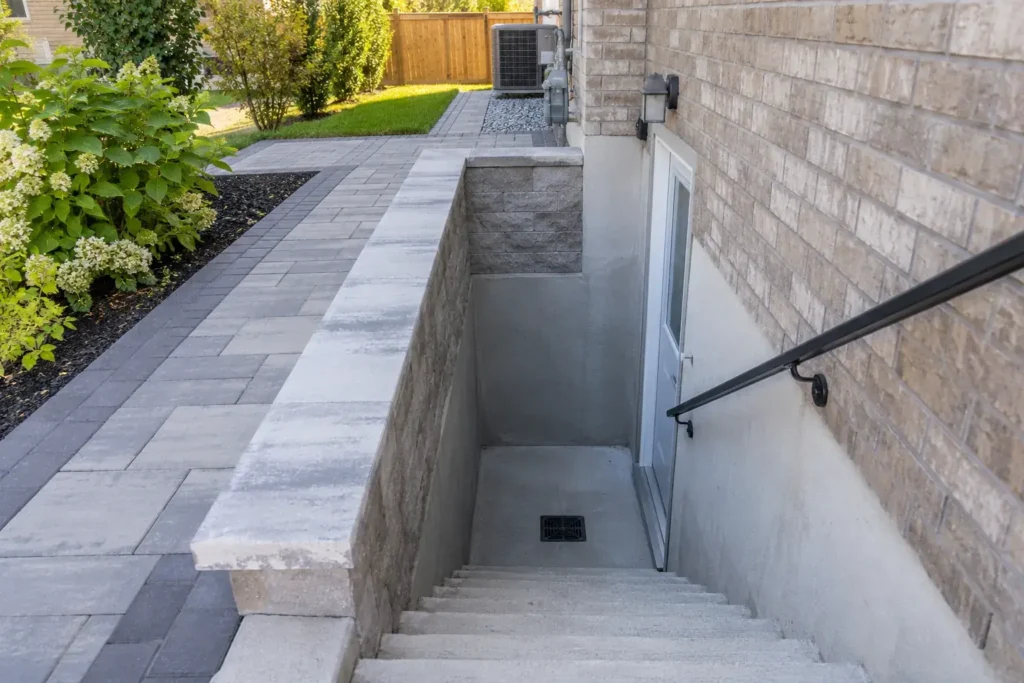
Grades and outlets govern construction. A pipe cannot reliably convey by gravity toward a destination at a higher level. A surface channel should not create a trip edge or interrupt the main path. Drainage grates must be placed where water can reach them, not where they look tidy in a drawing. Check the relationship to the foundation, window wells, service entrances, swales and utility lines. Arrange locates before excavation and verify current Town of Milton site-alteration or drainage requirements if the proposed work changes grades or runoff patterns. Work should not assume a right to send water onto the adjacent lot or into an unverified municipal connection. The owner needs to know where the water will go and who can access the system for cleaning.
Make side yards workable
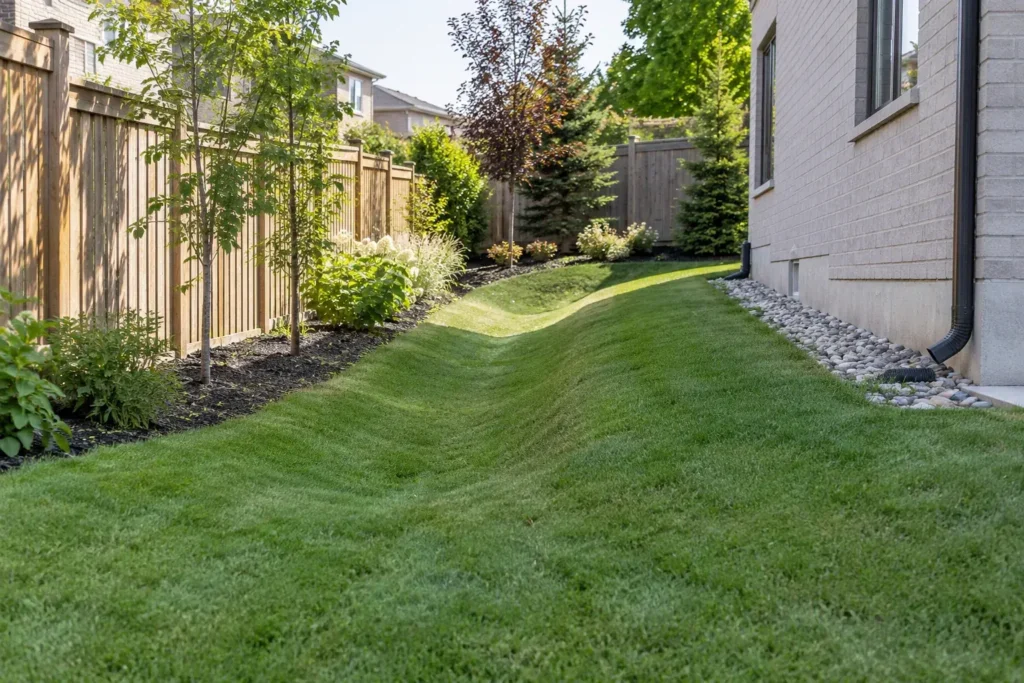
The water plan should fit the landscape rather than make it unusable. A side-yard walk can remain clear and dry if its grade and roof-water route are considered together. A bed may absorb ordinary moisture but should not be treated as an unlimited discharge pit beside the foundation. Lawn restoration may be needed after trenching, and newly placed sod needs establishment care independent of the drainage system. At the front of a property, roof water and snowmelt can create ice where visitors step from the driveway. Lighting may reveal the route after dark but cannot make ice acceptable. The best work improves both surface performance and daily access.
Keep outlets open through winter
Observe the route again after the first significant rain and through freeze-thaw conditions. Keep outlets, grates and above-ground extensions clear of leaves, soil and snow. Check that a buried discharge remains serviceable and has not settled at a trench. If a new wet area appears farther away, the chosen outlet or surrounding grade may need reassessment. A surface fix does not diagnose water entering a basement through another source, and building waterproofing should be evaluated separately when relevant. Documenting what was changed and where the water is intended to leave helps future garden, patio or fence work avoid blocking it.
Decisions that shape downspout & surface drainage
Roof-water source
Locate each outlet and check whether the volume comes from one roof section or several connected downspouts.
Discharge location
Keep concentrated water from foundations, doors and walking routes and identify an appropriate downstream path.
Hardscape intersections
Where a line crosses a patio or walk, plan the transition, reinstatement and winter slip or ice issue.
Grading and swales
Preserve existing surface conveyance and avoid using a new bed or curb to block a swale.
Utilities and outlet
Locate services before digging; confirm a pipe's destination and access before burying it.
Winter condition
Consider frozen extensions, snow piles and refreezing on walks, especially around the front entrance.
Define the downspout & surface drainage project
Scope should include the starting connection, route, outlet, treatment of existing paving or beds and restoration after excavation. An estimate that mentions only a length of pipe leaves the most important endpoint undefined. Where a roof system itself is defective, the gutter or downspout repair should be handled as that separate scope. Landscaping work should focus on how properly collected roof water is safely managed after it reaches the ground. If a solution relies on an existing drain, confirm its condition before treating it as available capacity.
Compare downspout & surface drainage proposals
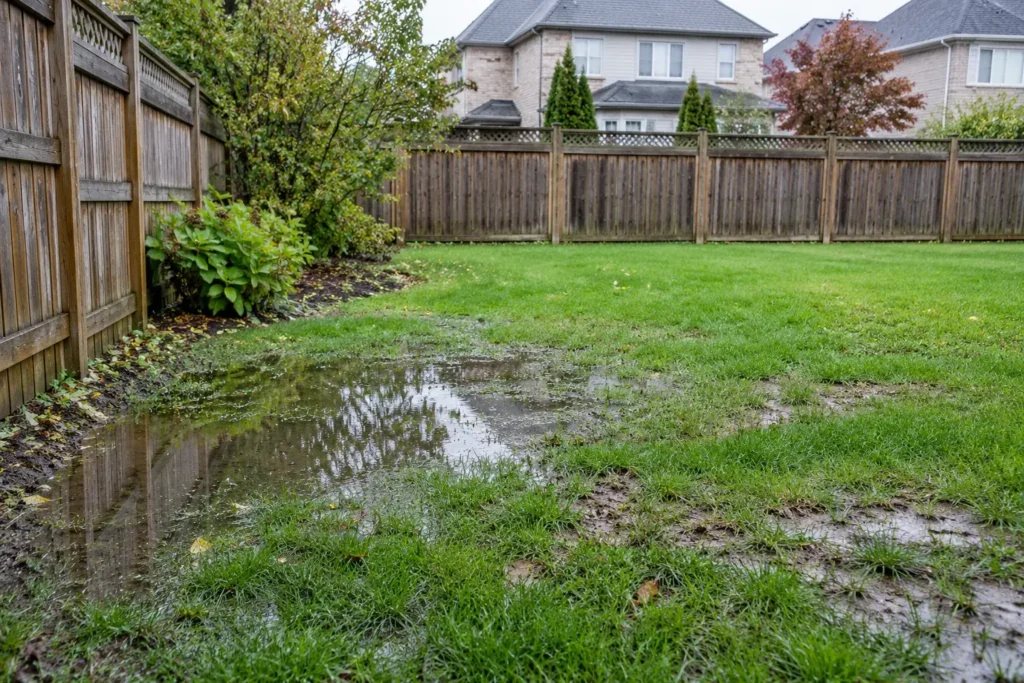
The difference between a local splash problem and a system-wide grade problem is important for the budget. If one downspout has eroded a bed, redirecting and protecting the discharge may be a focused scope. If the side passage is already a low channel receiving water from several surfaces, a single extension may leave the principal wetness untouched. Ask for an explanation of what each proposed component addresses and what conditions it will not change.
A small amount of water in the wrong place can have consequences beyond muddy grass. It can leave mineral marks on pavers, freeze at a gate, keep mulch saturated or wash soil from the edge of a step. The solution should consider those adjacent features and the ongoing ability to clean the outlet. Where a pipe passes through a bed, mark its route for future planting and avoid deep-rooted material immediately over service points. Where work crosses the side yard, restore a walking surface that remains usable after rain.
Questions about downspout & surface drainage
Can a downspout simply run into a buried pipe?
Only when the route, slope, outlet, maintenance access and applicable requirements are understood. Burying water without a viable destination can create a hidden wet area.
Will a splash block solve a wet side yard?
It may help manage a localized discharge, but persistent pooling also depends on grade, soil and the rest of the water entering the area.
Can we discharge toward a neighbour's yard?
The plan should not assume that redirecting runoff onto adjoining property is acceptable. The route must be assessed against actual grades and current requirements.
Why is my walkway icy near a downspout?
Roof water may cross or collect on the path and refreeze. Trace the discharge and path grades, then address the water route rather than relying on surface treatment alone.
Related property work
Landscape Drainage, Wet Yard Solutions, Yard Grading, Interlock Walkways, Milton Grading Guide.
Discuss your downspout & surface drainage project
Send photographs of each downspout, where water lands, the nearby foundation, hardscape and lawn, and the condition after rainfall or thaw. Include the property address, any existing drain outlet and the areas that ice in winter. These observations help trace the full route before proposing a change.