
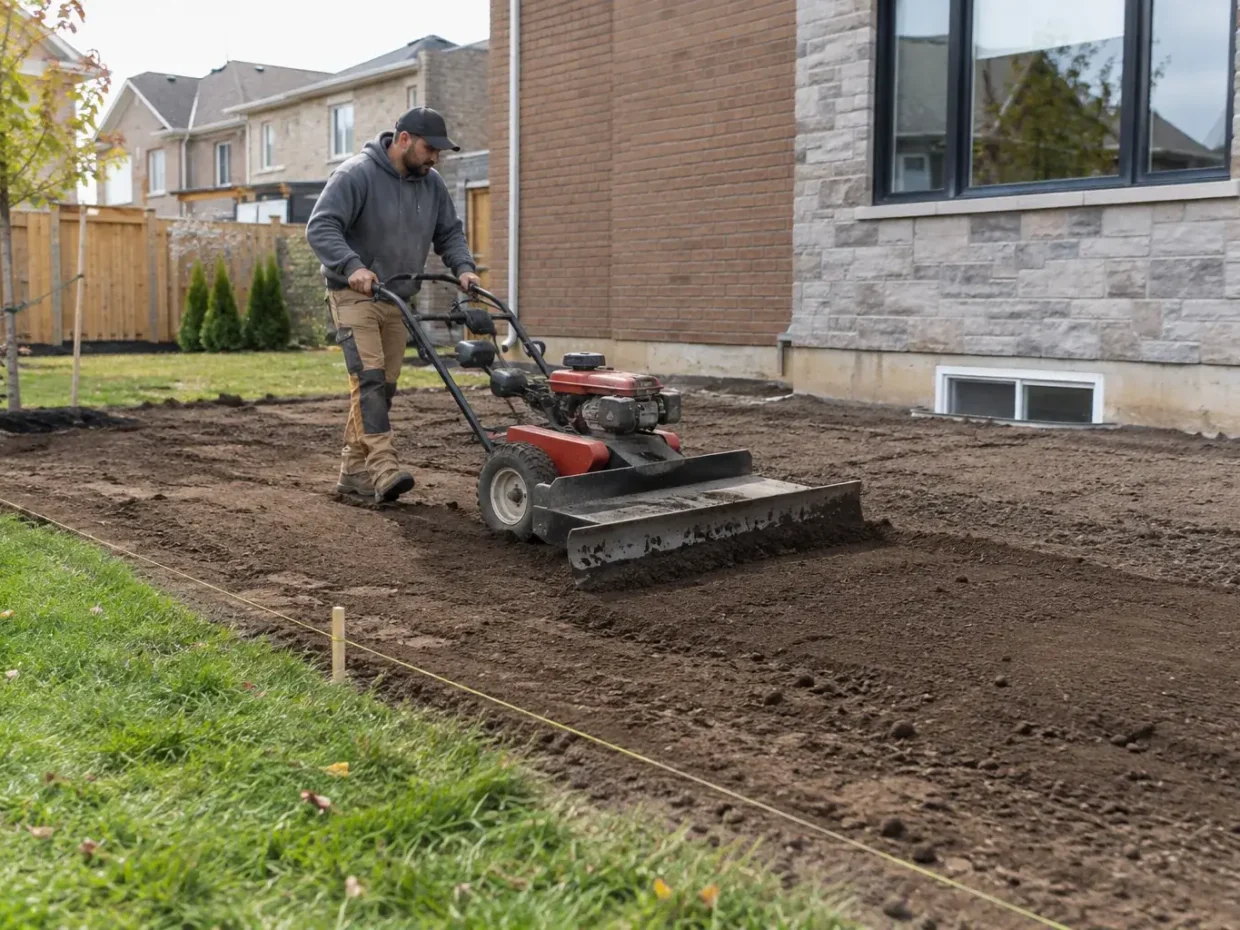
Water is part of the landscape plan, even when the visible request is a patio, lawn or garden. In Milton, a surface that appears nearly level can carry an important route between a house, side yard and neighbouring lot. Grading and drainage work begins by documenting where water comes from, how long it remains, and where it can go. The answer may be a modest surface correction, a restored swale, a downspout change, or a more involved system with a lawful outlet. A device selected before that diagnosis can simply move the problem.
Assess the existing property
Water should have a considered route through the landscape. A level-looking lawn, an attractive patio and a neat garden cannot perform well if their elevations interrupt that route. Start by mapping the house, property edges, low points and the places water collects after rain.
Read the site after rain
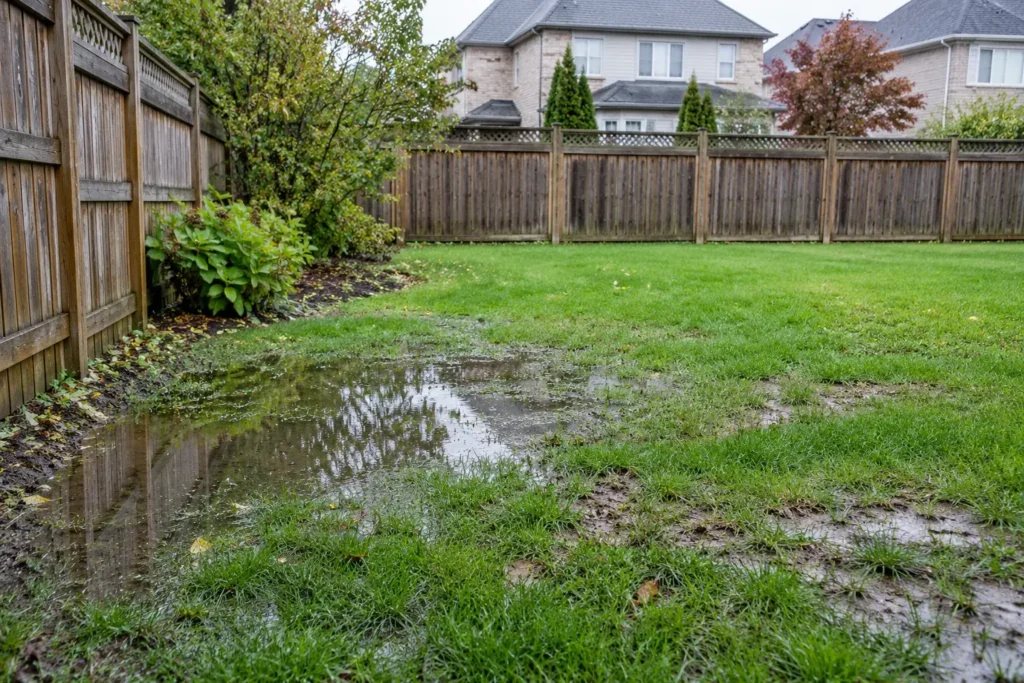
Photograph pooling and dampness soon after rainfall and again after the ground has had time to drain. The difference helps separate a short-lived low spot from a persistent saturated area. The location of the water matters as much as its depth: note doors, foundation walls, paths, neighbouring grades and downspouts.
Trace connected elevations
Survey the practical high and low points across lawn, beds and paving rather than treating each as a separate rectangle. A proposed patio or retaining edge can change how the rest of the yard receives and sheds water.
Understand soil and infiltration
Observe whether the surface crusts, compacts under foot traffic or remains wet below the grass. Soil preparation, lawn repair and drainage details should respond to these conditions instead of assuming every wet area needs a buried pipe.
Manage roof discharge
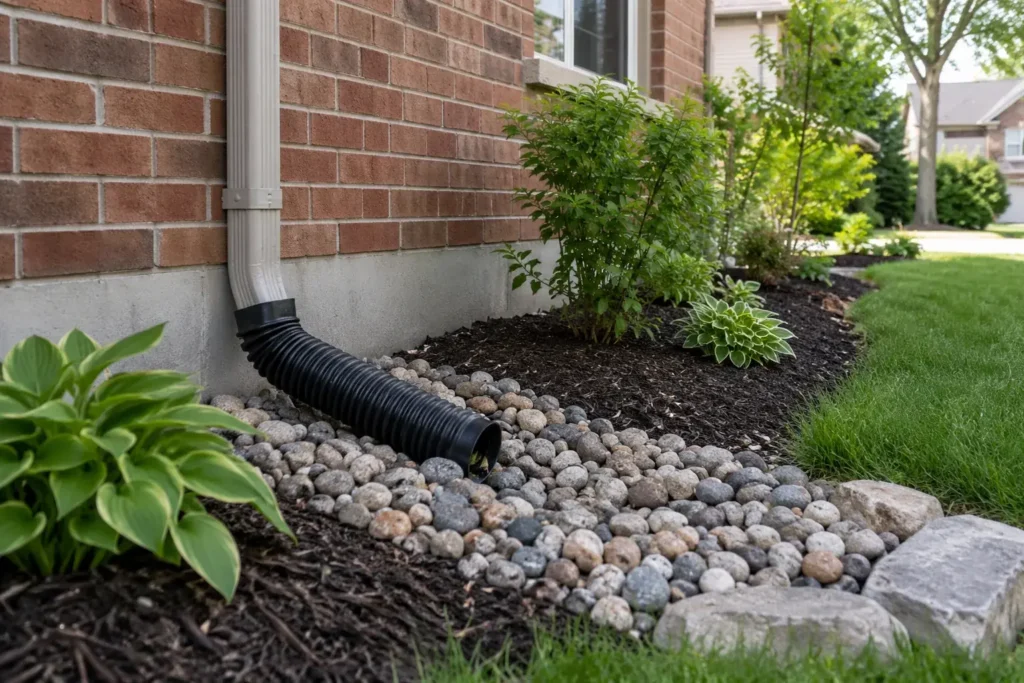
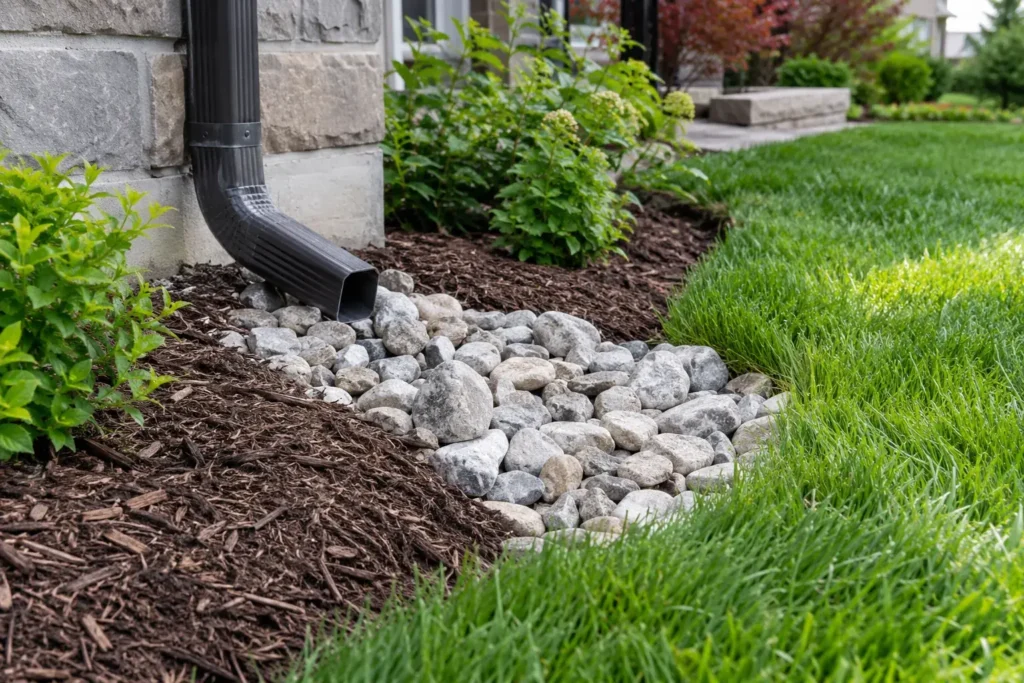
Locate downspouts, splash zones and any existing extensions before selecting a new landscape surface. A concentrated roof flow can undermine a path, erode a bed or saturate new sod if it is not addressed within the site plan.
Decisions that shape the scope
Keep boundaries in view
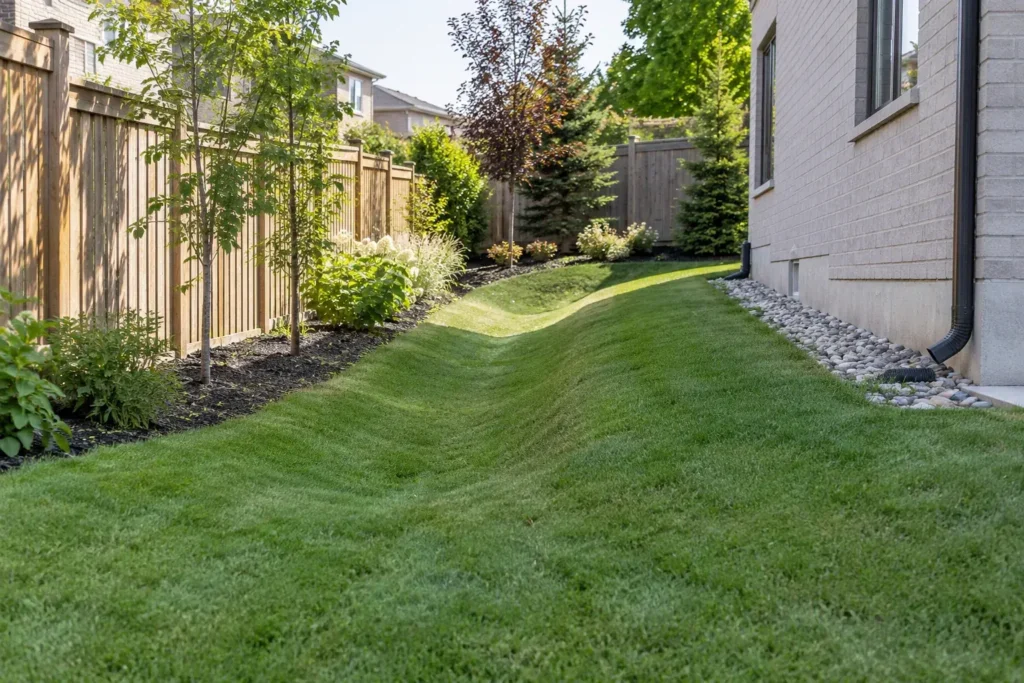
Identify property lines, fences, shared grades and visible swales before placing fill or changing an edge. A yard improvement should account for where water currently travels and avoid transferring a problem to adjacent land.
Coordinate hardscape and planting
Compare proposed patios, paths, walls and planting beds against drainage paths. Edging and base work affect water movement; planting may tolerate certain moisture conditions but should not be used to conceal a grading defect.
Plan the work sequence
Decide which access routes, excavation and disposal are needed before restoring lawn or beds. Doing the underlying grade or drainage work first reduces the chance of tearing out a freshly installed finish.
Screen local requirements
Describe the proposed fill, excavation, grade change and affected drainage before seeking current Town guidance. The scope and property conditions determine which rules may apply; no one rule should be presumed for every Milton yard.
Separate the source from the symptom
A puddle after a heavy storm is a symptom. Compare photographs taken during rain, shortly afterward and the following day. A low spot fed by a downspout behaves differently from a lawn that stays soft across a broad area after runoff has stopped. Check roof discharge, adjacent paving, irrigation overspray, shaded soil and any recently raised planting bed. Ask when the condition first appeared. If it followed a new patio, fence footing or garden edge, the new boundary may be interrupting an older surface route. When the cause remains uncertain, do not bury a pipe or spread topsoil merely because the wet patch is visible.
Draw the water route before drawing the finish
Map the house threshold, foundation edge, low windows, steps, walks, driveway, fences, catch basins and boundaries. The route should show how water passes through the work area without being trapped at a new retaining edge or sent onto adjacent land. A swale can look like an inconvenient shallow depression, yet may be carrying an intentional lot drainage path. Its location and continuity matter when a homeowner wants a flat lawn. On a compact lot, small elevation changes at a gate or side passage can affect both circulation and drainage. The finish plan should reflect these relationships.
Match construction to the surface
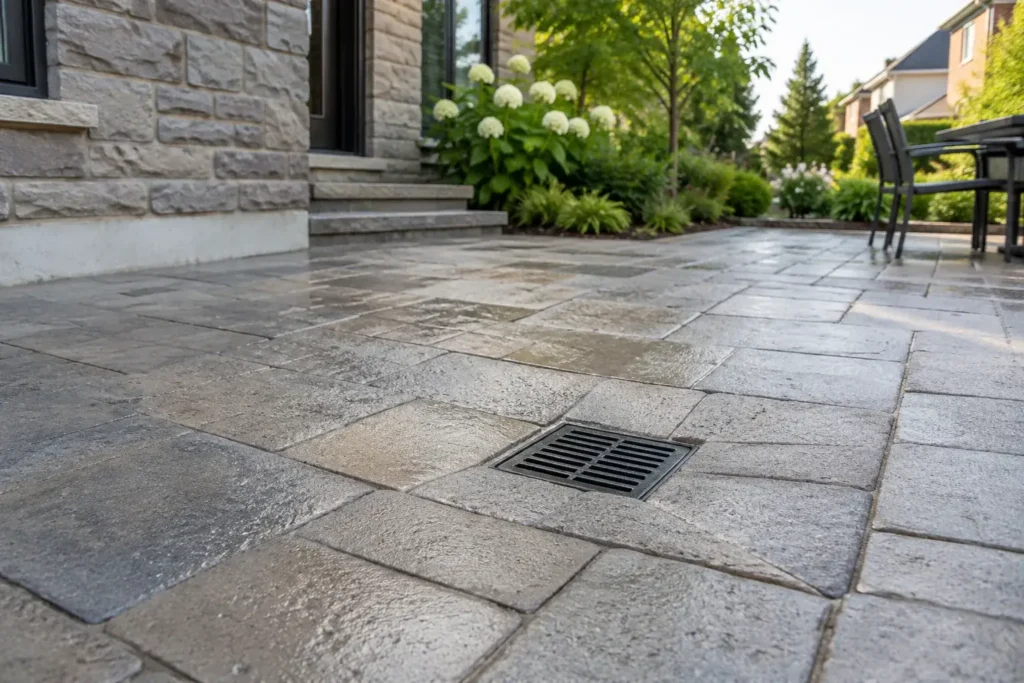
A pedestrian path, vehicle area, planted bed and play lawn have different support and soil requirements. Under a patio, excavation and base preparation affect stability and runoff. At a lawn, a workable growing layer and a smooth mowing shape matter after the drainage route is defined. A wall supporting a change in grade needs attention to load, backfill and water behind it; its decorative appearance does not establish its suitability. A surface drain can collect water locally, but its route, outlet, cleanout access and winter behaviour must be considered before construction. The right measure is the one that fits the source, site elevations and future maintenance.
Plan the order of a connected renovation
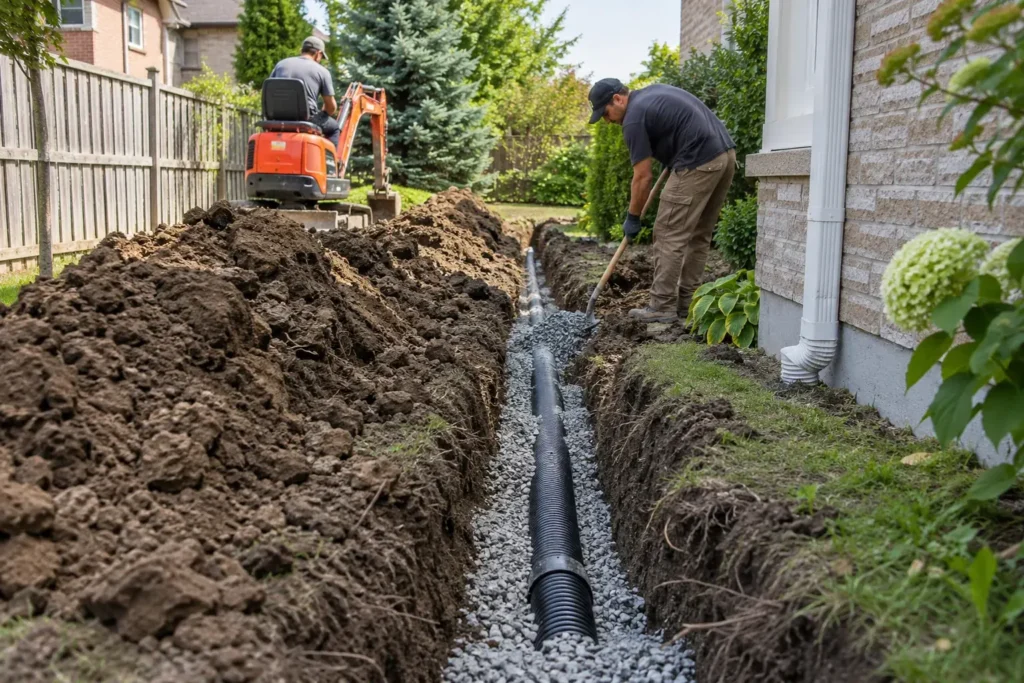
Underground routes and major grade corrections belong before finished paving, sod and planting. If a patio is to be built later, identify its intended elevation and excavation corridor now. Keep access for soil and aggregate deliveries without damaging preserved trees or newly established lawn. Record which hardscape edges can stay, which must be lifted, and where excavated soil will be handled. A phased project can still work if the final water route and adjoining levels are planned at the start. Otherwise the second phase may undo the first simply to reopen a drainage line or reset an edge.
Check Milton rules against the actual proposal
The Town of Milton’s current site alteration guidance addresses fill, grading, drainage changes and a narrow exemption for certain topsoil work. Its conditions must all be met; the presence of landscaping in a scope does not make every grade change exempt. Work near a regulated area can raise an additional Conservation Halton question, depending on the address. Before a final method is committed, describe the location, volume and purpose of fill or excavation, the existing and proposed drainage route and any walls. Ask the relevant authority to confirm what applies to that property rather than relying on a general threshold remembered from another job.
Decide what a successful result looks like
A dry-looking lawn on installation day does not prove the drainage question is resolved. Define how the surface should behave after ordinary rain, where collected water will travel, and what still requires observation during exceptional storms or spring thaw. A new lawn needs establishment watering even if previous standing water was a concern; that watering should not obscure a leak or blocked outlet. Accessible drains need periodic clearing of leaves and sediment. Paving edges and soil transitions should be reviewed after settlement. These are useful handoff points for any property owner comparing proposed work.
Common questions
Will filling a low area fix standing water?
Only when the source and the receiving route are understood. Adding soil to a local dip may be appropriate, but it can also push runoff toward a foundation, fence line or neighbour. Review elevations and any existing swale before treating a puddle as an isolated hole.
Do I need a drain or a grading change?
That depends on the source, soil, route and available outlet. A surface change can solve some local conditions; a collection system is useful in others. A buried pipe without a suitable discharge point is not a complete solution.
Can sod be installed at the same time?
Yes, after the underlying water route and finish grade have been resolved. Soil preparation and establishment care then become part of the lawn scope. New sod should not be used as a cover over unresolved saturation.
Does every landscaping grade change require a permit?
No universal answer applies. Milton identifies specific site alteration requirements and a conditional minor topsoil exemption. Confirm the current rule for the proposed work, volume, drainage effect and property before proceeding.
Discuss the property
To discuss a yard with pooling, erosion or an upcoming hardscape renovation, share the Milton address, photographs during and after rainfall, approximate dimensions, known downspout locations and any survey or grading plan. Explain which areas need to remain open during construction. A useful scope will distinguish diagnosis, preparation, water route, surface restoration and future maintenance. Request a landscaping quote with those details and review the related Milton grading and site alteration guide before major grade changes.
Related planning: Yard grading · Landscape drainage · Site alteration planning · Sod installation.