
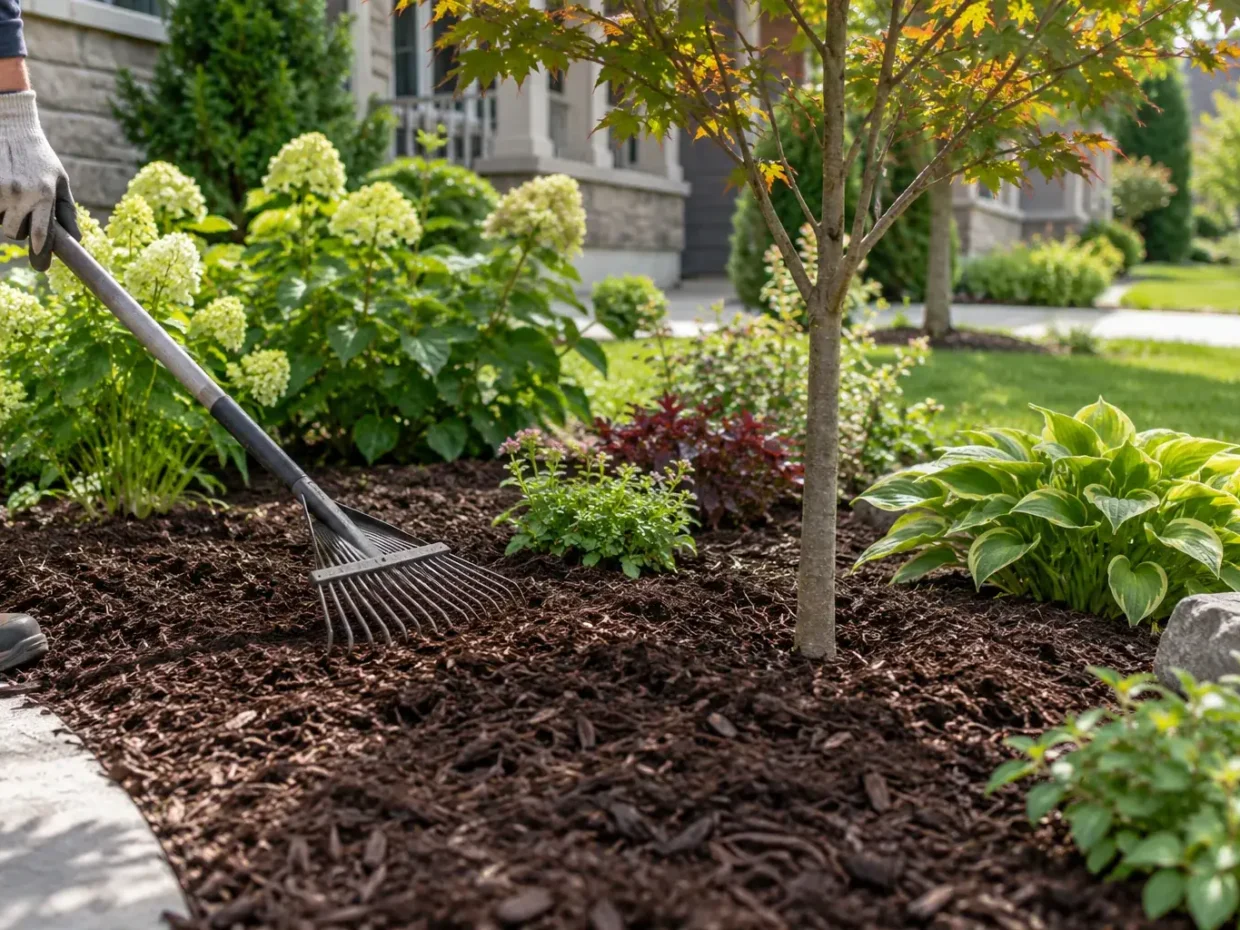
Mulch and decorative stone can give beds a clean finish, but they work differently around plants, soil and water. Garden mulch can help moderate moisture and temperature and soften a planting scheme; decorative aggregate can create a durable-looking surface in selected beds or circulation edges. Neither material erases weeds or fixes drainage, and each requires bed preparation, sensible depth, edging and later care. For Milton properties, the choice should follow what grows in the bed, how runoff moves, how leaves are collected and how the surface meets lawn, paving or the house. A finish selected only from a small colour swatch can be a poor fit for the real yard.
Inspect the existing beds
Inspect the bed before adding cover. Remove unwanted growth, distinguish desirable plants and roots, check soil level against trunks, stems, siding and vents, and identify low spots or roof-water discharge. A garden that pools after rain should not simply receive stone so the water is less visible. Evaluate tree leaf litter and seed drop; fine debris can be difficult to remove from small aggregate. Measure bed edges and access for material delivery. Stone near a sunny wall may warm differently from mulch, affecting plants and comfort. A narrow strip alongside a Milton driveway may receive salt and snow, while a shaded backyard bed may need soil care for established shrubs.
Choose an appropriate bed finish
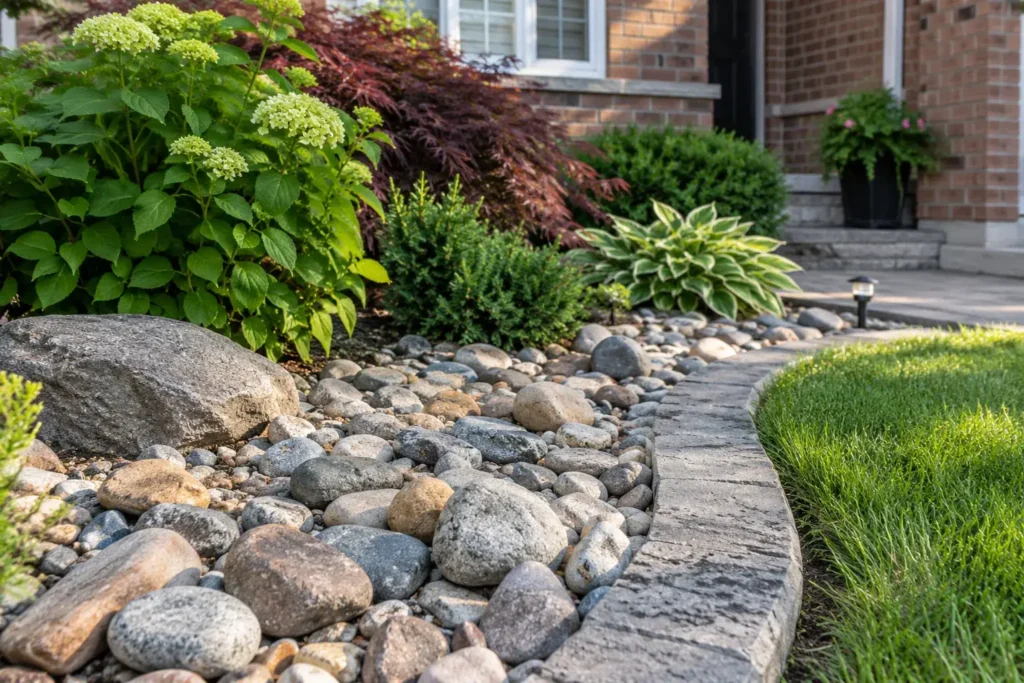
The design should decide where a bed starts and ends. A crisp but serviceable edge keeps mulch out of turf and aggregate off a walkway. Material size, colour and texture can support the house and adjacent hardscape, but uniform cover across every planting area may make the yard harsh or difficult to maintain. Mulch often suits living beds that need water and organic matter management; stone may be useful where its visual and upkeep characteristics fit. Mixing the two can mark different zones, provided the transition is intentional. Leave enough soil space for existing and future roots, and keep the surface from rising repeatedly around plants after annual top-ups.
Prepare depth and edges
Preparation may involve weeding, correcting bed shape, adjusting soil and checking drainage before any finish is delivered. Depth depends on the chosen material and plant conditions; too little may expose soil quickly, while excessive mulch can cover plant crowns and stone can bury important levels. Edging must be stable and compatible with lawn mowing or snow clearing. Avoid creating a raised dam along a swale or drainage outlet. Utility locates are relevant if substantial edging or excavation is proposed, and grade changes should be reviewed for the actual property. Fabric or other underlayment choices should be considered in relation to planting, drainage and future bed changes, not assumed to make weeds disappear permanently.
Make beds practical to use
A mulched garden is easier to read when plant spacing and mature size were planned first. The material frames shrubs and perennials rather than compensating for overcrowding. Stone can highlight an architectural edge or low planting, but it can also migrate onto a path if the border is weak. Consider maintenance tools: can leaves be removed, can a hedge be pruned without scattering aggregate, and can a mower follow the edge? A front bed that must receive snow may benefit from different plant and edge choices than a sheltered patio border. Lighting cable and irrigation should be installed before cover so the bed is not reopened immediately.
Plan replenishment and cleanup
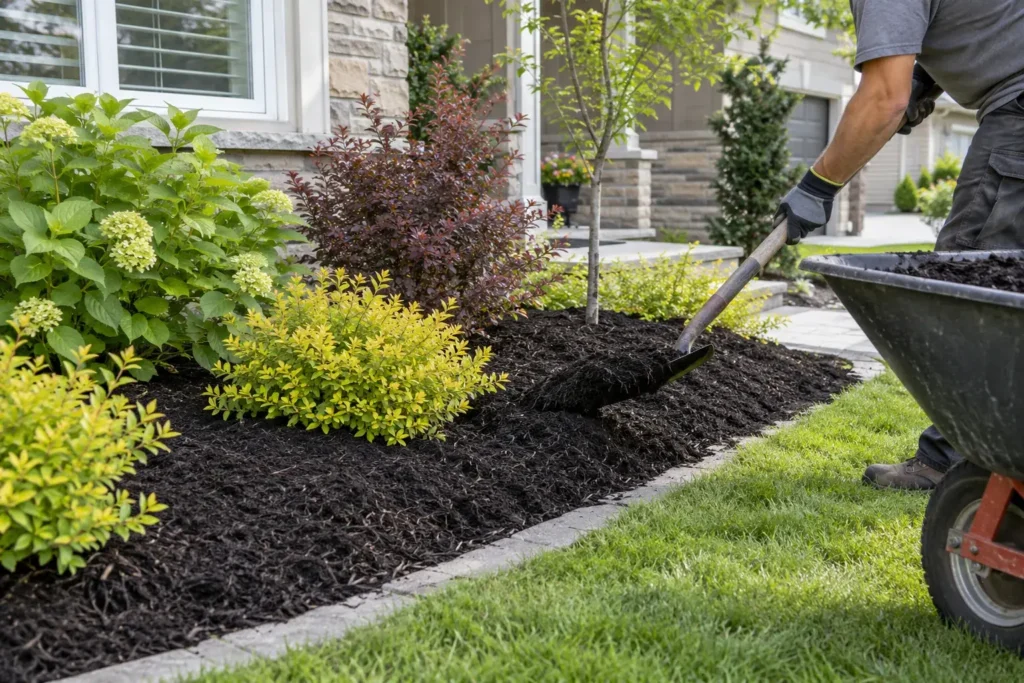
Expect ongoing work. Mulch decomposes and may need renewal, weeds can grow from seed above either surface, and aggregate collects organic matter and can move over time. Remove debris without stripping the cover, and check that stems and trunks remain clear as material is replenished. If drainage changes or plants decline, assess the soil and water path beneath the finish. A low-maintenance aim should be discussed honestly: fewer bare-soil weeds may be possible, but no bed covering makes planting self-sustaining. The scope should include the chosen material, approximate bed preparation, edge work and what remains for the owner after installation.
Decisions that shape mulch & decorative stone
Material purpose
Choose mulch for a living bed or stone for a suitable visual and maintenance goal; one material is not universally superior.
Bed preparation
Remove existing weeds and assess soil, level and drainage before covering the ground.
Appropriate depth
Specify material depth with the plants and edge in mind; avoid burying trunks, crowns, siding or drainage openings.
Stable edging
Keep cover in its assigned area and make the lawn, walkway or driveway transition practical to maintain.
Water behaviour
Do not use either finish to disguise pooling or block an established swale or downspout route.
Future care
Plan leaf removal, weed monitoring, replenishment and access to irrigation or lighting lines.

Compare mulch & decorative stone proposals
A clear quote should identify the exact beds, preparation and weed removal, material type and quantity, edging, delivery access and disposal of unwanted cover. Some beds only need replenishment; others require reshaping or correction of a raised soil level. Decorative aggregate may need a defined restraint and a different approach around living roots. A price by area without the condition of the bed can be misleading.
Compare the two materials through the owner's ordinary chores. Mulch is easier to renew in many living beds but may shift during heavy runoff and decompose. Stone can retain a crisp appearance yet gather leaves, seed and fine organic debris that require removal. A small gravelled bed below a shedding tree may become more demanding than a mulched bed. Neither finish is a substitute for appropriate plant spacing and soil care.
Sequence work with lighting and irrigation. Repair buried lines and locate future fixtures before covering the bed; leave access to valves and drainage points. Observe the bed after rain before adding a raised border that could trap water. The final surface should frame the planting while leaving the plant crowns, trunks and house materials at appropriate levels.
A new bed edge also changes how water moves at the surface. Where runoff normally travels across lawn into a swale, avoid a continuous raised border that traps it. The finish can still look crisp with an appropriate detail, while protecting drainage. That consideration is especially useful around downspouts and low side-yard beds.
Questions about mulch & decorative stone
Will decorative stone stop weeds forever?
No. Organic debris and windblown seed can support weeds above the stone, and perennial weeds may persist if preparation is poor.
How much mulch should be applied?
It depends on existing depth, plant crowns, soil and the material used. The goal is useful cover without repeatedly building a mound around stems or trunks.
Can stone solve a wet garden bed?
No. The source of water and a suitable outlet need assessment. Covering saturated soil with aggregate does not correct the underlying condition.
Which looks better with interlock?
Material colour and texture can be coordinated, but consider heat, leaves, maintenance and planting health along with appearance.
Related property work
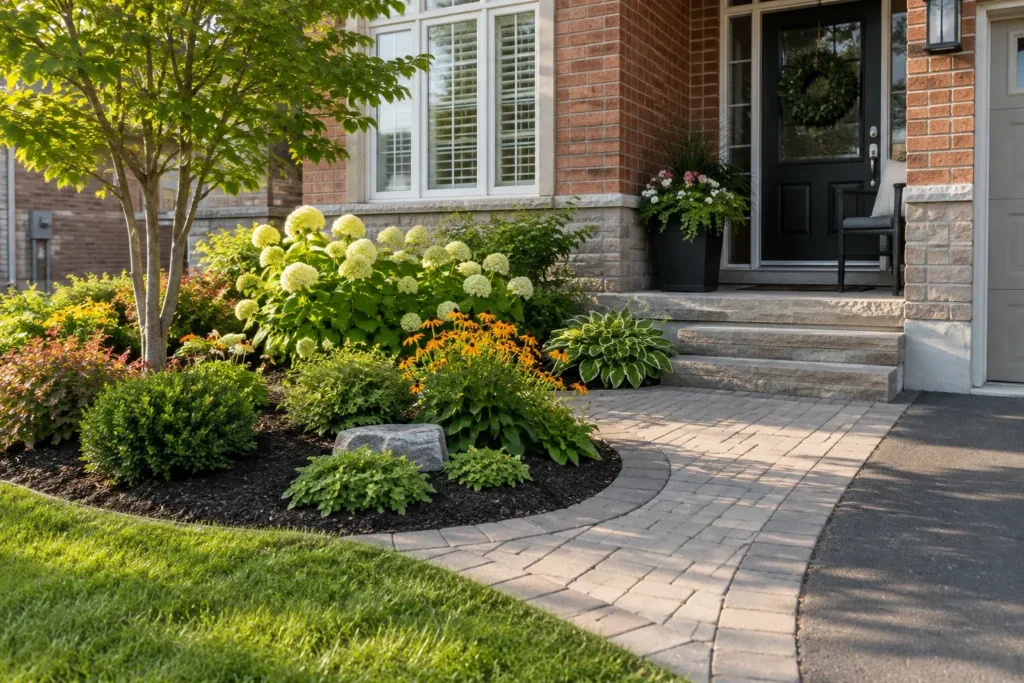
Garden Design & Planting, Low-Maintenance Landscaping, Tree & Shrub Planting, Garden & Hedge Maintenance, Landscape Drainage.
Discuss your mulch & decorative stone project
Show bed dimensions, current growth, drainage trouble and the edges against lawn or paving. Tell us whether the beds contain established plants or will be replanted, and how leaves are handled. This guides preparation, material selection, depth and edging.