
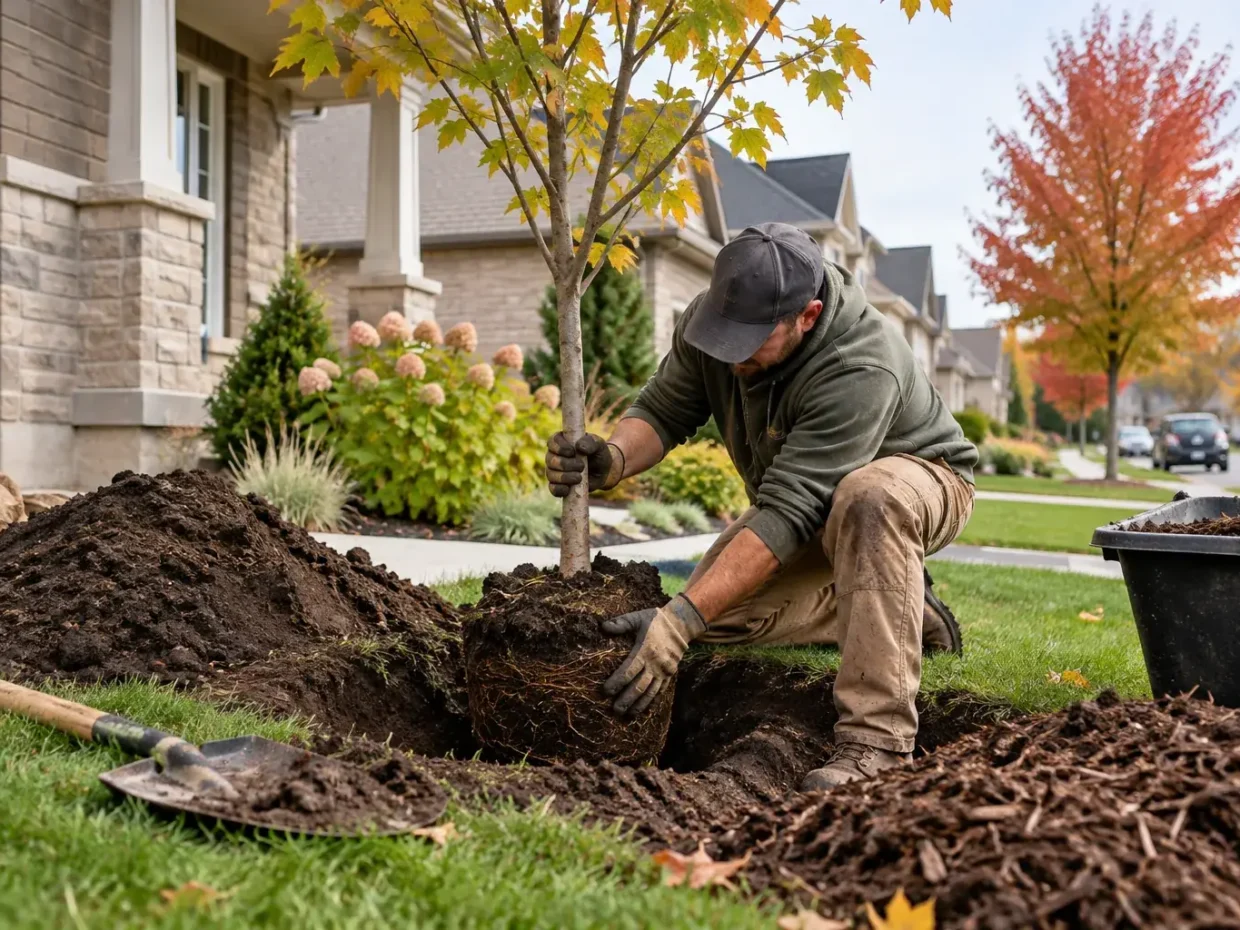
Trees, shrubs and hedges can give a Milton landscape shade, privacy, structure and seasonal change, but their long-term size matters much more than their appearance in a nursery pot. A row planted too close to a fence may be difficult to prune; a tree placed over a utility or beside a narrow patio can become a conflict. Plant selection should begin with sun, soil, moisture, available root space, mature canopy and the purpose of the planting. Privacy takes time to develop, while shade changes the lawn and garden beneath it as the tree grows. Good planting plans leave room for those changes.
Map space above and below ground
Record the existing trees, property boundaries, overhead wires, underground services, windows, driveways and roof-water patterns. Assess sunlight and any wet or dry areas, as well as where winter salt and piled snow reach the soil. Identify the view to frame or screen and the amount of pruning the owner can manage. A compact side yard may call for a different response from a deep rear boundary. Existing trees may offer substantial value; avoid unnecessary root disturbance from new beds, walls or paving. If a hedge is intended to screen a seated area, measure the sightline from that position rather than planting uniformly along every edge. Arrange locates before digging large planting holes.
Choose for mature form
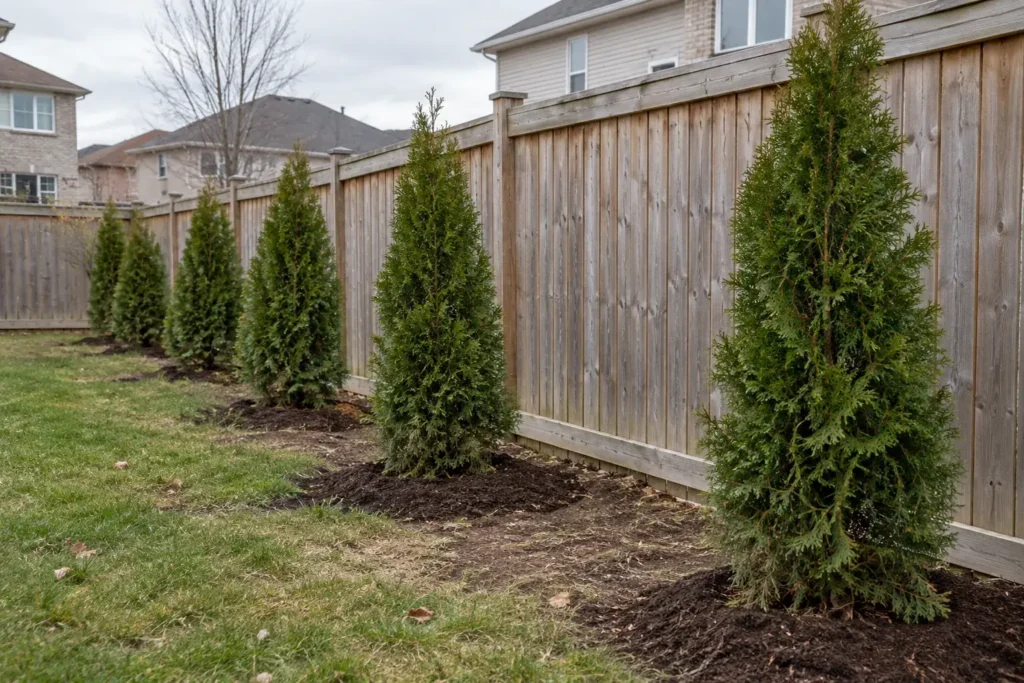
Choose species and spacing for their eventual form and the actual site. Trees need enough soil and canopy room; shrubs need a planting bed of useful depth, not a narrow slot between hardscape and fence. A hedge can be single-species for a formal line or mixed for a softer screen, but its growth rate and mature spread govern the maintenance commitment. Layered planting may provide depth and seasonal interest without relying on one wall of foliage. If immediate privacy is essential, consider a fence or screen alongside growing plants. Shade trees should be positioned for desired summer comfort without ignoring their effect on windows, turf, foundations and neighbouring space as they develop.
Prepare the root environment
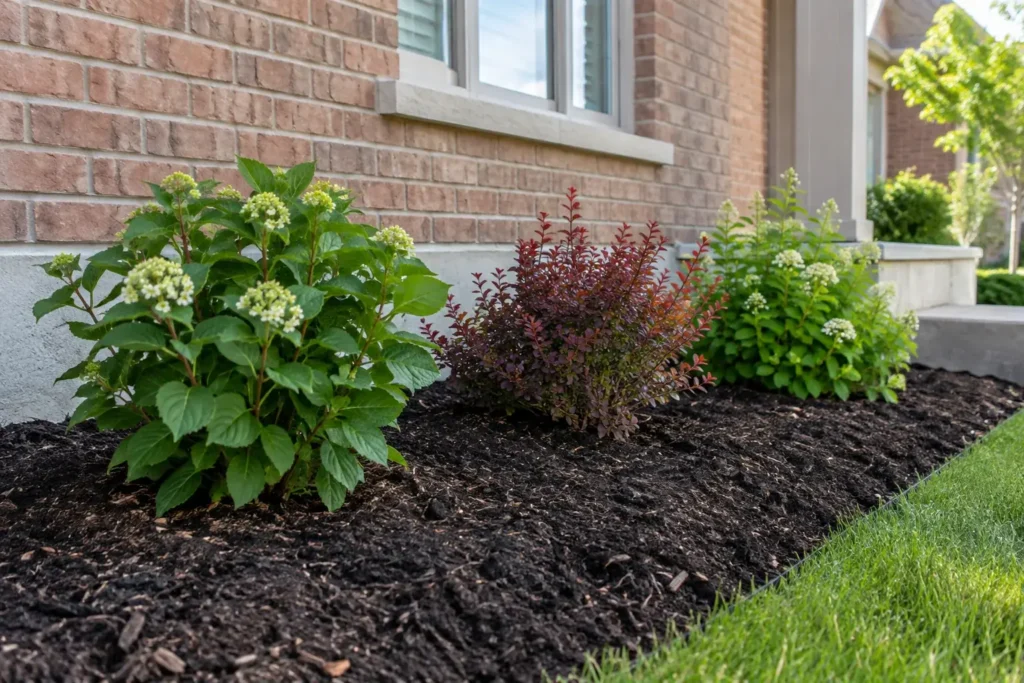
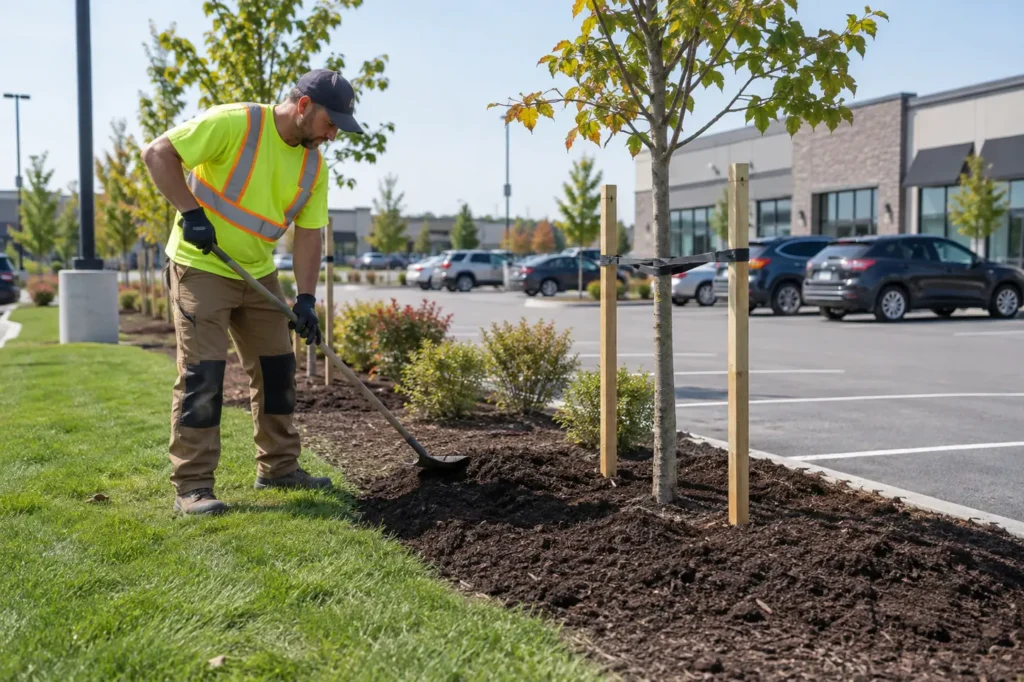
Planting conditions include the size and preparation of the planting area, placement at an appropriate level for the specific material, soil management, watering and mulch. A deep hole in poorly draining ground can become a wet basin unless the broader site is understood. Roots need viable soil beyond a small opening in compacted construction fill. Trees and shrubs should not obstruct swales, drainage outlets or utility access. Where grading or a raised bed is planned near an existing tree, protect its root zone and verify any property-specific constraints. Irrigation can support establishment, but emitters and schedules should match different plant needs. Fences, steps and retaining walls should be built in a sequence that avoids later damage to roots.
Compose a living landscape
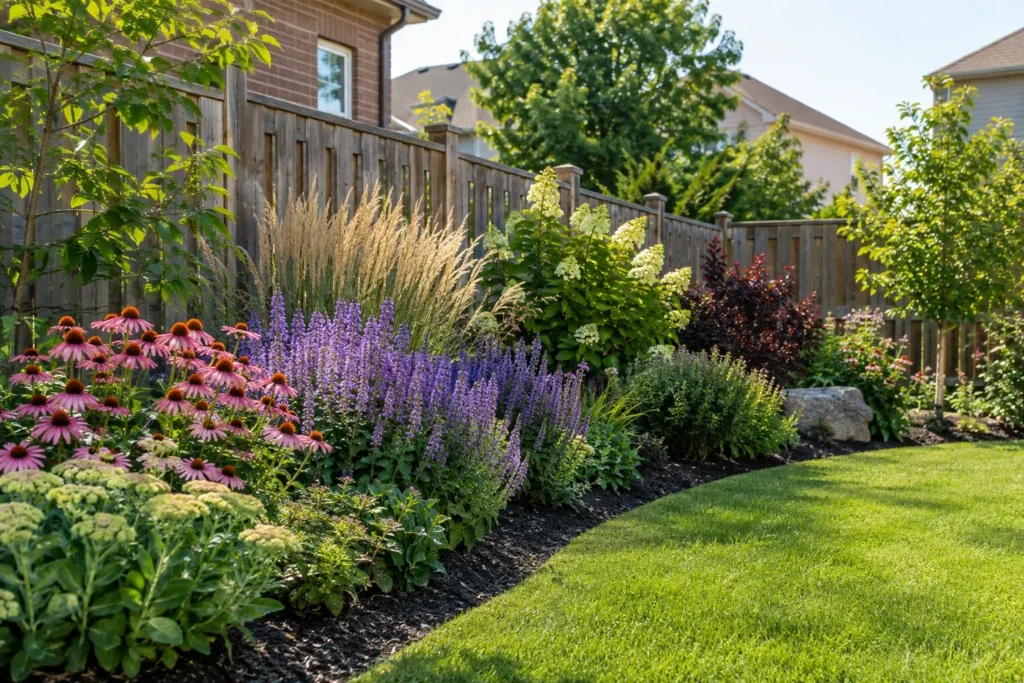
A planted space should be pleasant before it becomes mature, without being overfilled for an instant photograph. Repetition can give order to a front yard; a mixed border can make a backyard feel deeper. Consider what remains in winter, how leaves are handled in autumn and whether fruit or seeds are desirable near patios and vehicles. Planting beneath a mature tree requires attention to shade and root competition. Lighting can highlight a trunk or safely illuminate a route, but fixtures should allow for growth. The owner should be able to reach fence lines and prune without standing inside a densely packed bed.
Care through establishment
Establishment watering is essential, with frequency adjusted to weather, soil and the particular plant. Mulch should be maintained appropriately without burying stems or trunks. Inspect for stress, damage and drainage problems through the first seasons. Prune according to the plant's growth and desired form rather than repeatedly shearing everything to the same outline. A hedge may take years to provide the intended coverage; no honest plan promises instant mature privacy from small plants. Periodic review can catch a shrub that is crowding a walk or a young tree affected by drought before it becomes a larger problem.
Decisions that shape tree, shrub & hedge planting
Mature dimensions
Plan for eventual height, spread and root space, not the dimensions at delivery.
Sun and soil
Match selection to actual exposure, soil structure and moisture; a neighbouring lot's successful hedge may face different conditions.
Utilities and access
Keep overhead and underground services, meters, paths and fences accessible; arrange locates before excavation.
Privacy timeline
Map the exact view and distinguish immediate screening from the gradual fill of living planting.
Watering establishment
Plan who will water, how the root area will be monitored and whether irrigation is appropriate.
Long-term care
Leave room to prune, mulch and inspect plants without blocking drainage or damaging paving.
Compare tree, shrub & hedge planting proposals
The scope should name planting sizes, approximate spacing, bed and soil preparation, protection of existing features, mulch and initial watering responsibility. Two proposals listing the same number of trees may deliver very different mature outcomes if species and placement differ. Ask for mature height and spread, seasonal appearance and pruning needs. A hedge drawn as one continuous green block should still show the practical time needed to fill in and the space required to maintain it.
Trees and shrubs can change other parts of the landscape. Shade from a future canopy affects lawn, gardens and patio use. Roots and irrigation influence nearby paving; leaves may collect in a pool or drainage grate. Consider these relationships while plants are small. A tree positioned for shade can be valuable, but one placed merely to fill an empty drawing may create avoidable maintenance.
If planting is phased, reserve the necessary soil and root space before constructing a patio or wall. Later planting should not require breaking a finished base or raising grades over an existing tree's roots. A property-wide plan can make small initial plant sizes feel intentional instead of unfinished.
A planting line near a sidewalk or driveway should be viewed during winter as well as summer. Snow piles and salt can affect growth, while a maturing canopy can alter visibility and clearance. Selecting the position and species with these conditions in mind can avoid repeated pruning or replacement as the property changes.
Questions about tree, shrub & hedge planting
How close should a tree be to my house?
That depends on species, mature size, roots, utilities, available soil and the property layout. Decide by the actual plant and site rather than one blanket distance.
Can a hedge provide privacy immediately?
Small new plants need time to grow and fill in. For immediate coverage, a suitable fence or screen may need to be part of the plan.
Will irrigation guarantee establishment?
No. It helps deliver water when designed and monitored properly, but soil, drainage, weather and plant condition still matter.
Should an existing tree be removed to make room?
First assess its health, roots, shade and role in the yard. A layout change may protect a valuable tree; any removal should follow applicable rules and property-specific advice.
Related property work
Privacy Landscaping, Garden Design & Planting, Irrigation Systems, Garden & Hedge Maintenance, Landscape Design & Build.
Discuss your tree, shrub & hedge planting project
Show the planting area, views to screen or shade, sun exposure, existing trees, utilities and surrounding walks or fences. Share the immediate and long-term goals, plus watering access. A planting plan should work for mature size, not only the look on installation day.