
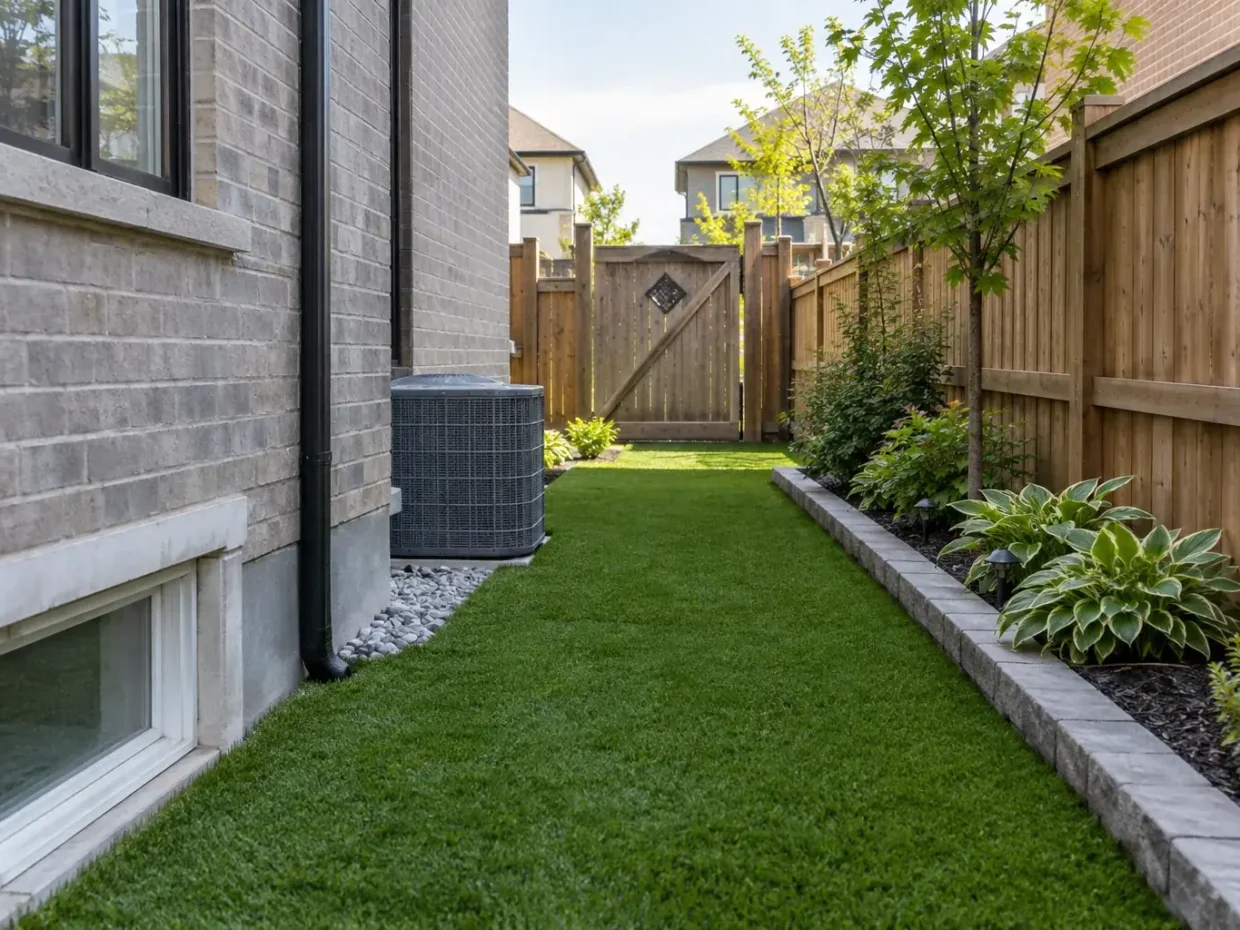
Artificial turf can be useful where conventional grass is difficult to maintain or use, such as a compact yard, heavily travelled side area or designated pet space. It removes mowing, but it does not remove cleaning, debris, heat, drainage or edge care. In Milton, turf installation should be judged by the function of the space and the ground beneath it, not only by a soft green appearance. A well-planned area has a prepared base, a viable water route, carefully made seams and secure transitions to paving, fences and planting. The owner should understand how the surface feels in sun and how it will be cleaned before deciding it suits the yard.
Assess use and ground conditions
Look at current grade, soil, roof runoff, shade, tree litter, pets and foot traffic. A wet side yard remains a drainage problem even when covered by artificial material. Measure door thresholds, gates, patio edges, fence lines and the intended use—play, casual seating, a dog run or visual greenery. A narrow irregular strip can create many cuts and seams; a simple shape may be more durable and easier to clean. Existing trees may shed leaves and seeds that collect in the pile. Consider how materials can be brought to the site and whether excavation affects utilities or roots. The site assessment should compare artificial turf with sod, planting and paving rather than assuming one answer for every yard.
Fit the artificial surface to the space
Design the exact surface for use. Pet areas need convenient cleaning access and careful thought about odour, drainage and infill. A children's play space needs a layout free of awkward hard edges and enough room for activity. Turf beside a patio should meet the pavers at a stable, neat height without lifting or trapping water. In a full-sun yard, surface temperature can be noticeably higher than natural grass, and shade or another material may be preferable for bare feet on hot days. Artificial turf can preserve a green look in a small area, but it should not cover every garden opportunity by default. Plan planting, seating and movement together.
Build a stable draining base
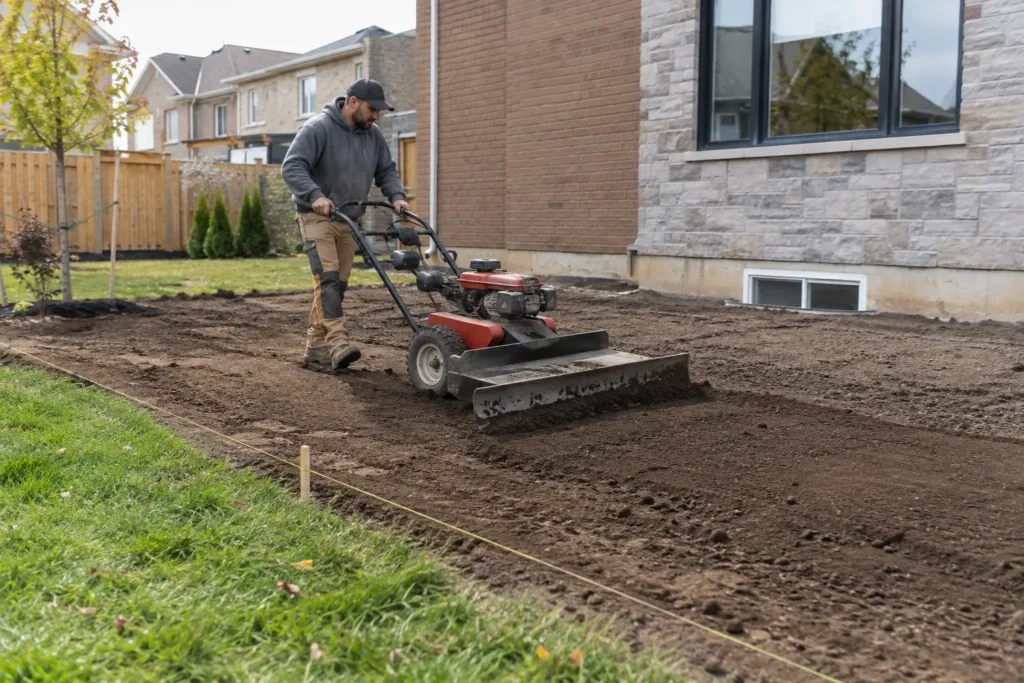
Installation typically involves removal of existing cover, excavation to the appropriate depth, a suitable compacted base, deliberate drainage, surface material, seam treatment and secure edges. The correct assembly depends on soil, use, product and surrounding grades. A base that ponds or settles undermines the finish. Downspouts should not pour onto a poorly draining turf area; surface water needs a suitable outlet. Utility locates precede deeper excavation, and property-specific requirements should be checked where grade or drainage changes. Edges near trees, fences and irrigation components deserve care. The relationship to patios and walks is resolved before the turf is cut, since uneven transitions can be a trip or maintenance problem.
Plan real-world cleaning and heat
In use, artificial turf changes the yard's routine rather than eliminating it. Debris and leaves must be removed, spills cleaned, fibres groomed when appropriate and pet areas washed according to the product and use. A fenced pet run may need a different cleaning schedule from a decorative front strip. Snow can cover it like any ground surface; the chosen clearing method should protect seams and edges. The surface may remain visually green in shade where living lawn struggles, but adjacent plants still need soil, water and light. If irrigation lines are retained for beds, keep them accessible and avoid soaking an area that does not need it.
Inspect seams and edges
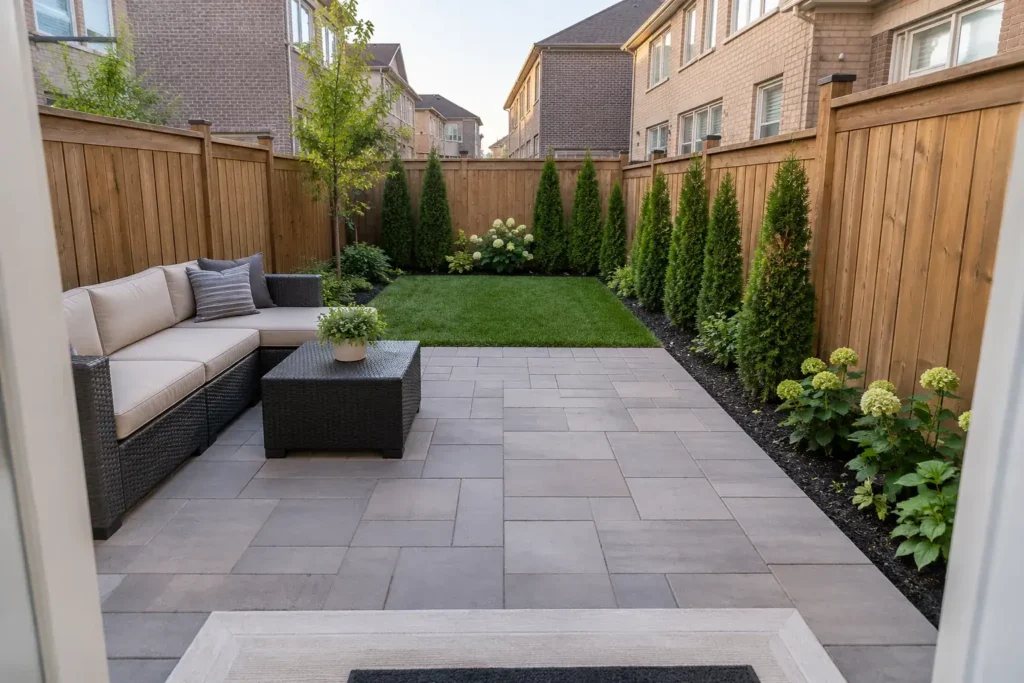
Inspect seams, edges and low spots periodically. If odour, standing water or surface rippling develops, investigate the base and maintenance practice instead of applying a cosmetic treatment. Replacement or repair of one section can differ visually from weathered surrounding material. The owner should keep the product care instructions and know whether particular cleaners, de-icers or heavy furniture are suitable. Where the aim is lower maintenance, compare those real tasks with the present mowing and watering burden. A design can also combine a smaller turf area with planting or interlock rather than treating the yard as one uniform carpet.
Decisions that shape artificial turf
Intended use
Pet run, play area, side path and decorative patch each impose different demands on base, cleaning and edge design.
Drainage route
Assess water before installation. A artificial surface does not absorb a persistently wet yard into a solution.
Heat and exposure
Discuss full-sun temperature, shade and the comfort of children or pets using the area on warm days.
Seams and geometry
Plan dimensions and rolls to minimize awkward seams and cuts, while leaving secure transitions around irregular edges.
Base and compaction
Prepare support for the site's soil and traffic so the surface remains even rather than following hidden ruts.
Care plan
Clarify debris removal, pet cleaning, brushing, stain response and periodic edge checks; it is not zero-maintenance.
Compare artificial turf proposals
The quote should identify turf product characteristics, site removal, base and drainage assumptions, seam locations, edge details, infill if applicable and reinstatement of nearby paving or planting. A low installation price can omit the ground work that determines whether the surface stays even and drains. Ask how pet waste or leaf debris will be managed on the chosen system. A fenced dog area should be evaluated for cleaning access and water outlet, not only visual density of the fibres.
Compare alternatives for the precise area. A small shaded side passage might benefit from a stable walkway and planting, while a full-sun play space may be better served by living turf or shade planning. Artificial turf can make sense where its use and care match the household, but it is not a universal replacement for soil and plants. If the yard includes new hardscape, set shared heights and drainage together.
During construction, preserve access to utility covers and future services. A seam placed over a changing support condition can become visible, and a weak perimeter can lift when maintenance equipment catches it. These details deserve the same attention as colour and pile height.
If a pet area is beside the house, pay attention to hose access and where rinse water will travel. A small space can receive intense use, making cleaning and drainage more important than on a decorative strip. A separate planting bed or shade feature may improve comfort and keep the hard edges from dominating the yard.
Questions about artificial turf
Does artificial turf drain?
A suitable installation can let water move through, but performance depends on the turf system, prepared base, grade and a viable outlet. It does not correct poor site drainage by itself.
Is turf comfortable for pets in sun?
Surface temperature can rise in direct sun. Consider shade, water access, timing of use and whether another surface suits the pet better.
Will it stop all yard maintenance?
No. Leaves, debris and pet waste still need removal, and seams or edges should be monitored.
Can turf meet an interlock patio?
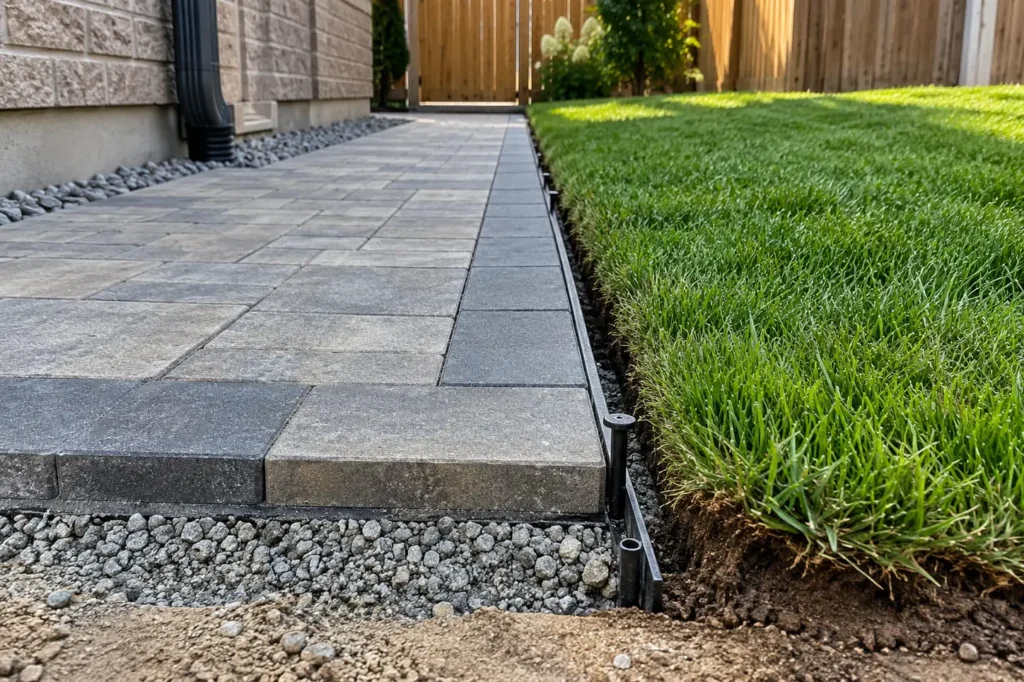
Yes, with a stable and appropriately graded edge. The patio and turf levels should be designed together rather than patched after either is complete.
Related property work
Low-Maintenance Landscaping, Sod Installation, Interlock Patios, Landscape Drainage, Backyard Landscaping.
Discuss your artificial turf project
Share the intended use, yard dimensions, gate access, sun exposure, pet needs and any areas that stay wet. Show how the turf would meet patios or gardens. The discussion can include its base, drainage, seams, heat and the cleaning work the surface will require.