
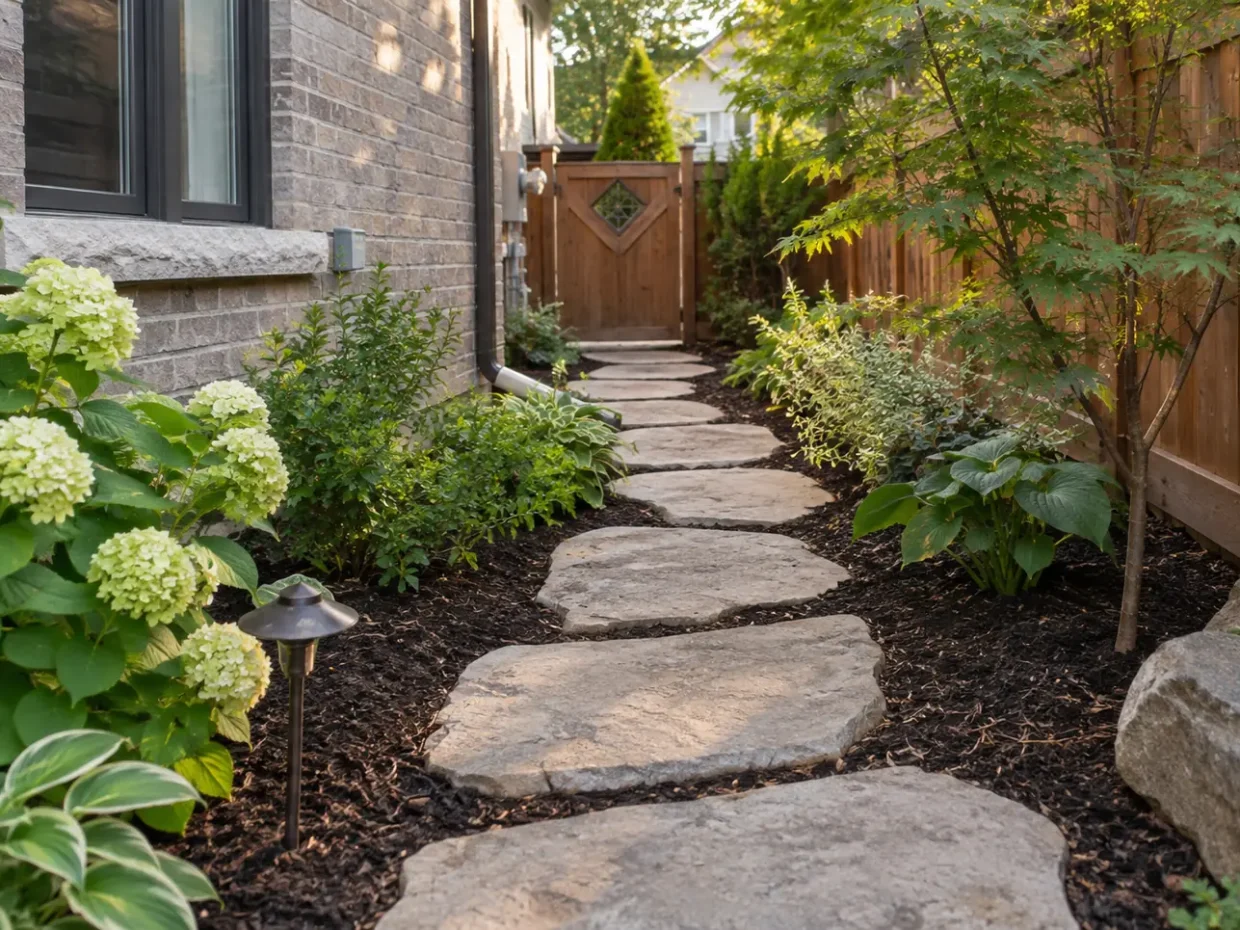
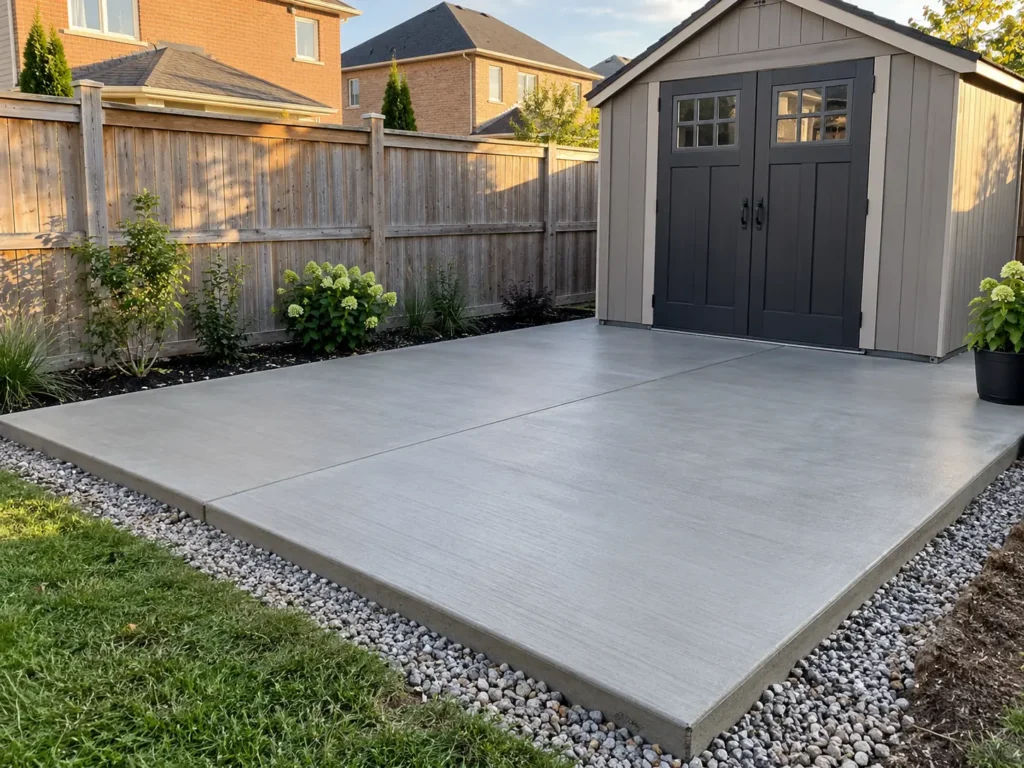
Concrete and natural stone can give a landscape a different character from unit interlock, but each material brings its own construction and maintenance questions. Poured concrete may form a straightforward pad, path or patio; flagstone can create a textured route; limestone or granite can provide steps or accents; armour stone can make a strong grade transition in an appropriate design. Material choice should follow the intended use, load, grade, winter exposure and connection to the house. A beautiful slab or stone placed on unsuitable support or in the wrong drainage route will not serve the yard well. Milton projects benefit from comparing the entire assembly rather than surface appearance alone.
Compare the site and intended load
Start with the existing ground and the surfaces to which the new work must connect. Measure door and porch heights, driveway and garage transitions, lawn grade, tree roots, utilities and access for materials. Look for old concrete that has cracked or settled; its condition may explain the underlying soil or water issue. A side-yard pad has different construction access from an open front driveway. Record whether the proposed surface is for pedestrians, furniture, a shed or a vehicle, because the support and material decisions change. Natural stone varies in thickness and texture; what looks attractive on a display piece may not be suitable for a smooth main entrance.
Choose material by function
Plan the geometry for use first. A concrete pad for a shed needs the size and location that the structure requires, plus access around it. A stone patio needs stable furniture areas and comfortable walking zones. Flagstone paths can be formal or informal, but the joint and surface treatment should suit the intended traffic and maintenance. Limestone and granite accents can mark steps or edges without forcing every material into one small space. Armour stone should be selected in relation to slope, access and the loads it may retain. Mixing materials can create a clear hierarchy if transitions are deliberately detailed. Avoid a collection of disconnected pads that leaves awkward lawn strips between them.
Prepare the full assembly
Subgrade preparation, base, thickness, reinforcement or jointing as appropriate, curing conditions and runoff all affect performance. Concrete needs a thoughtful layout of control or movement joints and a suitable foundation for its use. Natural stone needs appropriate bedding and restraint for the selected installation method. Large stone placement requires an assessment of excavation access and underlying support. Neither concrete nor stone should block a swale, trap roof water beside a foundation or redirect runoff onto a neighbour. Utility locates precede excavation; current property-specific rules should be verified if the work changes grade, driveway dimensions, an entrance or other regulated feature. Adjacent sod and beds need restoration after heavy work.
Use surfaces through the seasons
The finished material should suit daily routines and seasonal conditions. A front step needs a legible edge and manageable winter maintenance; a patio needs furniture stability; a walkway needs a continuous route. Natural texture can add interest, but unevenness should be evaluated where accessibility and shovelling matter. Concrete can look restrained and practical or form a backdrop for planting and lighting. Stone can make a transition more natural but may increase installation complexity and cost. Consider how snow is stored, what de-icing practice is appropriate to the material and whether spills from a grill or car will be easy to address.
Maintain distinct materials
Every material needs care. Concrete can stain and crack; joints and edges need observation. Natural stone may require cleaning suited to its composition and surface; loose or moving stones should be reset with attention to support and drainage. Avoid assuming sealing is always beneficial. Plants adjacent to stone need enough soil and water, while the surface should not shed all runoff into a narrow bed. When a concrete or stone feature fails, inspect the cause before repeating the same detail. A clear record of material, installation and maintenance helps future repairs preserve a consistent look.
Decisions that shape concrete & natural stone landscaping
Use and loading
A pedestrian flagstone walk, vehicle pad, shed base and patio have different demands. Decide what the surface carries before selecting its assembly.
Material texture
Compare stone thickness, surface irregularity, slip considerations, visual character and winter clearing against the actual route.
Subgrade and support
Investigate existing soil and old-surface failures, then prepare support suited to concrete or the chosen natural-stone installation.
Drainage and grade
Set final levels at doors, garage, beds and lawn. Preserve a suitable water route instead of using a new slab as a dam.
Large-stone access
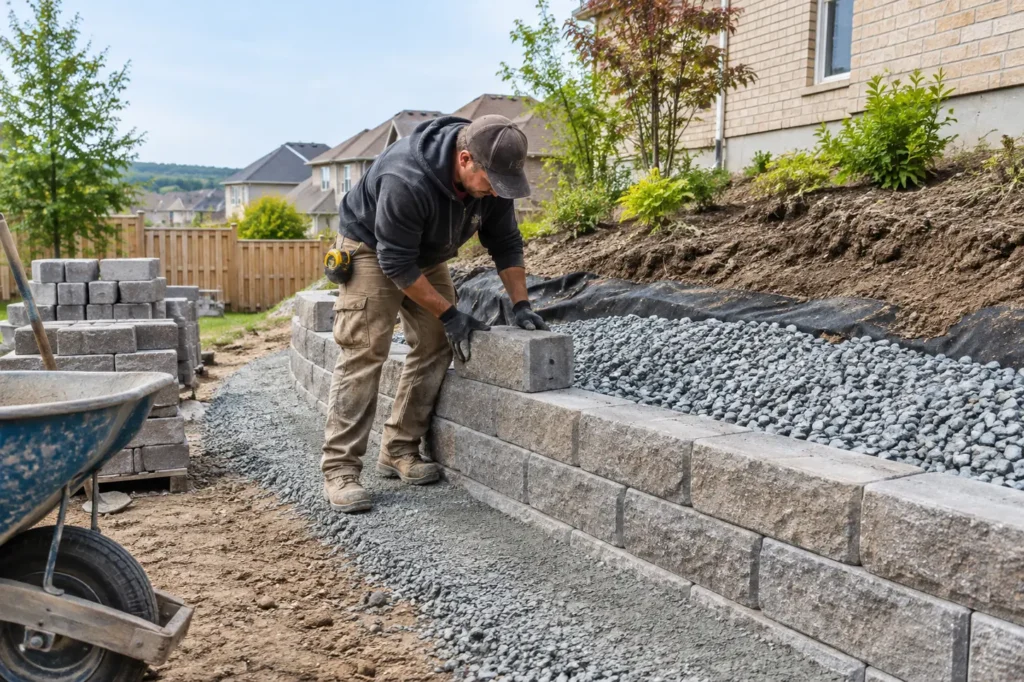
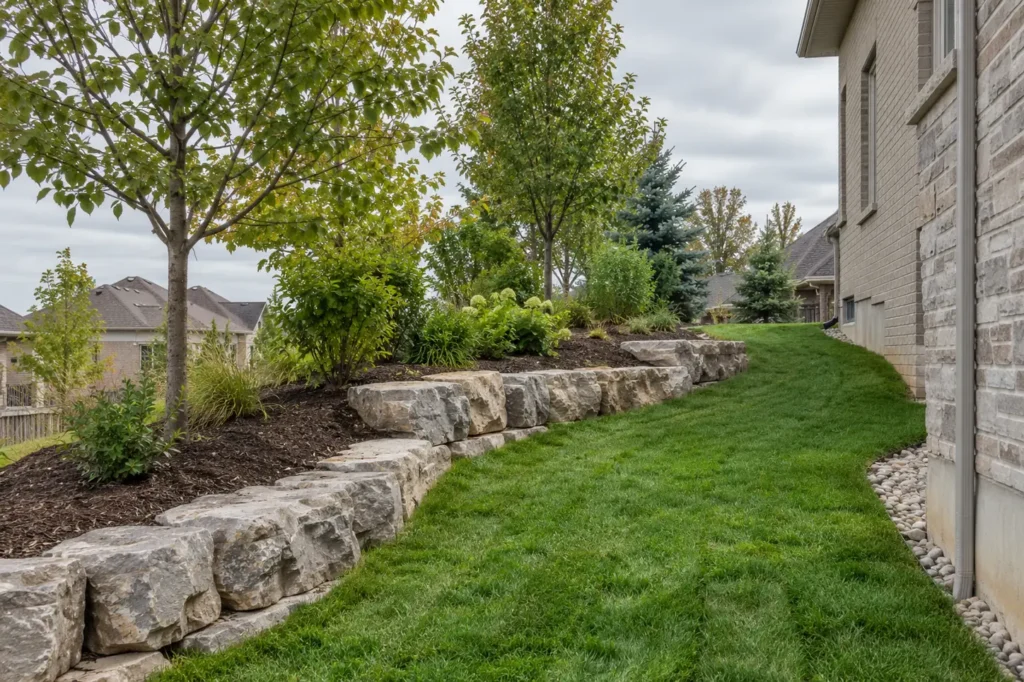
Armour stone and substantial steps can require significant delivery and placement access; plan this before narrowing a gate or finishing nearby beds.
Transitions
Detail connections among concrete, natural stone, interlock, turf and planting so edges remain stable and usable.
Compare concrete & natural stone landscaping proposals
Quotes should distinguish material and installation method. A poured slab, irregular flagstone route, cut-stone steps and armour-stone grade transition involve different excavation, support, handling, jointing and finish work. Specify demolition, disposal, edge treatment, drainage, any adjacent restoration and how the new work meets an existing porch or drive. A surface price alone conceals the parts most likely to determine durability.
Consider repairs and future access. A concrete slab may need a deliberate joint strategy and can be difficult to alter if a utility below it changes; unit stone may permit more localized lifting but demands suitable reinstatement. Natural stone can vary in colour and thickness, so a large-field selection should be judged in the landscape's actual light. For heavily travelled entrances, a relatively even texture can matter more than a dramatic individual slab.
Where materials meet living areas, keep drainage and maintenance in view. A stone patio that drains into a narrow planting bed can saturate roots; a concrete pad with no useful edge can make mowing awkward. The adjoining ground is part of the project.
A material decision can also affect future landscaping. A solid concrete pad may simplify a shed location but fixes the ground layout; a stone path can be adapted more easily in some circumstances, though its individual pieces require secure support. Choose the configuration for the lasting circulation and drainage plan rather than using leftover space as the only reason for a new surface.
Questions about concrete & natural stone landscaping
Is natural stone always more durable than interlock?
Performance depends on the specific stone, installation, support, load and maintenance. Compare complete systems rather than material names alone.
Can a new concrete pad cover an old damaged slab?
The old condition, finished height and intended load need assessment. Covering a failing surface can carry its problems into the new one.
Which material is best for front steps?
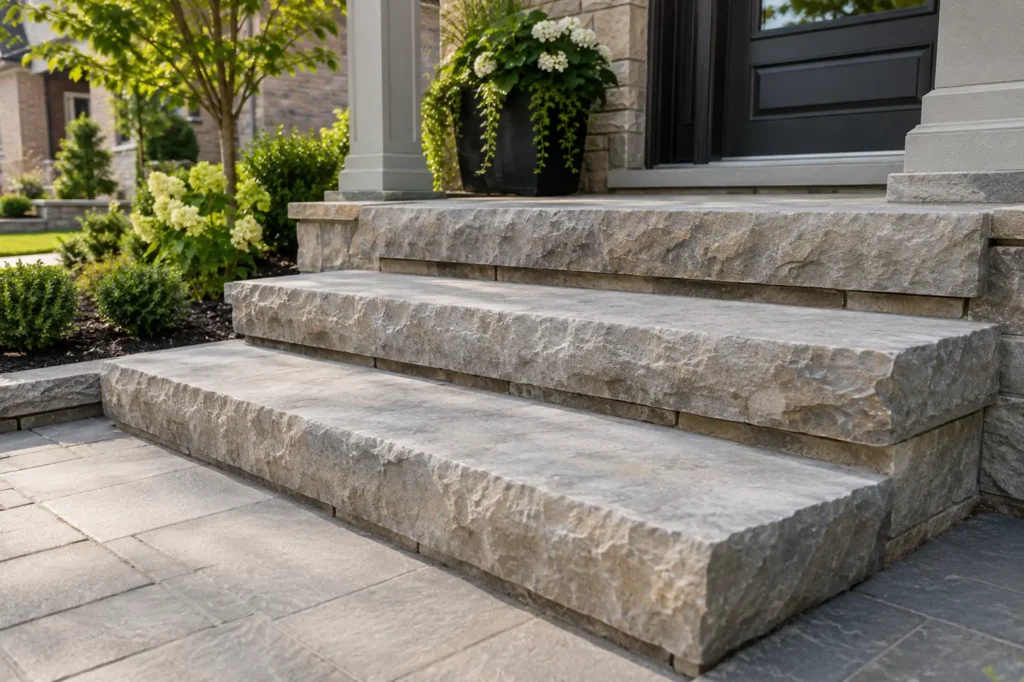
Evaluate comfortable geometry, stable support, finish texture, winter care and how the steps meet the porch and walk. The best choice varies by site.
Do concrete or stone surfaces need sealing?
It depends on product, exposure and desired maintenance. Sealing is not a structural repair or a guarantee against all stains.
Related property work
Interlocking, Retaining Walls, Interlock Steps, Backyard Landscaping, Yard Grading.
Discuss your concrete & natural stone landscaping project
Send photographs and dimensions of the proposed pad, path, steps or accent, and explain what it must support. Include the surfaces it will meet, access limitations and water concerns. Material options can then be compared against the actual load and grades.