
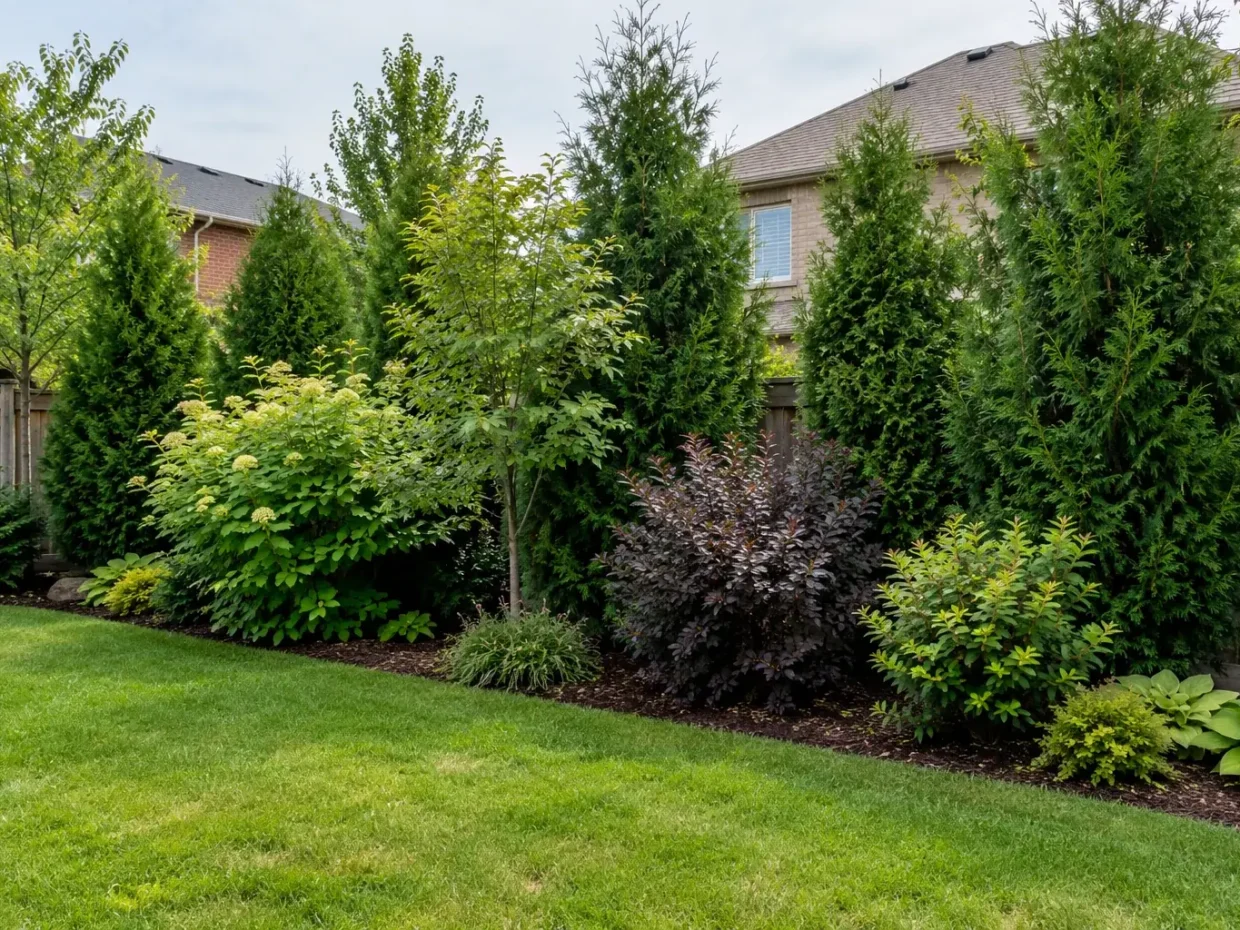
Privacy landscaping is a question of sightlines, timing and space. A row of small trees may look dense at planting yet leave a deck exposed for years. A tall fence may block a ground-level view but do little for a neighbouring second-storey window. The useful approach is to identify exactly where privacy is needed—from a dining chair, hot tub, living-room window or side-yard passage—and design a response for those views. In Milton's compact yards, mature plant width and maintenance access can be as important as height. Fences, screens, pergolas, hedges, trees and layered shrubs can work together without turning the entire property into one high boundary.
Measure the views to screen
Map the viewer and the area being screened. Stand and sit where the family actually uses the space, then check the line toward neighbouring windows, elevated decks, public sidewalks and adjacent outdoor rooms. Note sun exposure, prevailing site conditions, fence status, existing trees, property boundaries, grade changes, utilities and the width available for planting. A neighbour's raised deck can create a very different problem from a view through a side fence. Existing mature vegetation may already do part of the work and should be evaluated before it is removed. A shaded narrow strip between homes may not support the same dense hedge as an open, sunny rear boundary.
Layer immediate and living cover
Layer the response by distance. An immediate screen near a seat can address one direct view without building a tall structure along every boundary. A fence can form a clear base; shrubs soften it and provide seasonal texture. Trees can intercept elevated views as their canopy develops, but species and spacing must reflect full mature size and available root volume. A pergola can organize an outdoor room and carry partial visual screening in the right orientation. The plan should preserve light and air, keep routes open and allow access for pruning. Consider whether the aim is complete enclosure, filtered views, reduced exposure at one specific time of day or a calmer visual backdrop.
Give roots and structures room
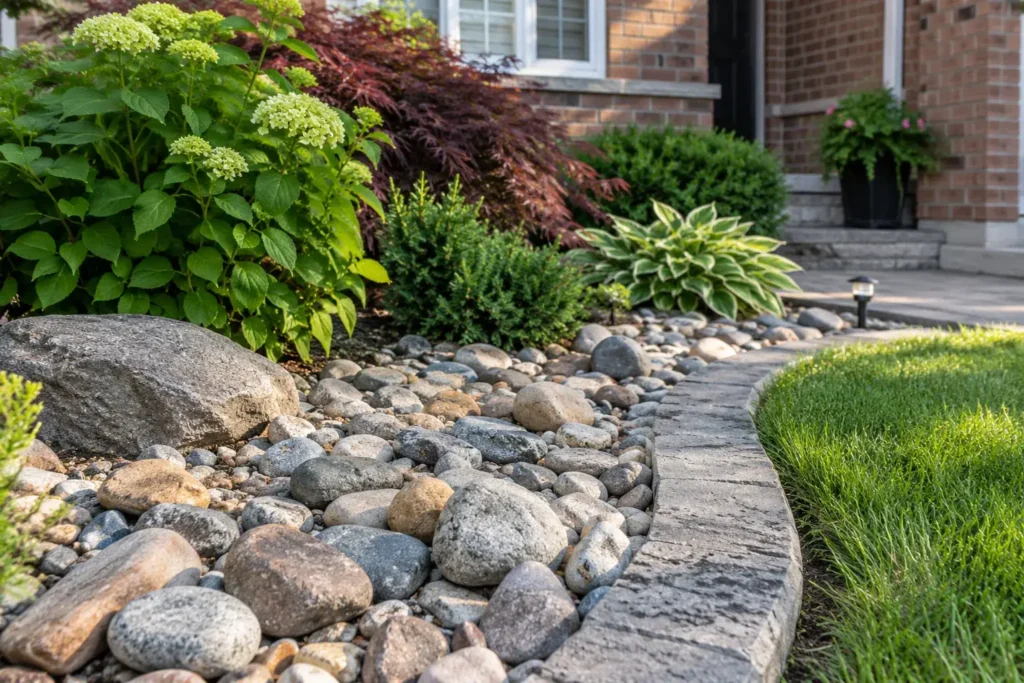
Planting success depends on soil preparation, drainage and watering, not just a species list. Hedges crowded too tightly may compete for resources and require heavy trimming; trees placed near hardscape or utilities create later conflicts. Fence posts and screens introduce structural and boundary questions. Confirm current Town rules and the true property line before a fence or structure is placed, and arrange utility locates before digging. A berm or raised planting edge can also change surface-water routes and may raise site-alteration questions. If a patio or deck is planned, establish its final elevation first so the privacy design is measured from the eventual seat, not today's lawn.
Balance enclosure with light
Privacy is strongest when it supports the use of the yard. A screen beside an outdoor table can make it comfortable while leaving the play lawn open. Mixed planting can break a long straight fence into more human-scaled views. Evergreens and deciduous plants have different winter effects; leaf-off conditions should be discussed rather than discovered after installation. Landscape lighting should illuminate safe routes and planting gently without shining into a neighbour's window. The storage gate and maintenance path should still open fully. In very small yards, fewer larger purposeful elements may work better than several competing lines of shrubs and screens.
Maintain a changing screen
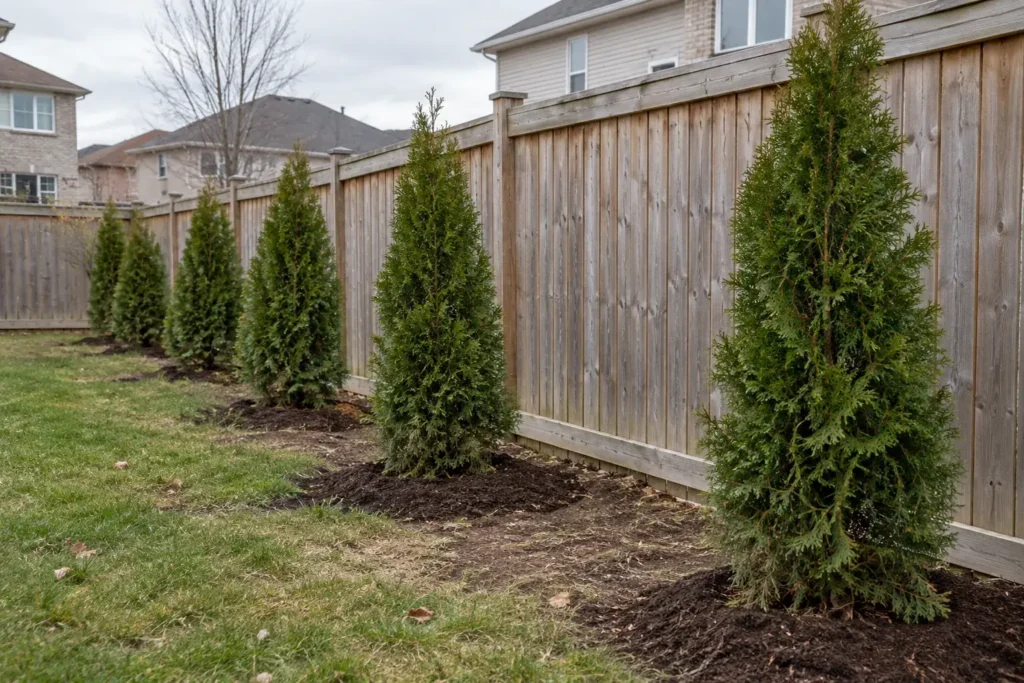
Living privacy changes over time. New plants need establishment watering and mulch; a hedge needs pruning to develop the desired density and keep it within the allotted width. Trees may be thinned or raised as they mature. Seasonal gaps, disease, winter salt and snow loads can alter the view. It is more honest to plan an immediate structural component when privacy is needed now, and treat planting as a growing layer. Routine access behind a hedge and to a fence should be designed in, because even a low-care privacy border cannot be forgotten after installation.
Decisions that shape privacy landscaping
The exact sightline
Record a view from seated and standing positions, including winter leaf-off conditions. One targeted screen may solve a problem more efficiently than a continuous tall hedge.
Immediate versus growing coverage
A fence or panel provides a defined present-day boundary; shrubs and trees take time to fill in. The planting plan should state mature spread and expected pruning needs without promising instant results.
Limited planting space
Narrow side yards need species suited to light, soil and available width. Crowding large plants beside the house or utilities is not a shortcut to a lasting screen.
Height and grade
Measure privacy from the finished patio or deck elevation. Retaining edges or raised beds can alter drainage and require further planning.
Four-season view
Deciduous foliage offers a different winter result from evergreen growth. A mixed approach can add seasonal interest without relying on one fragile line of identical plants.
Ongoing access
Leave room for pruning, fence repair, gate swing, drainage inspection and snow storage where relevant; privacy should not make the yard impossible to maintain.
Compare privacy landscaping proposals
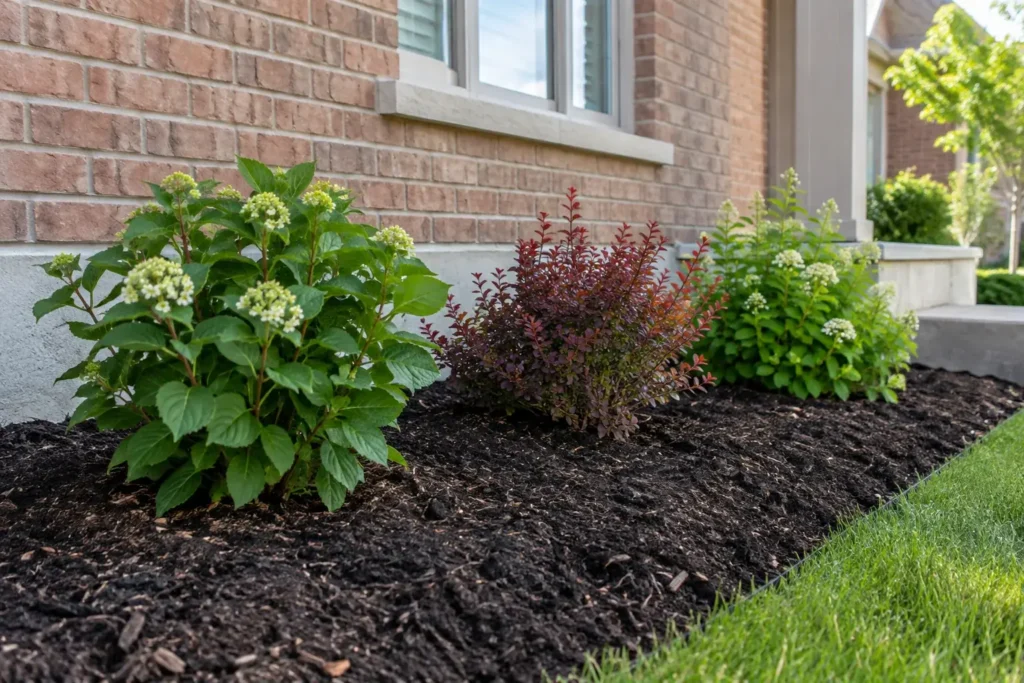
The estimate should describe the degree of screening at installation and the expected maintenance space when planting matures. A 1.5-metre shrub in a proposed plan does not create the same view as its eventual canopy. Ask how fast the desired privacy must happen and whether an immediate structural screen is an acceptable part of the landscape. For an elevated view, a tree's future canopy may be more relevant than a continuous boundary hedge; for a close ground-level view, a local panel may be more efficient.
Privacy should also be balanced with neighbour-facing effects. Planting can cast shade and drop leaves across a boundary, and a new raised bed or berm can affect drainage. Fence and screen placement calls for boundary and current-rule checks. Do not assume the visible fence sits exactly on the lot line. A thoughtful design offers comfort without making all sides of a compact yard feel enclosed or sacrificing the only useful sunlight.
This is why privacy work is best evaluated from the actual seat or window, not solely from a property-line elevation.
Questions about privacy landscaping
How quickly can a hedge give privacy?
That depends on starting plant size, species, site conditions and growth after planting. Immature material cannot be promised as an immediate solid screen. If you need coverage now, discuss a fence or screen alongside planting.
Will a fence solve a view from a second-floor window?
Not always. The viewing angle and distance matter. An overhead element or appropriately placed future tree canopy may address a high sightline more effectively, subject to space and applicable rules.
Can we keep privacy planting low maintenance?
Species choice and spacing can reduce repeated work, but watering during establishment, occasional pruning and plant-health checks remain necessary.
What should I photograph?
Take images from the seat or room where you want privacy, then toward the property boundary and the source of the view. Include the ground conditions, existing fence and nearby utilities.
Related property work
Fence Installation, Tree, Shrub & Hedge Planting, Backyard Landscaping, Pergolas, Garden Design & Planting.
Discuss your privacy landscaping project
Photograph the view from the exact chair, window or outdoor room where privacy is needed. Include the boundary, present planting, sun conditions and available bed width. Tell us whether coverage is needed immediately or can grow over time, and what pruning commitment suits you.